Categories
Thought

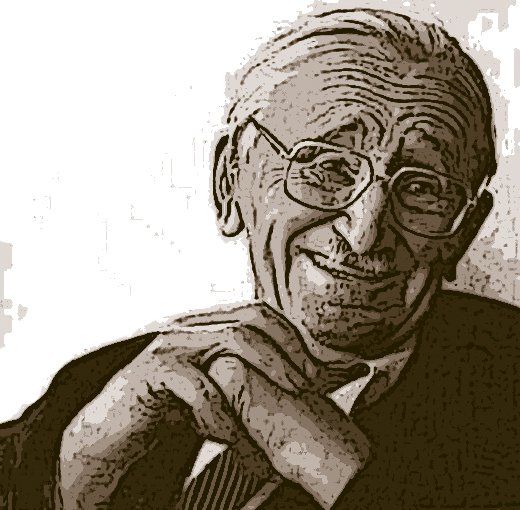
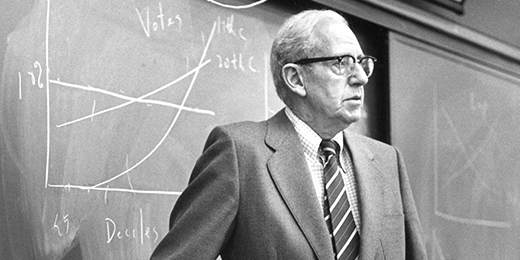
Amy Wax & Larry Alexander

All cultures are not equal. Or at least they are not equal in preparing people to be productive in an advanced economy.


Co-authors Amy Wax and Larry Alexander of “Paying the price for breakdown of the country’s bourgeois culture,” The Inquirer (August 9, 2017), an article that caused a huge backlash against Dr. Wax at her institution, the University of Pennsylvania Law School. Immediately following the above-quoted passage, the article continued:

The culture of the Plains Indians was designed for nomadic hunters, but is not suited to a First World, 21st-century environment. Nor are the single-parent, antisocial habits, prevalent among some working-class whites; the anti-“acting white” rap culture of inner-city blacks; the anti-assimilation ideas gaining ground among some Hispanic immigrants. These cultural orientations are not only incompatible with what an advanced free-market economy and a viable democracy require, they are also destructive of a sense of solidarity and reciprocity among Americans. If the bourgeois cultural script — which the upper-middle class still largely observes but now hesitates to preach — cannot be widely reinstated, things are likely to get worse for us all.

Would the re-embrace of bourgeois norms by the ordinary Americans who have abandoned them significantly reduce society’s pathologies? There is every reason to believe so. . . .

Categories
Thought

Yves Guyot

Neither government nor municipal monopolies are novelties; they are antiques. . . . They are not indicative of evolution, but of retrogression.


Yves Guyot, Where and Why Public Ownership Has Failed (H. F. Baker, trans., 1914), p. 397.

Illustration is a detail from a caricature by the great French artist André Gill (1840-1885).

Categories
Thought

Dixy Lee Ray

“Who speaks for science? Or, to put it another way, on whom does the press rely to speak for science?”


Dixy Lee Ray, Trashing the Planet, 1990

Categories
Thought

Yves Guyot

For all except the very few of extraordinary gifts, the spur of gain is not only powerful, it is indispensable.


Yves Guyot, stating what he called “the third incentive of human action,” in Where and why Public Ownership Has Failed (H. F. Baker, trans., 1914), p. 424.

Illustration is a detail from a caricature by artist André Gill (1840-1885).

Categories
Thought

Francis Amasa Walker

That is money; all that is money; only that is money, which performs a certain office. To parody a familiar proverb: Money is that Money does.

Francis Amasa Walker, defining the subject of his Money, Trade and Industry (1889), first page.
Categories
Thought

George Orwell

What is heterodox for the wider culture may be orthodox for the intelligentsia.


George Orwell, unfinished review of Evelyn Waugh, in Our Job Is to Make Life Worth Living: 1949–1950 (2001), as quoted by David Ramsay Steele, Orwell Your Orwell: A Worldview on the Slab (2017), p. 56.

Categories
Thought

Francis Amasa Walker

There is not and there never can be any positive virtue in restraint.

Francis Amasa Walker, Political Economy (third edition, revised and enlarged, 1888), pp. 507-508.
Categories
Thought

John Cowper Powys

Modern fashions of thinking have done a deadly hurt to the happiness of our race by their insistence upon the helplessness of the mind and the will.


‪John Cowper Powys, A Philosophy of Solitude (1933)‬, p. 122

Categories
Thought

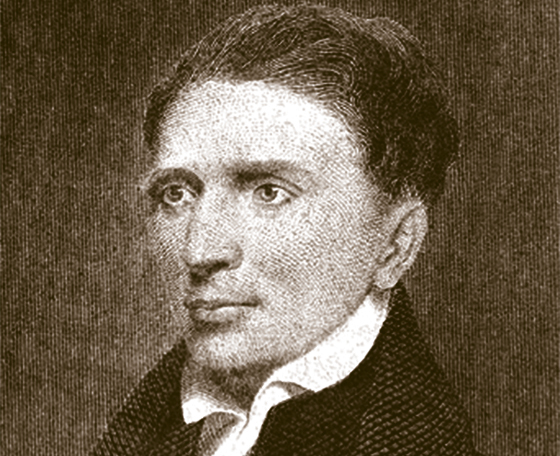
Benjamin Constant

The representative system is nothing but an organization by means of which a nation charges a few individuals to do what it cannot or does not wish to do herself. Poor men look after their own business; rich men hire stewards. This is the history of ancient and modern nations. The representative system is a proxy given to a certain number of men by the mass of the people who wish their interests to be defended and who nevertheless do not have the time to defend them themselves.

But, unless they are idiots, rich men who employ stewards keep a close watch on whether these stewards are doing their duty, lest they should prove negligent, corruptible, or incapable; and, in order to judge the management of these proxies, the landowners, if they are prudent, keep themselves well informed about affairs, the management of which they entrust to them. Similarly, the people who, in order to enjoy the liberty that suits them, resort to the representative system, must exercise an active and constant surveillance over their representatives, and reserve for themselves, at times that should not be separated by too lengthy intervals, the right to discard them if they betray their trust, and to revoke the powers they might have abused.


Benjamin Constant, On the Liberty of the Ancients Compared to that of the Moderns (“De la Liberté des Anciens Comparée à celle des Modernes,”1819)

Categories
Thought

John Cowper Powys

Once liberated from ambition, a person has nothing to lose by being taken for a fool.


‪John Cowper Powys, A Philosophy of Solitude (1933)‬, p. 57