War is what happens when language fails.
Margaret Atwood, The Robber Bride (1993), Ch. 6

War is what happens when language fails.
Margaret Atwood, The Robber Bride (1993), Ch. 6
My plan is to let people do whatever they please, so long as they do not invade the right and freedom of other persons to do the same.
When we lack the will to see things as they really are, there is nothing so mystifying as the obvious.
Irving Kristol, “‘When virtue loses all her loveliness’ — some reflections on Capitalism and ‘the free society,’” National Affairs, No. 21, Fall 1970.
How can protection, think you, add to the wealth of a country? Can you by legislation add one farthing to the wealth of the country? You may, by legislation, in one evening, destroy the fruits and accumulation of a century of labour; but I defy you to show me how, by the legislation of this House, you can add one farthing to the wealth of the country. That springs from the industry and intelligence; you cannot do better than leave it to its own instincts. If you attempt by legislation to give any direction to trade or industry, it is a thousand to one that you are doing wrong; and if you happen to be right, it is work of supererogation, for the parties for whom you legislate would go right without you, and better than with you.
Rigid, the skeleton of habit alone upholds the human frame.
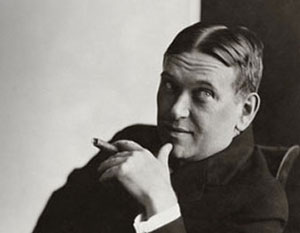
My own belief, more than once set afloat from this spot, is that it will take us, soon or late, into the stormy waters of Fascism. To be sure, that Fascism is not likely to be identical with the kinds on tap in Germany, Italy and Russia; indeed, it is very apt to come in under the name of anti-Fascism. And its first Duce, whether the Hon. Mr. Roosevelt or another, will not call himself a dictator, but a scotcher of dictators
.
Life is not a series of gig lamps symmetrically arranged; life is a luminous halo, a semi-transparent envelope surrounding us from the beginning of consciousness to the end.
Irving Kristol, “‘When virtue loses all her loveliness’ — some reflections on Capitalism and ‘the free society,’” National Affairs, No. 21, Fall 1970.
Our youthful rebels are anything but inarticulate; and though they utter a great deal of nonsense, the import of what they are saying is clear enough. What they are saying is that they dislike — to put it mildly — the liberal, individualist, capitalist civilization that stands ready to receive them as citizens. They are rejecting this offer of citizenship and are declaring their desire to see some other kind of civilization replace it.
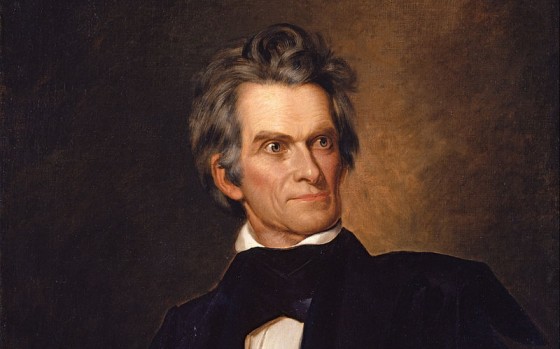
A power has risen up in the government greater than the people themselves, consisting of many and various and powerful interests, combined into one mass, and held together by the cohesive power of the vast surplus in the banks.
A light here required a shadow there.