It is up to the government to keep the government’s secrets.
Bob Novak was born on February 26, 1931. He died in 2009.

It is up to the government to keep the government’s secrets.
Bob Novak was born on February 26, 1931. He died in 2009.

I bet you are one of those people who dreams of immortality but has no idea what to do on a Sunday.

I feel anxious for the fate of our monarchy, or democracy, or whatever is to take place. I soon get lost in a labyrinth of perplexities; but, whatever occurs, may justice and righteousness be the stability of our times, and order arise out of confusion. Great difficulties may be surmounted by patience and perseverance.
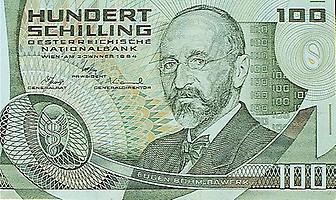
[T]here is one . . . thing that not even the most imposing dictate of power will accomplish: It can never effect anything in contradiction to the economic laws of value, price, and distribution; it must always be in conformity with these; it cannot invalidate them; it can merely confirm and fulfill them.
Eugen von Böhm-Bawerk, “Control or Economic Law,” Zeitschrift für Volkswirtshaft, Sozialpolitik und Verwaltung, Volume XXIII (1914): 205–71; John Richard Mez, Ph.D., translator.

If an ideology produces unhappiness, misery, grief, division, sickness, boredom, and hatred, surely this is not a commendation but an indictment.
John Norman, GorChronicles.com

Simone Weil, draft for a Statement of Human Obligations (1943).
It is the aim of public life to arrange that all forms of power are entrusted, so far as possible, to men who effectively consent to be bound by the obligation towards all human beings which lies upon everyone, and who understand the obligation.
Law is the quality of the permanent provisions for making this aim effective.
One who would influence the masses must have recourse to the art of advertisement. The clamour of puffery is to-day requisite even for an intellectual movement.

[A]ll Value resides in the mind. But people have come to regard Value as an absolute Quality inherent in Things: and the confusion of ideas is the source of bad reasoning. Value is founded on estimation.

An army is a diversion of energy from the productive life of a nation.
Charm is a way of getting the answer yes without asking a clear question.