I think we’ve worked our way through the education process of making sure everybody understands this is really a different plant.
Categories
Sen. Mitch McConnell

I think we’ve worked our way through the education process of making sure everybody understands this is really a different plant.

The tendency to look not to the past but to the future for types of perfection was brought into the world by Christianity. Ancient literature gives few or no hints of a belief that the progress of society is necessarily from worse to better.
Note the difference between a right and a privilege. A right, in the abstract, is a fact; it is not a thing to be given, established, or conferred; it is. Of the exercise of a right power may deprive me; of the right itself, never. Privilege, in the abstract, does not exist; there is no such thing. Rights recognized, privilege is destroyed.
We all are so optimistic that industrial hemp can become sometime in the future what tobacco was in Kentucky’s past.
[T]he stationary condition of the human race is the rule, the progressive the exception. . . . The Roman jurisprudence has the longest known history of any set of human institutions. The character of all the changes which it underwent is tolerably well ascertained. From its commencement to its close, it was progressively modified for the better, or for what the authors of the modification conceived to be the better, and the course of improvement was continued through periods at which all the rest of human thought and action materially slackened its pace, and repeatedly threatened to settle down into stagnation.

What country can preserve its liberties if their rulers are not warned from time to time that their people preserve the spirit of resistance. Let them take arms.
The movement of the progressive societies has hitherto been a movement from Status to Contract.
“Only one thing can save this country, and that’s to get a handle on this deficit and debt issue.”
Sen. Mitch McConnell, as quoted in Jack Brammer, “Sen. Mitch McConnell says Medicare, Social Security must change to fix U.S. debt,” Wichita Eagle (Jan. 21, 2013).
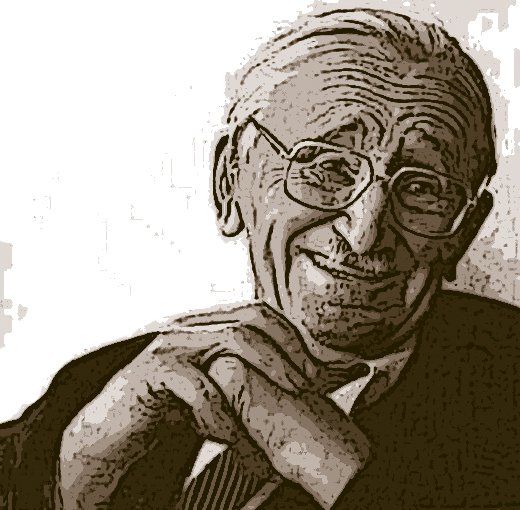
F. A. Hayek, The Constitution of Liberty (1960).
What a free society offers to the individual is much more than what he would be able to do if only he were free.

The mere gathering of individuals into a group does not constitute them a society. A society, in the sociological sense, is formed only when, besides juxtaposition there is cooperation. So long as members of the group do not combine their energies to achieve some common end or ends, there is little to keep them together. They are prevented from separating only when the wants of each are better satisfied by uniting his efforts with those of others, than they would be if he acted alone.
Cooperation, then, is at once that which can not exist without a society, and that for which a society exists.