Categories
Thought

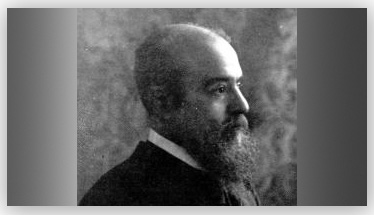
Benedetto Croce

Morality, and the ideal of freedom which is the political expression of morality, are not the property of a given party or group, but a value that is fundamentally and universally human. . . . No people will be truly free till all are free.

Benedetto Croce was an Italian philosopher and outspoken anti-fascist.
Categories
Thought

Rose Wilder Lane

This is the nature of human energy; individuals generate it, and control it. Each person is self-controlling, and therefore responsible for his acts. Every human being, by his nature, is free.


Rose Wilder Lane, Discovery of Freedom (1943).

Categories
Thought

Isabel Paterson

In arguing against free enterprise capitalism, the collectivist always adopts the false assumption of a fixed number of jobs in that system. Conversely, in arguing for collectivism, he always assumes that there will be as many jobs as there are workers. The government will make the jobs.


Isabel Paterson, The God of the Machine, 1943.

Categories
Thought

Stanislav Andreski

The pioneers of rationalism inveighed against the traditional dogmas, ridiculed popular superstitions, campaigned against priests and sorcerers, and castigated them for fostering and preying upon the ignorance of the masses — hoping that a final victory of science would vanish for ever the evils of unreason and organized deception. Little did they suspect that a Trojan Horse would appear in the camp of enlightenment, full of streamlined sorcerers clad in the latest paraphernalia of science.


Stanislav Andreski, Social Sciences as Sorcery (1972), p. 237-238.

Categories
Thought

Benedetto Croce

Even in the darkest and crassest times liberty trembles in the lines of poets and affirms itself in the pages of thinkers and burns, solitary and magnificent, in some men who cannot be assimilated by the world around them.


Benedetto Croce, History as the Story of Liberty, 1938 (1941, Eng. translation).

Categories
Thought

Ogden Nash

O Duty,
Why hast thou not the visage of a sweetie or a cutie?
Why glitter thy spectacles so ominously?
Why art thou clad so abominously?
Why art thou so different from Venus
And why do thou and I have so few interests mutually in common between us?
Why art thou fifty per cent martyr
And fifty-one per cent Tartar?

Ogden Nash, from “Kind of an Ode to Duty,” The Face Is Familiar (1941)

Categories
Thought

Ogden Nash

People who have what they want are very fond of telling people who haven’t what they want that they really don’t want it,

And I wish I could afford to gather all such people into a gloomy castle on the Danube and hire half a dozen capable Draculas to haunt it.

I don’t mind their having a lot of money, and I don’t care how they employ it,

But I do think that they damn well ought to admit they enjoy it.

Categories
Thought

J. S. Mill

A general State education is a mere contrivance for moulding people to be exactly like one another; and as the mould in which it casts them is that which pleases the dominant power in the government, whether this be a monarch, an aristocracy, or a majority of the existing generation; in proportion as it is efficient and successful, it establishes a despotism over the mind, leading by a natural tendency to one over the body.

John Stuart Mill, On Liberty (1859), Chapter V, “Applications.”
Categories
Thought

Benedetto Croce

Liberty is not the function of the bourgeoisie or any other economy but rather the human soul and its deep needs; it possesses qualities and origins that are not economic but instead moral and religious. . . .


Benedetto Croce, as quoted in As If God Existed: Religion and Liberty in the History of Italy, by Maurizio Viroli, (Princeton University Press, 2012).

Categories
Thought

Arthur Latham Perry

Suppose for a moment, that all taxes of every name could be abolished instantaneously, and the Governments, like the Israelites, live on manna for forty years. What harm would ensue? What industry would decline? Who would be impoverished? What stimulus to work and save and grow rich would be weakened thereby? Would not wages, and profits, and rents, all be lifted thereby, with no damage to anybody? A child can see that Taxes from their very nature are a burden, are a subtraction from income, are a minus and not a plus. Who, then, except from sinister motives, can imagine and represent, that Taxes are a good in themselves, a positive blessing, a spur to the progress of Society?


Arthur Latham Perry, Principles of Political Economy (1891).