Non omnia possumus omnes.
We cannot all do everything.
Virgil, Eclogues (37 BC), Book VIII, line 63 (tr. Fairclough).
Non omnia possumus omnes.
We cannot all do everything.
Virgil, Eclogues (37 BC), Book VIII, line 63 (tr. Fairclough).
The progress of civilization necessitates the giving of greater and greater attention and intelligence to public affairs.
We have no right to expect that our rulers will be more wise, more virtuous, or more perfect than those of other nations have been. . . .
History shows how the human mind, which, at the dawn of civilisation, was a lyre of three chords, became in the progress of civilisation a lyre of seven chords. . . .
G. H. Lewes, Problems of Life and Mind (Third Series) Problem the First — The Study of Psychology: Its Object, Scope, and Method (1879), p. 157.
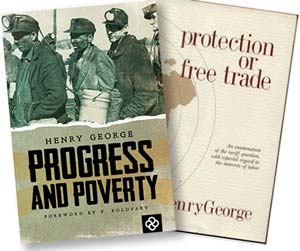
Charity is false, futile, and poisonous when offered as a substitute for justice.
Ideas are forces: the existence of one determines our reception of others.
G. H. Lewes, Problems of Life and Mind (Third Series) Problem the First — The Study of Psychology: Its Object, Scope, and Method (1879).
One thing is needful: to give style to one’s character — a great and rare art! He exercises it who surveys all that his nature presents in strength and weakness and then moulds it to an artistic plan until everything appears as art and reason, and even the weaknesses delight the eye.
Sometimes it is said that man can not be trusted with the government of himself. Can he, then, be trusted with the government of others? Or have we found angels in the forms of kings to govern him? Let history answer this question. Let us, then, with courage and confidence pursue our own Federal and Republican principles, our attachment to union and representative government. Kindly separated by nature and a wide ocean from the exterminating havoc of one quarter of the globe; too high-minded to endure the degradations of the others; possessing a chosen country, with room enough for our descendants to the thousandth and thousandth generation; entertaining a due sense of our equal right to the use of our own faculties, to the acquisitions of our own industry, to honor and confidence from our fellow citizens, resulting not from birth, but from our actions and their sense of them; enlightened by a benign religion, professed, indeed, and practiced in various forms, yet all of them inculcating honesty, truth, temperance, gratitude, and the love of man; acknowledging and adoring an overruling Providence, which by all its dispensations proves that it delights in the happiness of man here and his greater happiness hereafter — with all these blessings, what more is necessary to make us a happy and a prosperous people?
Still one thing more, fellow citizens — a wise and frugal Government, which shall restrain men from injuring one another, shall leave them otherwise free to regulate their own pursuits of industry and improvement, and shall not take from the mouth of labor the bread it has earned. This is the sum of good government, and this is necessary to close the circle of our felicities. About to enter, fellow-citizens, on the exercise of duties which comprehend everything dear and valuable to you, it is proper you should understand what I deem the essential principles of our Government, and consequently those which ought to shape its Administration.
Progress has not followed a straight ascending line, but a spiral with rhythms of progress and retrogression, of evolution and dissolution.
Man is always something more than what he knows of himself. He is not what he is simply once and for all, but is a process…