The easiest person to deceive is one’s own self.
Edward Bulwer-Lytton, The Disowned (1828).
Categories
Bulwer-Lytton
The easiest person to deceive is one’s own self.
Edward Bulwer-Lytton, The Disowned (1828).
No man thinks there is much ado about nothing when the ado is about himself.
Anthony Trollope, The Bertrams (1859).
There is no society, however free and democratic, where wealth will not create an aristocracy.
Edward Bulwer-Lytton, The Disowned (1828).

If printing money would end poverty, printing diplomas would end stupidity.
Argentine President Javier Milei, quoted by Rebecca Weisser, “Don’t Cry for Milei, Argentina,” Spectator Australia (December 2023).
True, — this! [Richelieu holding a pen]
Edward Bulwer-Lytton, Richelieu; or, The Conspiracy: A Play in Five Acts (1839), Act II, Scene II.
Beneath the rule of men entirely great
The pen is mightier than the sword. Behold
The arch-enchanter’s wand! — itself a nothing!
But taking sorcery from the master-hand
To paralyse the Caesars — and to strike
The loud earth breathless! — Take away the sword
States can be saved without it!
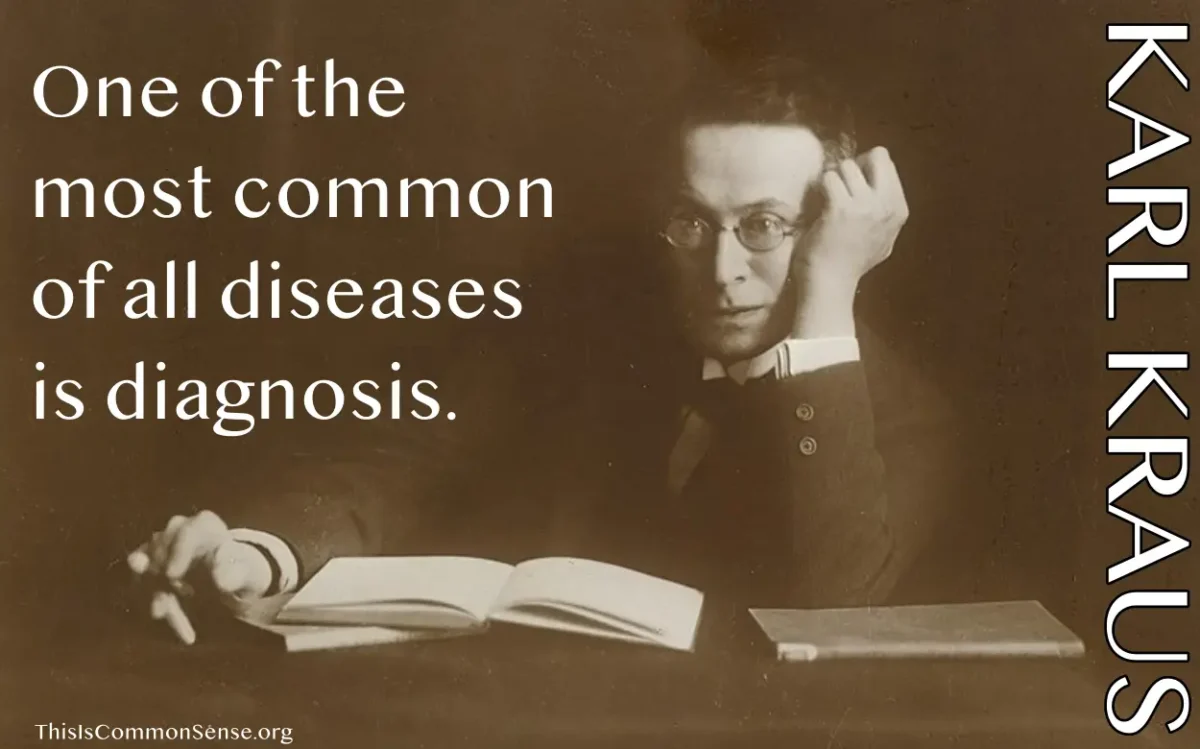
One of the most common of all diseases is diagnosis.
Karl Kraus, as quoted in The Portable Curmudgeon (1987).
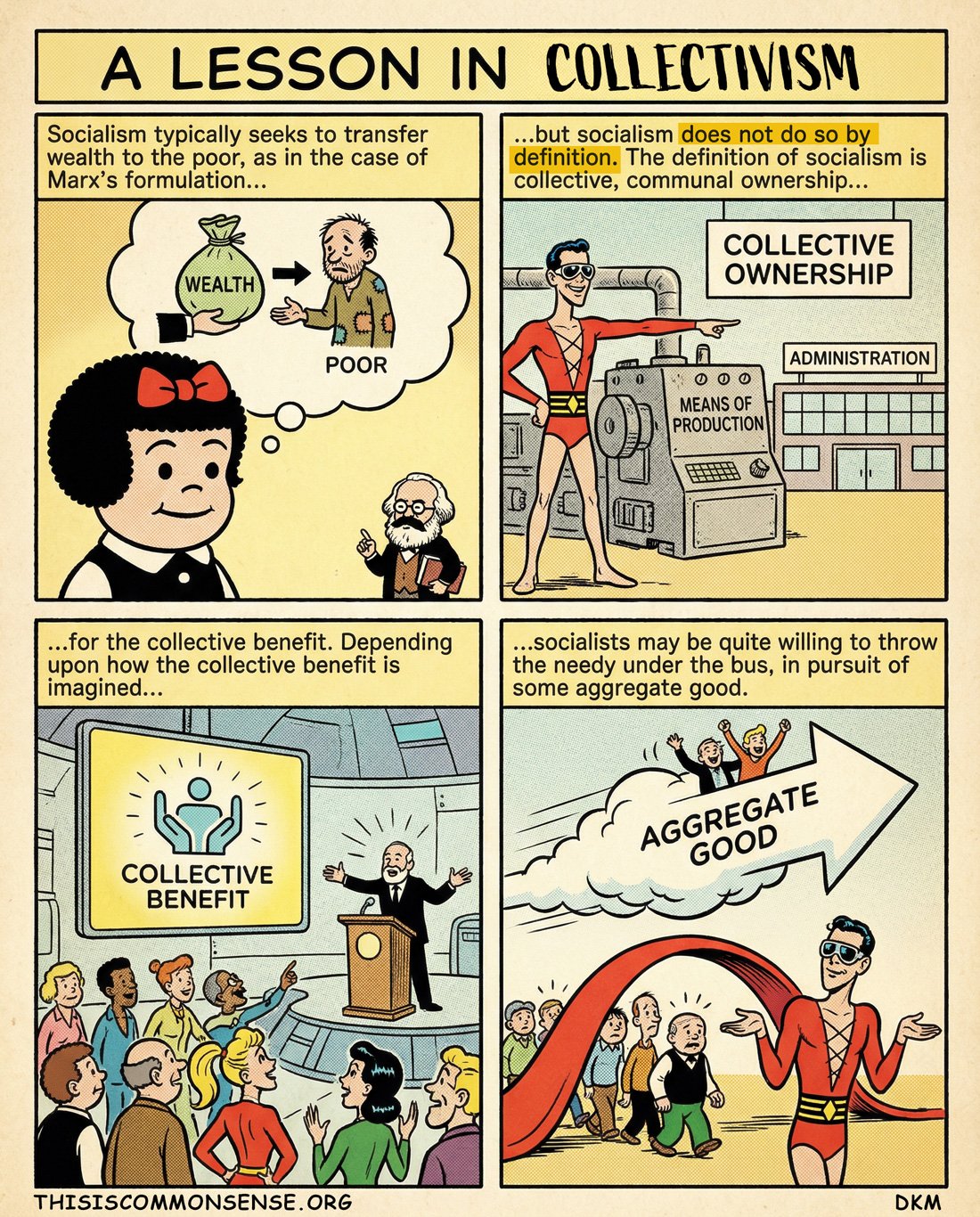
“Socialism typically seeks to transfer wealth to the poor, as in the case of Marx’s formulation; but socialism does not do so by definition. The definition of socialism is collective, communal ownership of the means of production and administration for the collective benefit. Depending upon how the collective benefit is imagined, socialists may be quite willing to throw the needy under the bus, in pursuit of some aggregate good.”
–DKM


The welfare State is a lie and the idea that the State generates wealth is also a lie. The State generates nothing; the State only destroys wealth and all it does is steal it from others to distribute it among friends.
President Javier Milei, “Tucker Carlson asks Argentina’s new president what advice he’d give to Trump, and his answer is applause-worthy,” The Rubin Report (November 22, 2023).
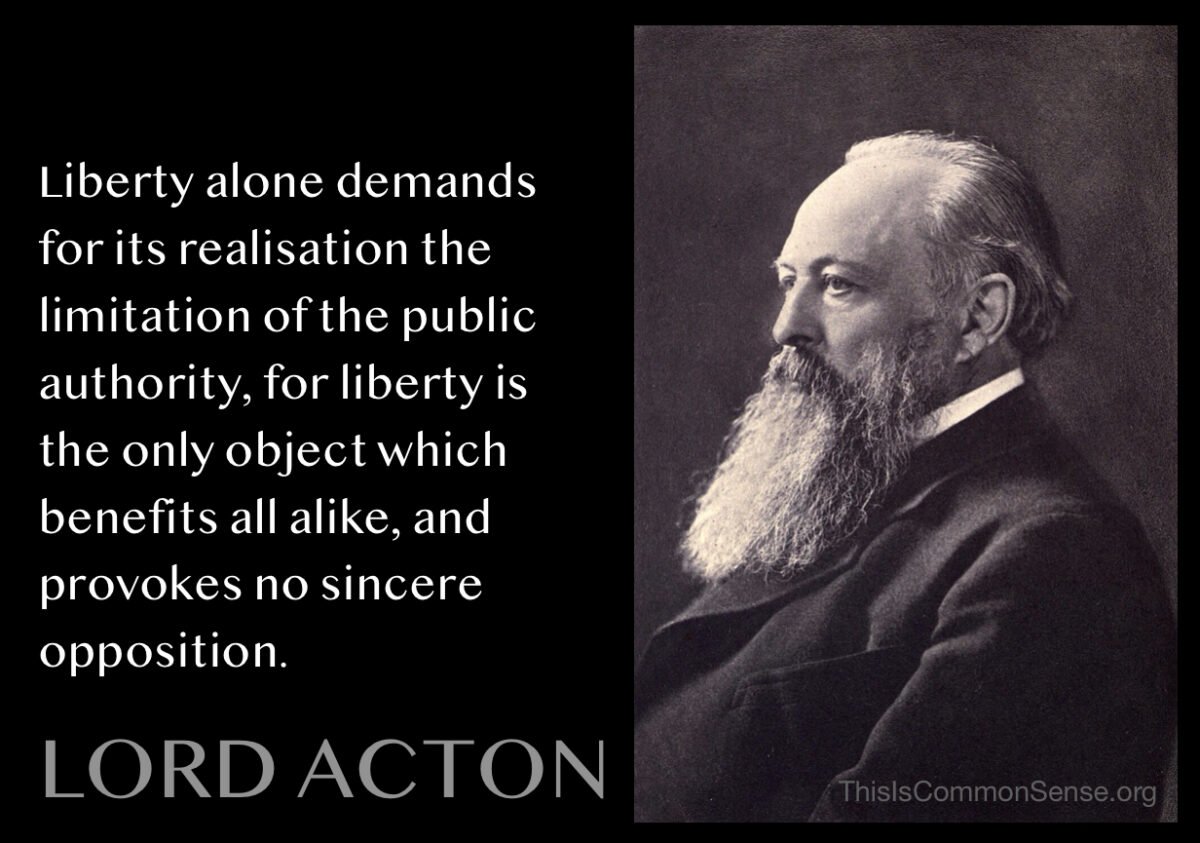
Whenever a single definite object is made the supreme end of the State, be it the advantage of a class, the safety of the power of the country, the greatest happiness of the greatest number, or the support of any speculative idea, the State becomes for the time inevitably absolute. Liberty alone demands for its realisation the limitation of the public authority, for liberty is the only object which benefits all alike, and provokes no sincere opposition.
John Emerich Edward Dalberg-Acton, 1st Baron Acton, 13th Marquess of Groppoli, “Nationality,” in Home and Foreign Review (July 1862); republished in The History of Freedom and Other Essays (1907), p. 288.
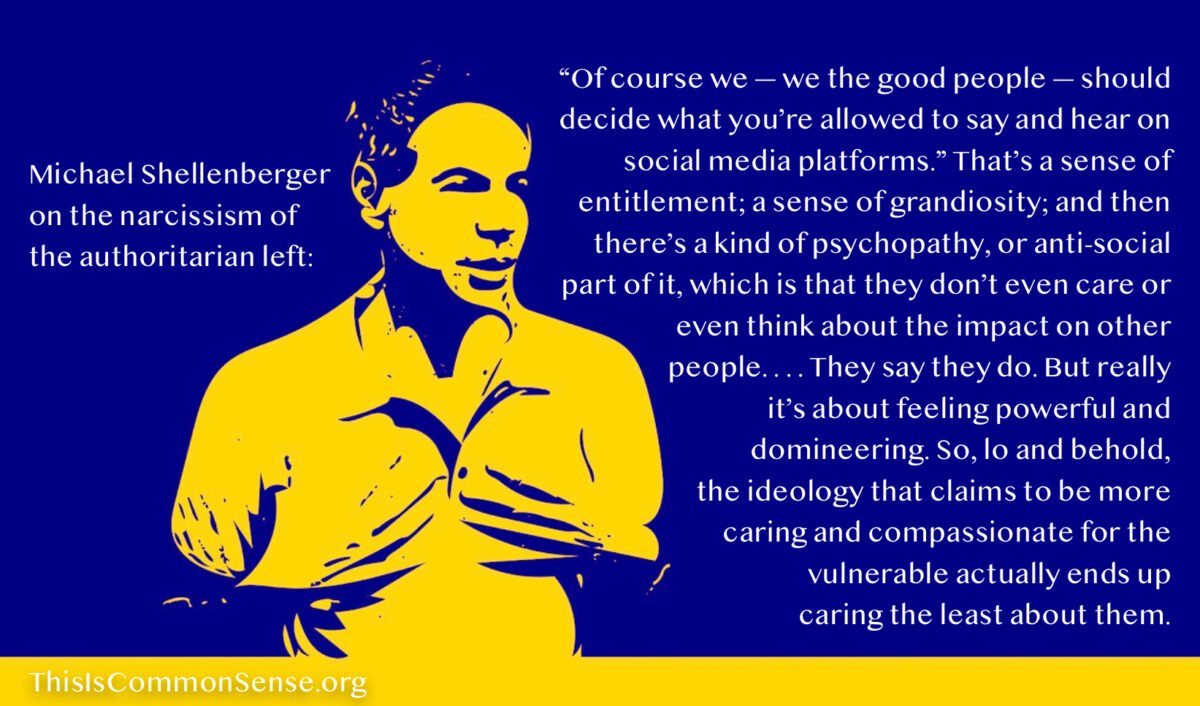
New research finds that left-wing authoritarians — people that support socialist dictators . . . people that support censorship . . . [who] think there should be a committee to decide what you should be allowed to say — that it’s almost identical with narcissism. And you can sort of see why, which is that you have a strong sense of entitlement. I see this on the censorship stuff all the time. “Of course we — we the good people — should decide what you’re allowed to say and hear on social media platforms.” That’s a sense of entitlement; a sense of grandiosity; and then there’s a kind of psychopathy, or anti-social part of it, which is that they don’t even care or even think about the impact on other people. . . . They say they do. But really it’s about feeling powerful and domineering. So, lo and behold, the ideology that claims to be more caring and compassionate for the vulnerable actually ends up caring the least about them.
Michael Shellenberger on the Winston Marshall podcast, #009, “Worst Medical Scandal in History.” 1:57 mark or thereabouts.