A journalistic purpose could be someone with a Xerox machine in a basement.
Categories
Antonin Scalia
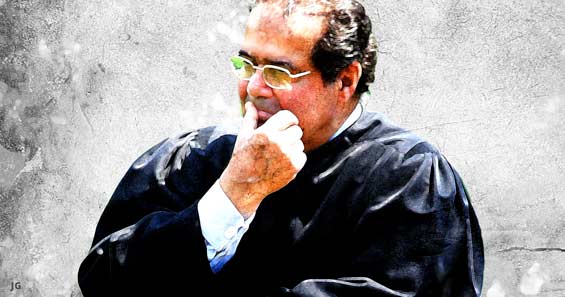
A journalistic purpose could be someone with a Xerox machine in a basement.
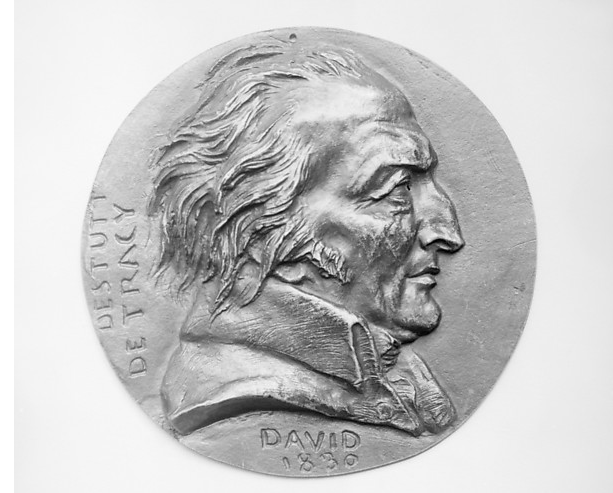
Government is a very great consumer, living not on its profits but on its revenues.
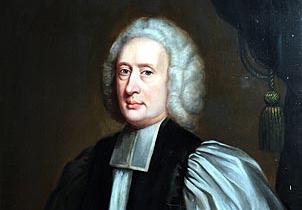
Things and actions are what they are, and the consequences of them will be what they will be: why then should we desire to be deceived?
Bishop Butler, epigraph for The Moral Economy (1909) by Ralph Barton Perry.
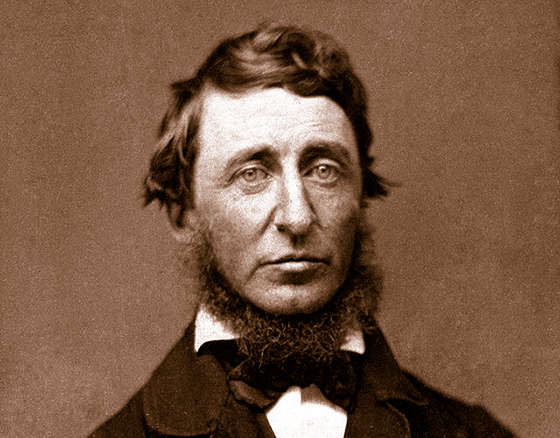
Where there is a lull of truth, an institution springs up. But the truth blows right on over it, nevertheless, and at length blows it down.
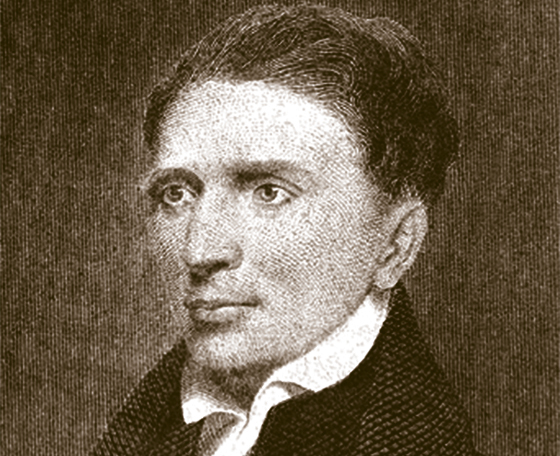
‘DO NOT GOVERN TOO MUCH,’ is a maxim which should be placed in large letters over the speaker’s chair in all legislative bodies. The old proverb, ‘too much of a good thing is good for nothing,’ is most especially applicable to the present time, when it would appear, from the course of our legislation, that common sense, common experience, and the instinct of self-preservation, are utterly insufficient for the ordinary purposes of life; that the people of the United States are not only incapable of self-government, but of taking cognizance of their individual affairs; that industry requires protection, enterprize bounties, and that no man can possibly find his way in broad day light without being tied to the apron-string of a legislative dry-nurse. The present system of our legislation seems founded on the total incapacity of mankind to take care of themselves or to exist without legislative enactment.
William Leggett, in an editorial in the Evening Post, March 11, 1835 — republished in A Collection of the Political Writings of William Leggett (1840) and titled “The Legislation of Congress”).

We live in this extraordinary age in which a butterfly flapping its wings on one side of the planet truly can create a tornado on the other—but only if the butterfly then sets up a website.
Jacky Colliss Harvey, Red: A History of the Redhead (2015).

There is a Passion natural to the Mind of man, especially a free Man, which renders him impatient of Restraint.
George Mason, Letter to the Committee of Merchants in London (June 6, 1766).
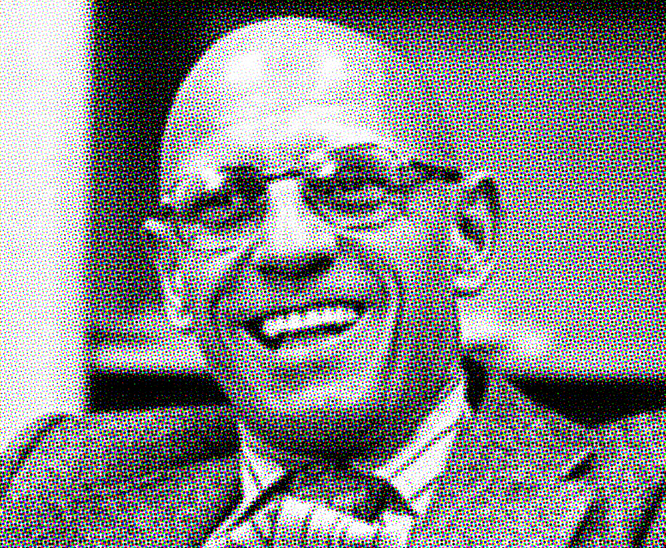
Michel Foucault, “Power, Moral Values, and the Intellectual,” interview in History of the Present 4 (Spring 1988).
Sometimes, because my position has not been made clear enough, people think I’m a sort of radical anarchist who has an absolute hatred of power. No! What I am trying to do is to approach this extremely important and tangled phenomenon in our society, the exercise of power, with the most reflective, and I would say prudent attitude. Prudent in my analysis, in the moral and theoretical postulates I use: I try to figure out what’s at stake. But to question the relations of power in the most scrupulous and attentive manner possible, looking into all the domains of its exercise, that’s not the same thing as constructing a mythology of power as the beast of the apocalypse.
In all our associations; in all our agreements let us never lose sight of this fundamental maxim — that all power was originally lodged in, and consequently is derived from, the people.
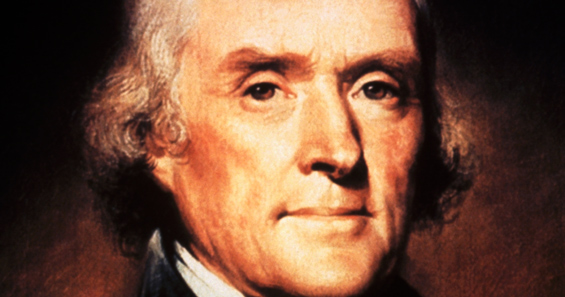
When in the course of human events it becomes necessary for a people to advance from that subordination in which they have hitherto remained, & to assume among the powers of the earth the equal & independant station to which the laws of nature & of nature’s god entitle them, a decent respect to the opinions of mankind requires that they should declare the causes which impel them to the change.
We hold these truths to be sacred & undeniable; that all men are created equal & independant, that from that equal creation they derive rights inherent & inalienable, among which are the preservation of life, & liberty, & the pursuit of happiness; that to secure these ends, governments are instituted among men, deriving their just powers from the consent of the governed; that whenever any form of government shall become destructive of these ends, it is the right of the people to alter or to abolish it, & to institute new government, laying it’s foundation on such principles & organising it’s powers in such form, as to them shall seem most likely to effect their safety & happiness. prudence indeed will dictate that governments long established should not be changed for light & transient causes: and accordingly all experience hath shewn that mankind are more disposed to suffer while evils are sufferable, than to right themselves by abolishing the forms to which they are accustomed. but when a long train of abuses & usurpations, begun at a distinguished period, & pursuing invariably the same object, evinces a design to subject them to arbitrary power, it is their right, it is their duty, to throw off such government & to provide new guards for their future security. such has been the patient sufferance of these colonies; & such is now the necessity which constrains them to expunge their former systems of government. the history of his present majesty, is a history of unremitting injuries and usurpations, among which no one fact stands single or solitary to contradict the uniform tenor of the rest, all of which have in direct object the establishment of an absolute tyranny over these states. to prove this, let facts be submitted to a candid world, for the truth of which we pledge a faith yet unsullied by falsehood.
Thomas Jefferson, original draft of the Declaration of Independence of the United States, as reconstructed by Prof. Julian Boyd, opening (July 1776). This draft was then edited by the Committee of Five, which submitted it to Congress for further emendation as well as for approval.