Categories
Thought

Arthur Latham Perry

What is called the Progress of Civilization has been marked and conditioned at every step by an extension of the opportunities, a greater facility in the use of the means, a more eager searching for proper expedients, and a higher certainty in the securing of the returns, of mutual exchanges among men.

Categories
Thought

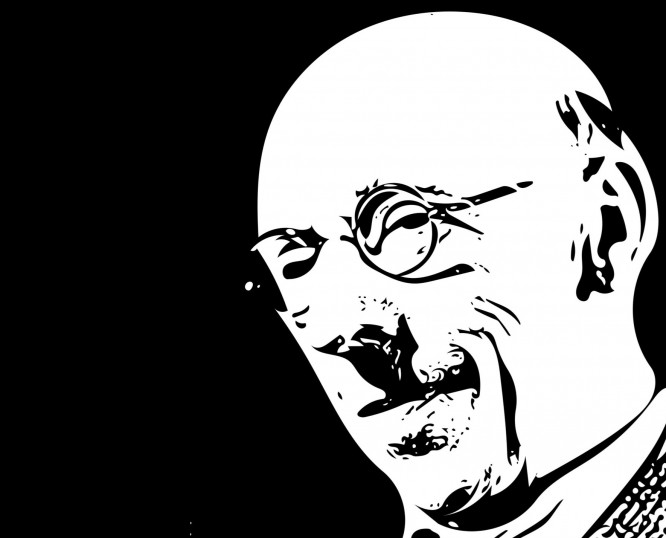
Yves Guyot

The effect of a protective duty on any commodity is to raise the price, not only of the amount imported, but of the whole quantity sold in the country; it is a private tax placed upon consumers for the benefit of producers.

Yves Guyot (September 6, 1843 – February 22, 1928) was a French politician and economist.
Categories
Thought

Walter Bagehot

The great difficulty which history records is not that of the first step, but that of the second step. What is most evident is not the difficulty of getting a fixed law, but getting out of a fixed law; not of cementing (as upon a former occasion phrased it) a cake of custom, but of breaking the cake of custom; not of making the first preservative habit, but of breaking through it, and reaching something better.

Walter Bagehot, Physics and Politics (1872).
Categories
Thought

Gustave de Molinari

Man experiences a multitude of needs, on whose satisfaction his happiness depends, and whose non-satisfaction entails suffering. Alone and isolated, he could only provide in an incomplete, insufficient manner for these incessant needs. The instinct of sociability brings him together with similar persons, and drives him into communication with them. Therefore, impelled by the self-interest of the individuals thus brought together, a certain division of labor is established, necessarily followed by exchanges. In brief, we see an organization emerge, by means of which man can more completely satisfy his needs than he could living in isolation. This natural organization is called society.
The object of society is therefore the most complete satisfaction of man’s needs. The division of labor and exchange are the means by which this is accomplished.

Gustave de Molinari, “The Production of Security” (1849; J. Huston McCulloch, trans., 1977).

Categories
Thought

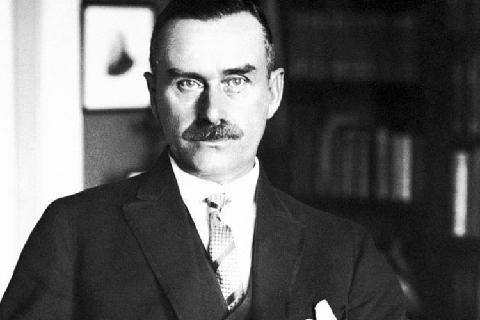
Thomas Mann

This fantastic state of mind, of a humanity that has outrun its ideas, is matched by a political scene in the grotesque style, with Salvation Army methods, hallelujahs and bell-ringing and dervishlike repetition of monotonous catchwords, until everybody foams at the mouth. Fanaticism turns into a means of salvation, enthusiasm into epileptic ecstasy, politics becomes an opiate for the masses, a proletarian eschatology; and reason veils her face.

On German fascism, in “An Appeal to Reason” [“Deutsche Ansprache. Ein Appell an die Vernunft”] in Berliner Tageblatt (18 October 1930); as translated by Helen T. Lowe-Porter in Order of the Day, Political Essays and Speeches of Two Decades (1942), p. 57
Categories
Thought

Zora Neal Hurston

It is no longer profitable, with few exceptions, to ask people what they think, for you will be told what they wish, instead.

Zora Neal Hurston, Dust Tracks on a Road (1942), p. 257, as quoted by Don Boudreaux at Cafe Hayek.
Categories
Thought

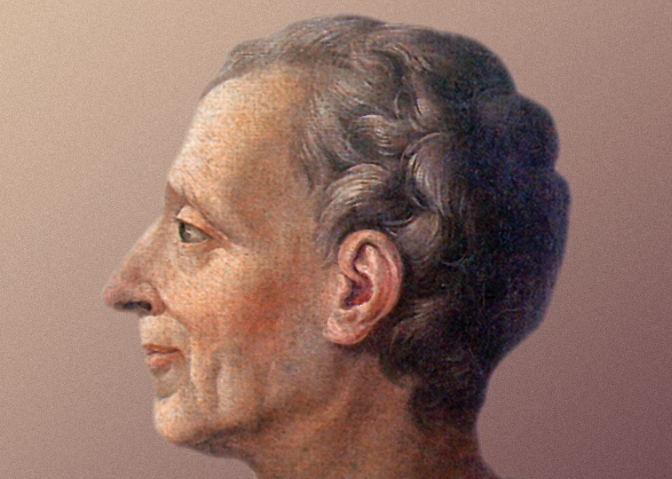
Montesquieu

Democratic and aristocratic states are not in their own nature free. Political liberty is to be found only in moderate governments; and even in these it is not always found. It is there only when there is no abuse of power. But constant experience shows us that every man invested with power is apt to abuse it, and to carry his authority as far as it will go. Is it not strange, though true, to say that virtue itself has need of limits?

To prevent this abuse, it is necessary from the very nature of things that power should be a check to power. A government may be so constituted, as no man shall be compelled to do things to which the law does not oblige him, nor forced to abstain from things which the law permits.

Charles de Secondat, Baron de Montesquieu, The Spirit of the Laws (De l’esprit des loix; 1748), Book XI, “Of the Laws Which Establish Political Liberty, with Regard to the Constitution.”
Categories
Thought

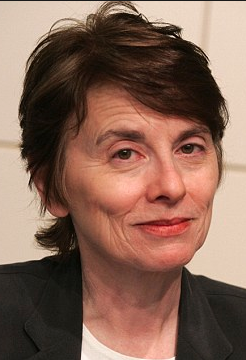
Camille Paglia

Society is a system of inherited forms reducing our humiliating passivity to nature. We may alter these forms, slowly or suddenly, but no change in society will change nature.

Camille Paglia, Sexual Personae: Art and Decadence from Nefertiti to Emily Dickinson, p. 1.
Categories
Thought

Charles Ives

There is a moral in the ‘Nominalist and Realist’ that will prove all sums. It runs something like this: No matter how sincere and confidential men are in trying to know or assuming that they do know each other’s mood and habits of thought, the net result leaves a feeling that all is left unsaid; for the reason of their incapacity to know each other, though they use the same words. They go on from one explanation to another but things seem to stand about as they did in the beginning ‘because of that vicious assumption.’ But we would rather believe that music is beyond any analogy to word language and that the time is coming, but not in our lifetime, when it will develop possibilities unconceivable now, — a language, so transcendent, that its heights and depths will be common to all mankind.


Charles Ives, in Essays Before a Sonata (1920).