Categories
Thought

Robert Nozick

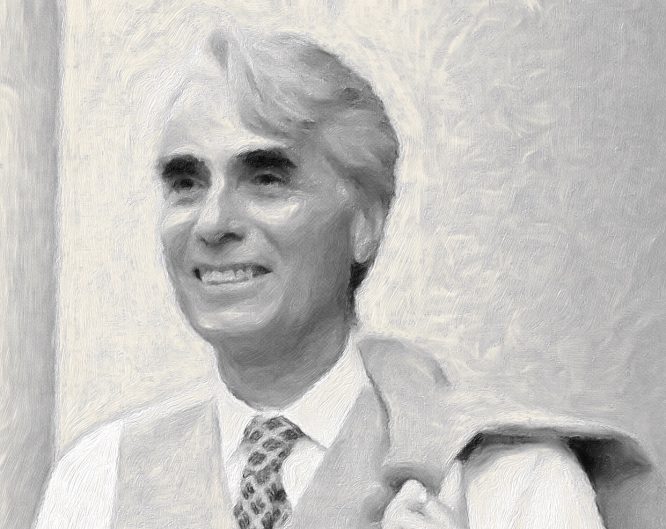
From the beginnings of recorded thought, intellectuals have told us their activity is most valuable. Plato valued the rational faculty above courage and the appetites and deemed that philosophers should rule; Aristotle held that intellectual contemplation was the highest activity. It is not surprising that surviving texts record this high evaluation of intellectual activity. The people who formulated evaluations, who wrote them down with reasons to back them up, were intellectuals, after all. They were praising themselves. Those who valued other things more than thinking things through with words, whether hunting or power or uninterrupted sensual pleasure, did not bother to leave enduring written records. Only the intellectual worked out a theory of who was best.

Robert Nozick, “Why Do Intellectuals Oppose Capitalism?Cato Policy Report January/February 1998
Categories
Thought

H. L. Mencken

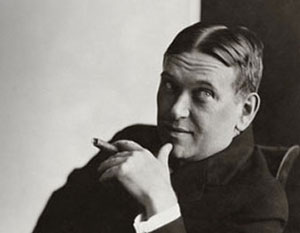
To die for an idea; it is unquestionably noble. But how much nobler it would be if men died for ideas that were true!

H. L. Mencken, Prejudices: First Series (1919)
Categories
Thought

Robert Nozick

Though not part of the official curricula, in the schools the intellectuals learned the lessons of their own greater value in comparison with the others, and of how this greater value entitled them to greater rewards.

The wider market society, however, taught a different lesson. There the greatest rewards did not go to the verbally brightest. There the intellectual skills were not most highly valued. Schooled in the lesson that they were most valuable, the most deserving of reward, the most entitled to reward, how could the intellectuals, by and large, fail to resent the capitalist society which deprived them of the just deserts to which their superiority “entitled” them? Is it surprising that what the schooled intellectuals felt for capitalist society was a deep and sullen animus that, although clothed with various publicly appropriate reasons, continued even when those particular reasons were shown to be inadequate?

Robert Nozick, “Why Do Intellectuals Oppose Capitalism?Cato Policy Report January/February 1998
Categories
Thought

H. L. Mencken

All successful newspapers are ceaselessly querulous and bellicose. They never defend anyone or anything if they can help it; if the job is forced on them, they tackle it by denouncing someone or something else.

H. L. Mencken, Prejudices: First Series (1919), Ch. 13
Categories
Thought

Matt Taibbi

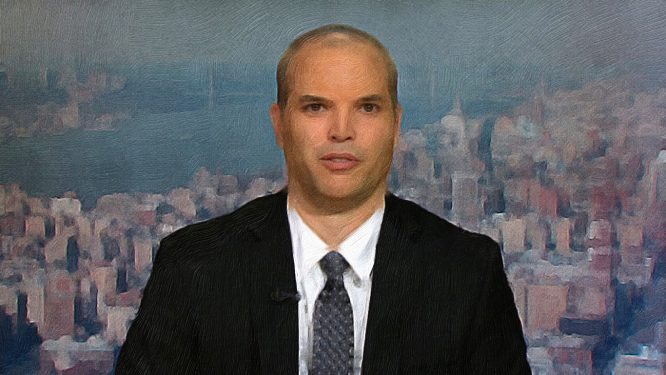
Stories have been coming out for some time now hinting Mueller’s final report might leave audiences “disappointed,” as if a President not being a foreign spy could somehow be bad news. 

Openly using such language has, all along, been an indictment. Imagine how tone-deaf you’d have to be to not realize it makes you look bad, when news does not match audience expectations you raised. To be unaware of this is mind-boggling, the journalistic equivalent of walking outside without pants. 

There will be people protesting: the Mueller report doesn’t prove anything! What about the 37 indictments? The convictions? The Trump tower revelations? The lies! The meeting with Don, Jr.? The financial matters!There’s an ongoing grand jury investigation, and possible sealed indictments, and the House will still investigate, and . . .

Stop. Just stop. Any journalist who goes there is making it worse.

Matt Taibbi, “It’s official: Russiagate is this generation’s WMD” (March 23, 2019)

Categories
Thought

John Adams

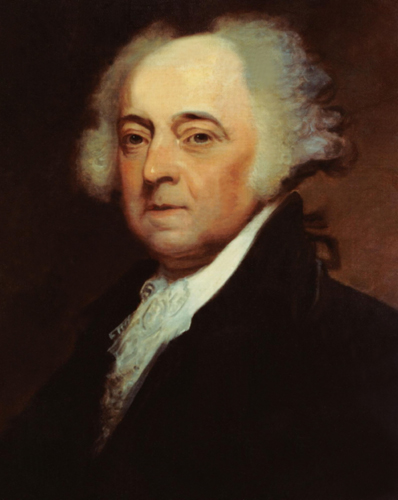
When people talk of the Freedom of Writing, Speaking, or thinking, I cannot choose but laugh. No such thing ever existed. No such thing now exists; but I hope it will exist. But it must be hundreds of years after you and I shall write and speak no more.

John Adams to Thomas Jefferson (July 15, 1817)
Categories
Thought

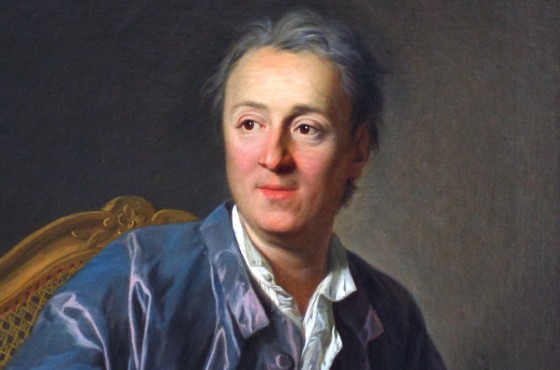
Denis Diderot

Aucun homme n’a recu de la nature le droit de commander aux autres. La liberté est un présent du ciel, et chaque individu de la meme espèce a le droit d’en jouir aussitòt qu’il jouit de la raison.

No man has received from nature the right to give orders to others. Freedom is a gift from heaven, and every individual of the same species has the right to enjoy it as soon as he is in enjoyment of his reason.

Denis Diderot, L’Encyclopédie (1751-1766), Political Authority, Vol. 1, (1751) as quoted in Selected Writings (1966) edited by Lester G. Crocker.
Categories
Thought

Herbert Spencer

A stronger affection to be displayed by child for parent in later life, must be established by a closer intimacy between parent and child in early life. . . . When the minds of children are no longer stunted and deformed by the mechanical lessons of stupid teachers — when instruction, instead of giving mutual pain gives mutual pleasure, by ministering in proper order to faculties which are eager to appropriate fit conceptions presented in fit forms — when among adults wide-spread knowledge is joined with rational ideas of teaching, at the same time that in the young there is an easy unfolding of the mind such as is even now shown by exceptional facility of acquisition — when the earlier stages of education passed through in the domestic circle have come to yield, as they will in ways scarcely dreamed of at present, daily occasions for the strengthening of sympathy, intellectual and moral, then will the latter days of life be smoothed by a greater filial care, reciprocating the greater parental care bestowed in earlier life.

Herbert Spencer, Principles of Sociology, Vol. I, Part III: Domestic Institutions, from the concluding paragraph (1898).
Categories
Thought

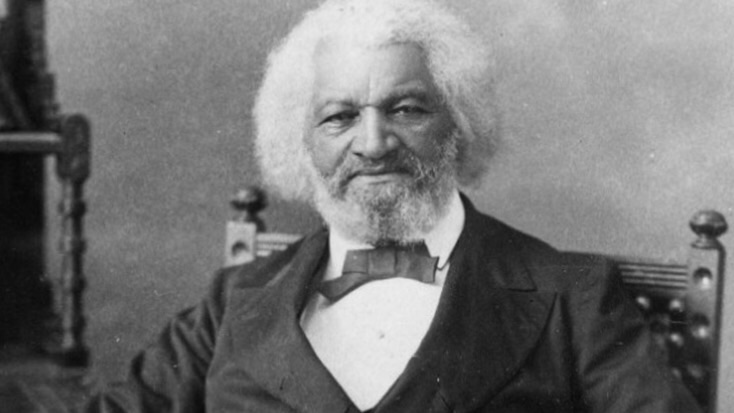
Frederick Douglass

To suppress free speech is a double wrong. It violates the rights of the hearer as well as those of the speaker.

Categories
Thought

Harriet Beecher Stowe

What makes saintliness in my view, as distinguished from ordinary goodness, is a certain quality of magnanimity and greatness of soul that brings life within the circle of the heroic.

Harriet Beecher Stowe, “The Cathedral,” The Atlantic Monthly (1846).