The end move in politics is always to pick up a gun.
Categories
The end move in politics is always to pick up a gun.
As long as I don’t write about the government, religion, politics, and other institutions, I am free to print anything.
Once the truth is denied to human beings, it is pure illusion to try to set them free. Truth and freedom either go together hand in hand or together they perish in misery.
Pope John Paul II, Encyclical Fides et Ratio (September 14, 1998).
It’s a question of who you going to believe: your lying eyes or the government?
Former Federal Aviation Administration investigator John Callahan, who, as part of an international panel of two dozen former pilots and government officials convened at a National Press Club conference, “said the CIA in 1987 tried to hush up the sighting of a huge lighted ball four times the size of a jumbo jet in Alaska” [Reuters, Former pilots and officials call for new U.S. UFO probe,” November 12, 2007].
Useless laws weaken the necessary laws.
Charles de Secondat, Baron de Montesquieu, De l’esprit des lois (The Spirit of Laws,1748), Book XXIX: Of the Manner of Composing Laws, Ch. 16: Things to be Observed in the Composing of Laws.

The thesis of etatism that the members of the government and its assistants are more intelligent than the people, and that they know better what is good for the individual than he himself knows, is pure nonsense. The Führers and the Duces are neither God nor God’s vicars.
Ludwig von Mises explaining “statism” in Omnipotent Government: The Rise of the Total State and Total War (1944).

Despite the heated disagreements between economists on just about every issue under the sun, there is probably one point that they are all actually unanimous on. That is the fact that every policy has winners and losers. Given that human wants are infinite but our means towards attaining those wants are limited, policies, by their nature, advantage some groups at the expense of others.
Antony Sammeroff, “Universal Basic Income: A Dream Come True for Despots,” Mises Wire (January 11, 2020).
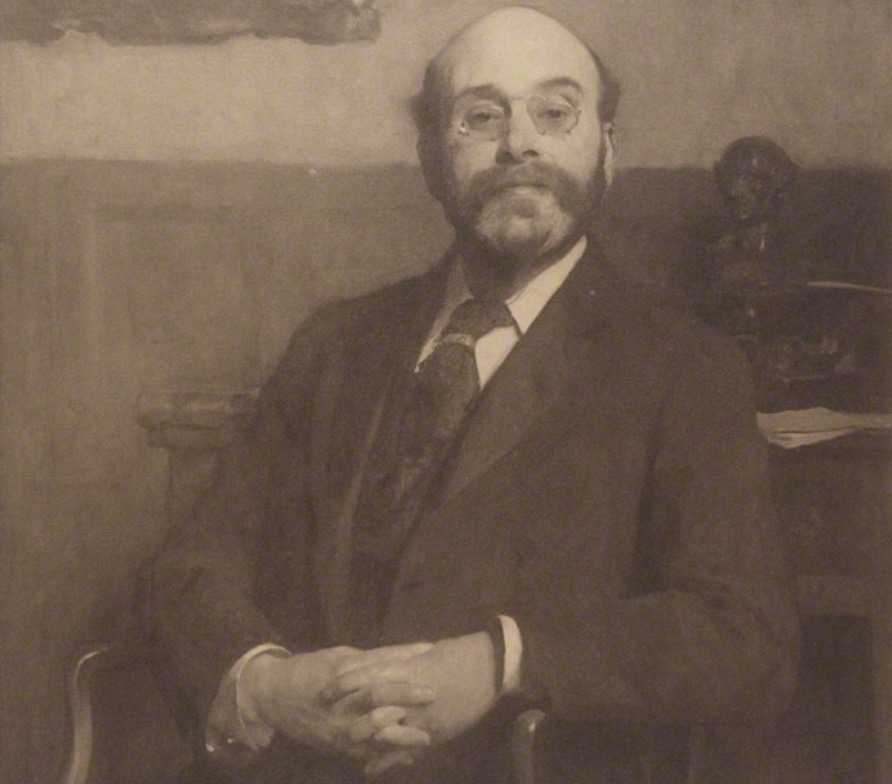
Individualism . . . means neither egotism nor isolation. It means voluntary beneficence and public spirit, as against all attempts to enforce these by penal laws. It means voluntary cooperation as contrasted with the forced cooperation of the State.
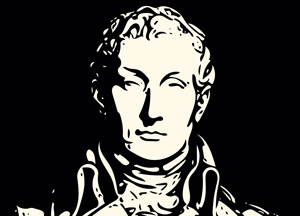
When time and labor had developed riches, cupidity restrained by the laws, became more artful, but not less active. Under the mask of union and civil peace, it fomented in the bosom of every state an intestine war, in which the citizens, divided into contending corps of orders, classes, families, unremittingly struggled to appropriate to themselves, under the name of supreme power, the ability to plunder every thing, and render every thing subservient to the dictates of their passions; and this spirit of encroachment, disguised under all possible forms, but always the same in its object and motives, has never ceased to torment the nations.
The most important event in the history of the last hundred years is the displacement of liberalism by etatism. Etatism appears in two forms: socialism and interventionism. Both have in common the goal of subordinating the individual unconditionally to the state, the social apparatus of compulsion and coercion. . . .
Ludwig von Mises defining “statism” in Omnipotent Government: The Rise of the Total State and Total War (1944).
Etatism assigns to the state the task of guiding the citizens and of holding them in tutelage. It aims at restricting the individual’s freedom to act. It seeks to mold his destiny and to vest all initiative in the government alone.