William J. Locke, The Morals of Marcus Ordeyne (1905), p. 50.
Truth is the enfant terrible of the Virtues.
Categories
William J. Locke
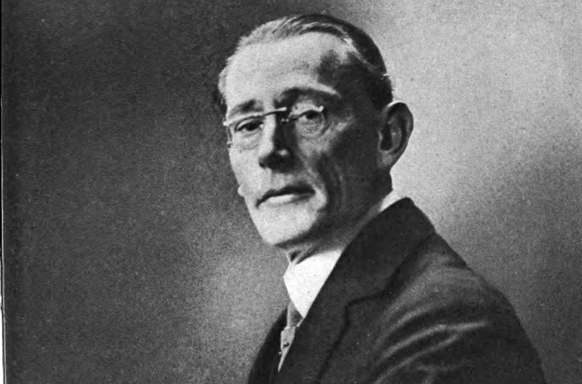
William J. Locke, The Morals of Marcus Ordeyne (1905), p. 50.
Truth is the enfant terrible of the Virtues.

There is what I call the American idea. I so name it, because it seems to me to lie at the basis of all our truly original, distinctive, and American institutions. It is itself a complex idea, composed of three subordinate and more simple ideas, namely: The idea that all men have unalienable rights; that in respect thereof, all men are created equal; and that government is to be established and sustained for the purpose of giving every man an opportunity for the enjoyment and development of all these unalienable rights. This idea demands, as the proximate organization thereof, a democracy, that is, a government of all the people, by all the people, for all the people; of course, a government after the principles of eternal justice, the unchanging law of God; for shortness’ sake, I will call it the idea of Freedom.
Theodore Parker, “The American Idea,” a speech at New England Anti-Slavery Convention, Boston (May 29, 1850)
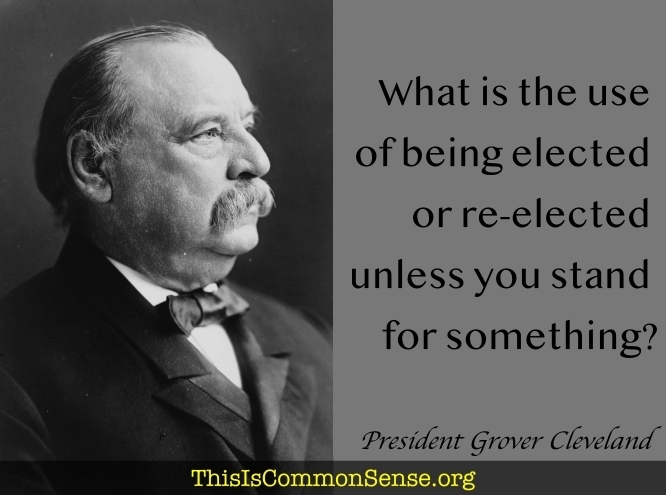
What is the use of being elected or re-elected unless you stand for something?

I sought for the greatness and genius of America in her commodious harbors and her ample rivers — and it was not there. . . . . in her fertile fields and boundless forests — and it was not there. . . . . in her rich mines and her vast world commerce — and it was not there. . . . in her democratic Congress and her matchless Constitution—and it was not there. Not until I went into the churches of America and heard her pulpits flame with righteousness did I understand the secret of her genius and power. America is great because she is good, and if America ever ceases to be good, she will cease to be great.
Rev. John McDowell, from a sermon quoted in a 1922 letter to the Herald and Presbyter (vol. 93, no. 36, p. 8). McDowell misattributed it to Alexis de Tocqueville, in Democracy in America, and it has widely been mis-cited since.
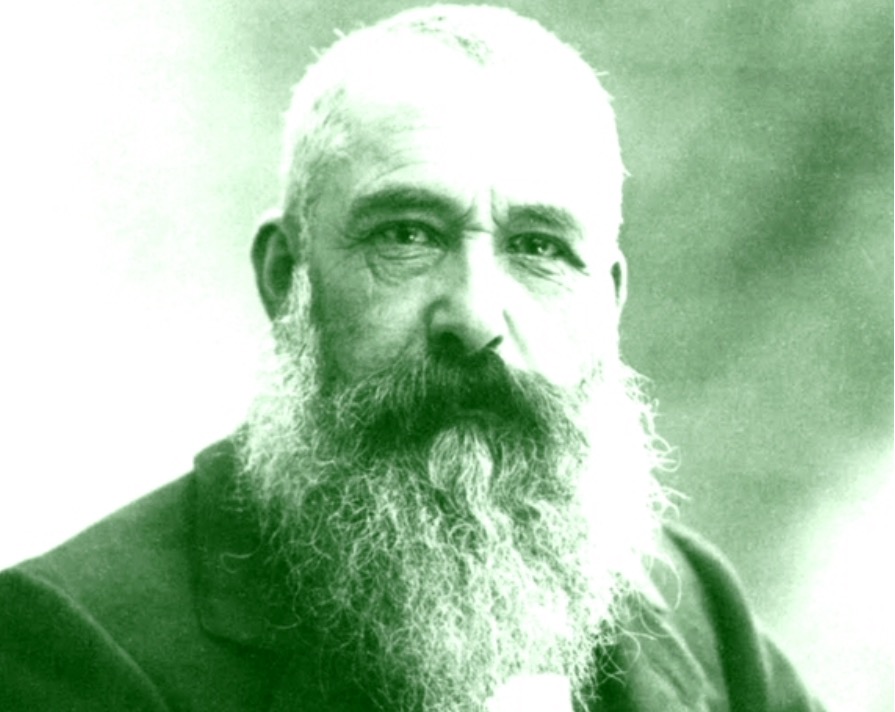
Louis Baudin, A Socialist Empire: The Incas of Peru.
It is incumbent upon us to take action if we do not wish to become the subjects of a new Inca empire.
Götz Aly, Hitler’s Beneficiaries: Plunder, Racial War, and the Nazi Welfare State (2005), Jefferson Chase, trans., p. 41.
Another major source of stop-gap revenues to fund Hitler’s popular tax and rearmament policies was Germany’s — and later much of Europe’s — Jewish population. By late 1937, civil servants in the Finance Ministry had pushed the state’s credit limit as far as it would go. Forced to come up with ever more creative ways of refinancing the national debt, they urged their attention to property owned by German Jews, which was soon confiscated and added to the so-called Volksvermögen, or the collective assets of the German people.
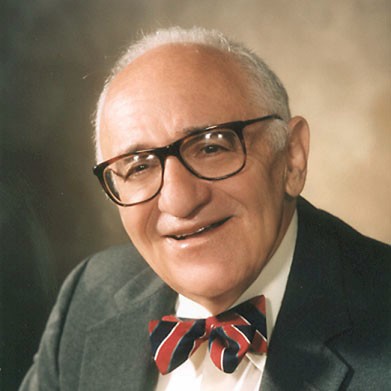
When we see that the most ardent advocates of the minimum wage law have been the AFL-CIO, and that the concrete effect of the minimum wage laws has been to cripple the low-wage competition of the marginal workers as against higher-wage workers with union seniority, the true motivation of the agitation for the minimum wage becomes apparent.
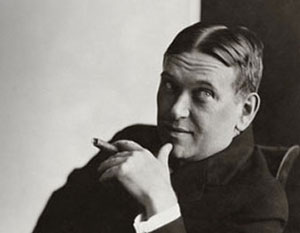
One horse-laugh is worth ten thousand syllogisms. It is not only more effective; it is also vastly more intelligent.
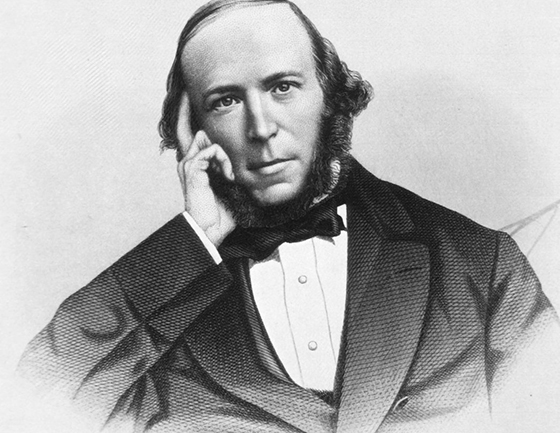
Whoever hesitates to utter that which he thinks the highest truth, lest it should be too much in advance of the time, may reassure himself by looking at his acts from an impersonal point of view. Let him duly realize the fact that opinion is the agency through which character adapts external arrangements to itself—that his opinion rightly forms part of this agency—is a unit of force, constituting, with other such units, the general power which works out social changes; and he will perceive that he may properly give full utterance to his innermost conviction: leaving it to produce what effect it may. It is not for nothing that he has in him these sympathies with some principles and repugnance to others. He, with all his capacities, and aspirations, and beliefs, is not an accident, but a product of the time. He must remember that while he is a descendant of the past, he is a parent of the future; and that his thoughts are as children born to him, which he may not carelessly let die.
Herbert Spencer, from the last page of “The Unknowable,” Part One of First Principles, Second Edition (1867).
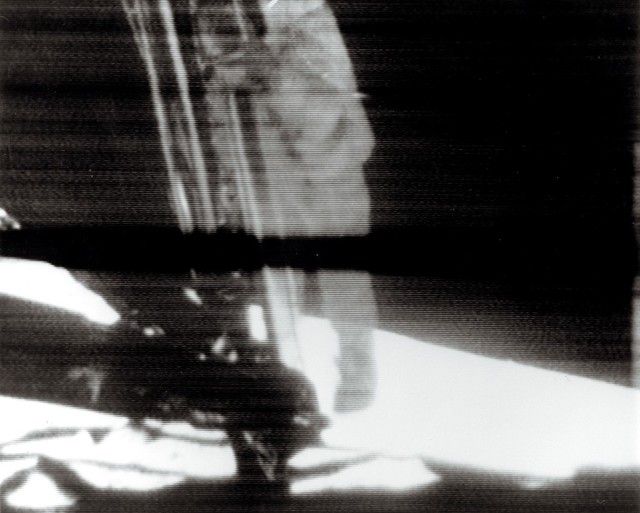
That’s one small step for [a] man, one giant leap for mankind.
What the Apollo 11 astronaut said as he set foot upon the lunar surface on July 21, 1969. The sentence is self-contradictory as CBS news anchor Walter Cronkite heard it and repeated it on air, without the indefinite article — “man,” unmodified, in this context means “mankind” — but Armstrong had indeed intended to say it with the article, so making his announcement sensible and even profound; it is also what he probably did actually say, but was garbled in the transmission to Earth.