Categories
Thought

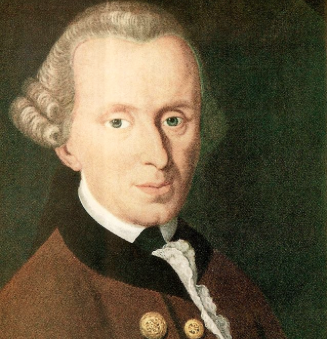
Immanuel Kant

The civil state regarded purely as a lawful state, is based on the following a priori principles:

  • The freedom of every member of society as a human being.
  • The equality of each with all the others as a subject.
  • The independence of each member of a commonwealth as a citizen.

These principles are not so much laws given by an already established state, as laws by which a state can alone be established in accordance with pure rational principles of external human right.

Immanuel Kant, Theory and Practice (1791)
Categories
Thought

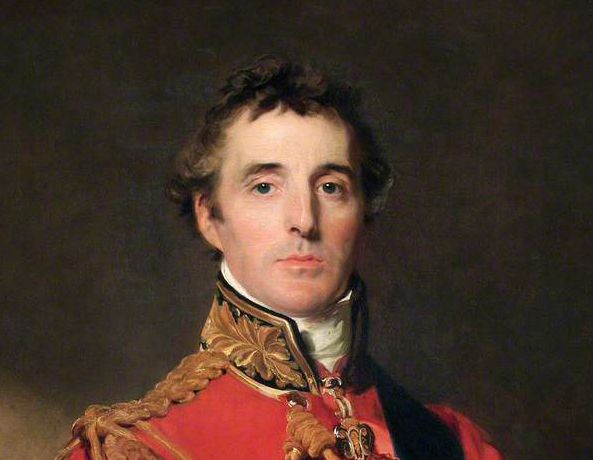
Wellington

All the business of war, and indeed all the business of life, is to endeavour to find out what you don’t know by what you do; that’s what I called ‘guessing what was at the other side of the hill.’

Arthur Wellesley, 1st Duke of Wellington

Categories
Thought

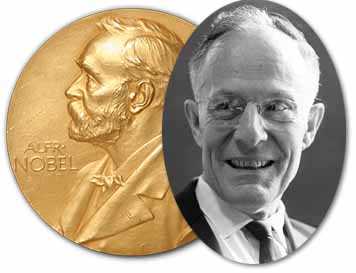
Theodore W. Schultz

Whereas the governments of some low-income countries are improving their economics policies, in the United States the proliferation of political movements that view economics with disdain, along with apparent general public support for government market interventions, are in considerable measure contributing to the decline in the performance of the U.S. economy.

Theodore W. Schultz, Investing in People: The Economics of Population Quality (1981), p. 143-4

Categories
Thought

Frédéric Passy

There are people who think the natives of Dahomey very barbarous, because, on the accession of a king, they believe it well to sail a little vessel in human blood in order to tell the fortunes of the new monarch. Now the blood of a thousand slaves is enough for the purpose, whilst in our so-called civilized countries, the great powers, for prestige, or power, or revenge, will shed the blood, not of a thousand, but of 10,000, of 500,000, of millions of persons, enough to make bloody the mightiest river of Europe or America. And yet we dare to treat as barbarians the people of Dahomey.

Frédéric Passy, from a speech promoted widely in its day (late 19th century) by The Peace and Arbitration Society.

Categories
Thought

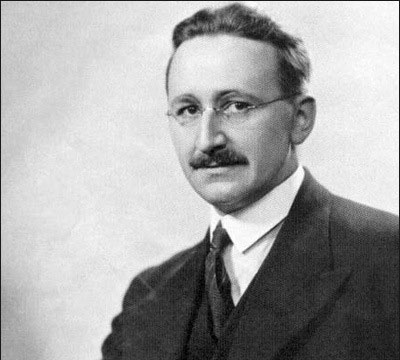
F. A. Hayek

All economic activity is carried out through time. Every individual economic process occupies a certain time, and all linkages between economic processes necessarily involve longer or shorter periods of time.

F. A. Hayek, “Intertemporal Price Equilibrium and Movement in the Value of Money” (1928)
Categories
Thought

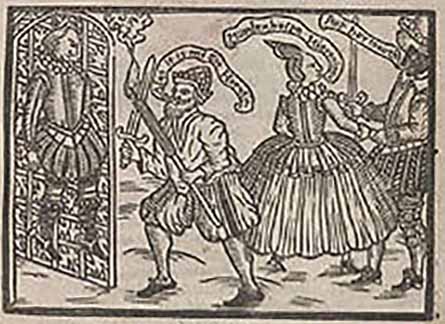
Thomas Kyd

Oh eyes, no eyes, but fountains fraught with tears;
Oh life, no life, but lively form of death;
Oh world, no world, but mass of public wrongs,
Confused and filled with murder and misdeeds.”

Thomas Kyd, The Spanish Tragedy (1592)

Categories
Thought

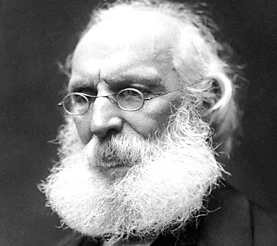
Simon Newcomb

Scientific method consists in applying to those subjects which lie without the range of our immediate experience those same common-sense methods of reasoning which successful men of the world apply in judging of matters which concern their own interests.

Simon Newcomb, Principles of Political Economy, 1886, chapter III, “Of Scientific Method”

Categories
Thought

Barbara Jordan

Do not call for black power or green power. Call for brain power.

Categories
Thought

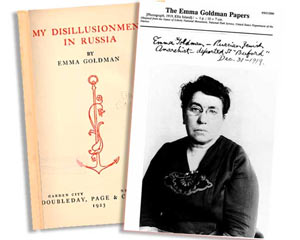
Emma Goldman

To-day is the parent of to-morrow. The present casts its shadow far into the future. That is the law of life, individual and social. Revolution that divests itself of ethical values thereby lays the foundation of injustice, deceit, and oppression for the future society. The means used to prepare the future become its cornerstone.

Emma Goldman, My Disillusionment in Russia (1925).

Categories
Thought

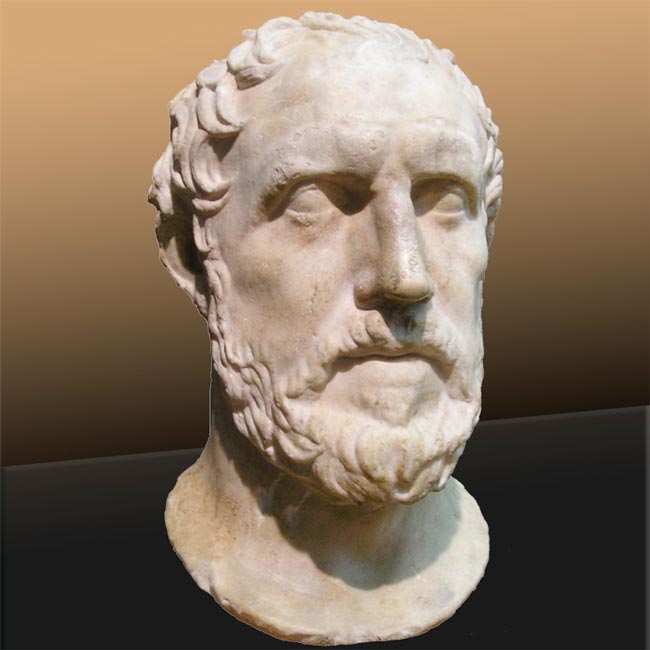
Thucydides

When one is deprived of one’s liberty, one is right in blaming not so much the man who puts the shackles on as the one who had the power to prevent him, but did not use it.

Thucydides, The History of the Peloponnesian War, Book 1, 69.