Fear of danger is ten thousand times more terrifying than danger itself.
Daniel Defoe, Robinson Crusoe (1719), Ch. 11, “Finds Print of Man’s Foot on the Sand.”
Categories
Daniel Defoe

Fear of danger is ten thousand times more terrifying than danger itself.
Daniel Defoe, Robinson Crusoe (1719), Ch. 11, “Finds Print of Man’s Foot on the Sand.”

Envy thou not the oppressor, and choose none of his ways.
Proverbs 3:31, King James Version.
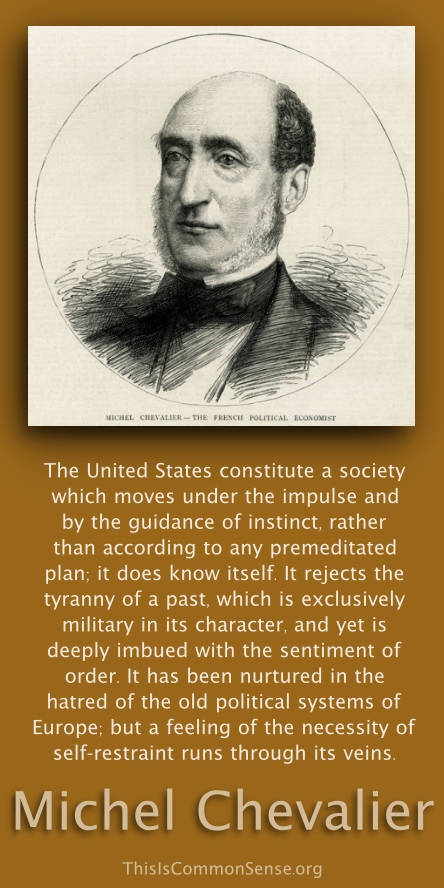
The United States constitute a society which moves under the impulse and by the guidance of instinct, rather than according to any premeditated plan; it does know itself. It rejects the tyranny of a past, which is exclusively military in its character, and yet is deeply imbued with the sentiment of order. It has been nurtured in the hatred of the old political systems of Europe; but a feeling of the necessity of self-restraint runs through its veins. It is divided between its instinctive perceptions of the future and its aversion to the past; between its thirst after freedom, and its hunger for social order; between its religious veneration of experience, and its horror of the violence of past ages.
Michel Chevalier, Society, Manners and Politics in the United States Being a Series of Letters on North America (translated from the Third Edition, 1839), p. 333.
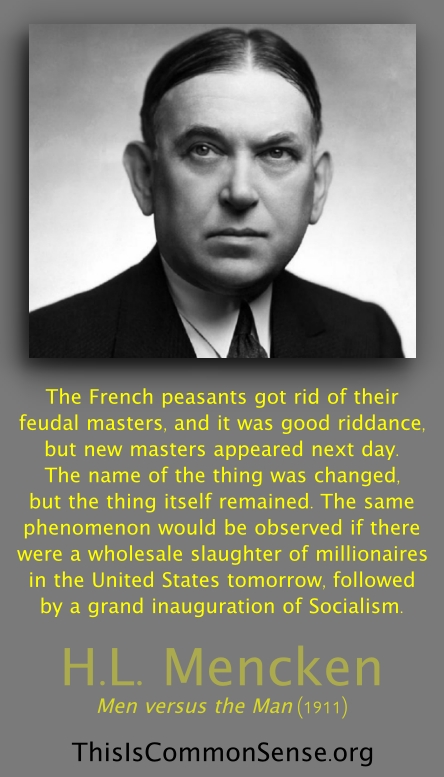
The French peasants got rid of their feudal masters, and it was good riddance, but new masters appeared next day. The name of the thing was changed, but the thing itself remained. The same phenomenon would be observed if there were a wholesale slaughter of millionaires in the United States tomorrow, followed by a grand inauguration of Socialism.
H.L. Mencken, Men versus the Man (1911).
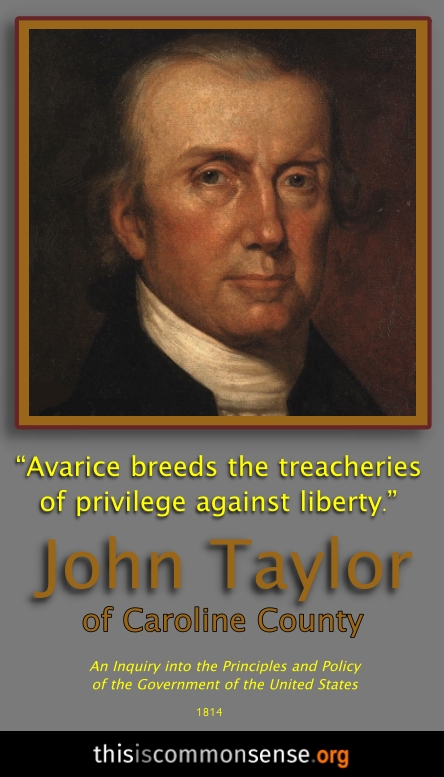
Avarice breeds the treacheries of privilege against liberty.
John Taylor of Caroline, An Inquiry into the Principles and Policy of the Government of the United States (1814).

We had no such thing as printed newspapers in those days to spread rumours and reports of things, and to improve them by the invention of men, as I have lived to see practised since. But such things as these were gathered from the letters of merchants and others who corresponded abroad, and from them was handed about by word of mouth only; so that things did not spread instantly over the whole nation, as they do now. But it seems that the Government had a true account of it, and several councils were held about ways to prevent its coming over; but all was kept very private.
Daniel Defoe, of the London pandemic of 1665, A Journal of the Plague Year / Written by a Citizen Who Continued All the While in London (1722).
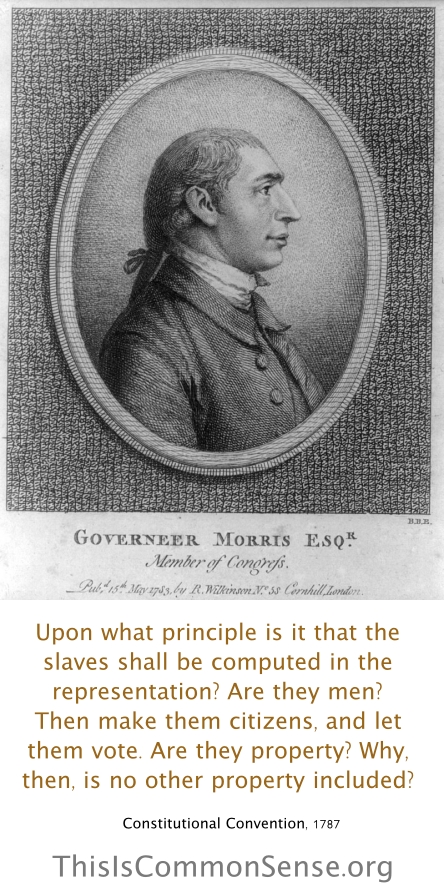
Upon what principle is it that the slaves shall be computed in the representation? Are they men? Then make them citizens, and let them vote. Are they property? Why, then, is no other property included? The houses in this city are worth more than all the wretched slaves who cover the rice swamps of South Carolina. The admission of slaves into the Representation when fairly explained comes to this: that the inhabitant of Georgia and South Carolina who goes to the Coast of Africa, and in defiance of the most sacred laws of humanity tears away his fellow creatures from their dearest connections and damns them to the most cruel bondages, shall have more votes in a Government instituted for protection of the rights of mankind, than the Citizen of Pennsylvania or New Jersey who views with a laudable horror, so nefarious a practice.
Gouveneur Morris,Debate at the Constitutional Convention (August 8, 1787).
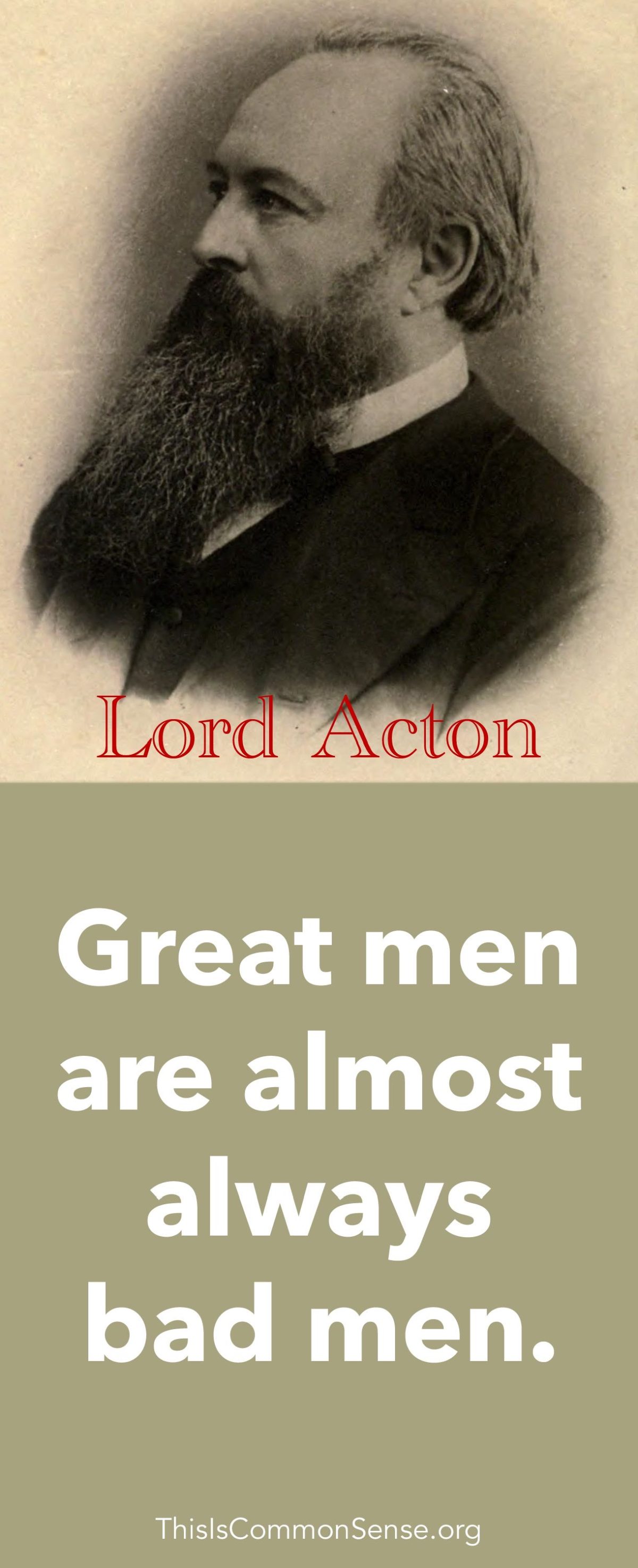
John Emerich Edward Dalberg-Acton, 1st Baron Acton, 13th Marquess of Groppoli, KCVO, DL (1834 – 1902).
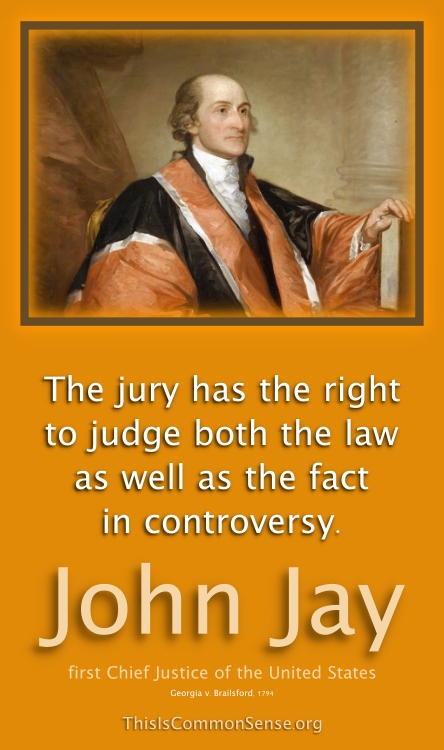
The jury has the right to judge both the law as well as the fact in controversy.
Supreme Court Chief Justice John Jay, in Georgia v. Brailsford, 1794.
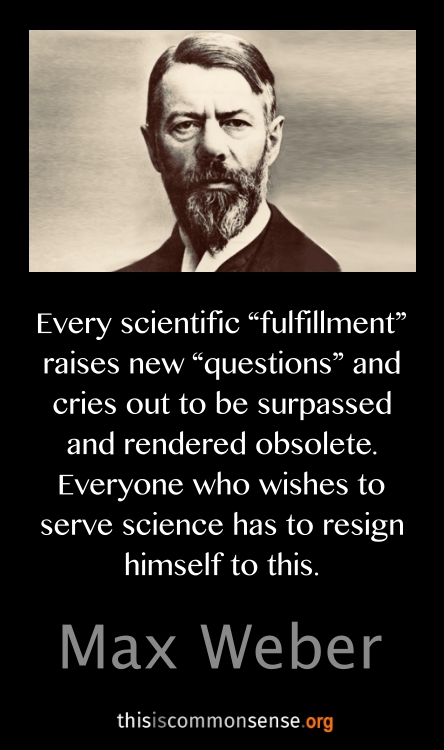
Every scientific “fulfillment” raises new “questions” and cries out to be surpassed and rendered obsolete. Everyone who wishes to serve science has to resign himself to this.
Max Weber, from a speech (1918) presented at Munich University, published in 1919, and collected in ‘Wissenschaft als Beruf,’ Gessammelte Aufsätze zur Wissenschaftslehre (1922), 524–525, as translated by Rodney Livingstone in David Owen (ed.), The Vocation Lectures: Science as a Vocation: Politics as a Vocation (2004), 11.