Categories
Thought

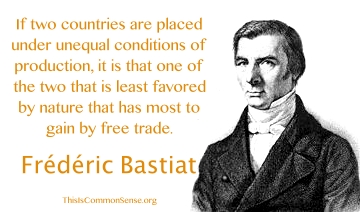
Frédéric Bastiat

[I]f two countries are placed under unequal conditions of production, it is that one of the two that is least favored by nature that has most to gain by free trade.

Frédéric Bastiat, from Economic Sophisms, “To Equalize the Conditions of Production.”

Categories
Thought

Herbert Spencer

Duplicate men are not to be found. There is in each a different balance of desires. Therefore the conditions adapted for the highest enjoyment of one, would not perfectly compass the same end for any other. And consequently the notion of happiness must vary with the disposition and character; that is, must vary indefinitely.

Herbert Spencer, Social Statics: or, The Conditions essential to Happiness specified, and the First of them Developed (London: John Chapman, 1851), Introduction, § 2.

Categories
Thought

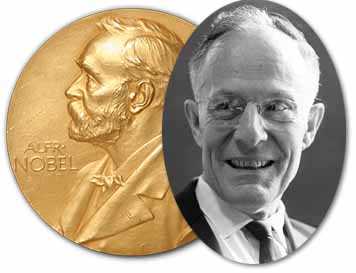
Theodore W. Schultz

[T]here is an abundance of rhetoric consisting of dire predictions that the soils of the earth are being depleted, natural resources are being exhausted, the land that is suitable for crops cannot produce enough food for the still growing population, and that massive famines will soon occur. These predictions are not a true reckoning of the limits of the earth, because the future productivity of the economy is not foreordained by space, energy, and cropland. It will be determined by the abilities of human beings. It has been so in the past and there are no compelling reasons why it will not be so in the years to come.

Theodore W. Schultz, Investing in People: The Economics of Population Quality (1981), p. 140.

Categories
Thought

Herbert Spencer

Instead of civilization being artificial, it is a part of nature; all of a piece with the development of the embryo or the unfolding of a flower. The modifications mankind have undergone, and are still undergoing, result from a law underlying the whole organic creation; and provided the human race continues, and the constitution of things remains the same, those modifications must end in completeness.

Herbert Spencer, Social Statics: or, The Conditions essential to Happiness specified, and the First of them Developed (London: John Chapman, 1851), Chapter 1, § 4.

Categories
Thought

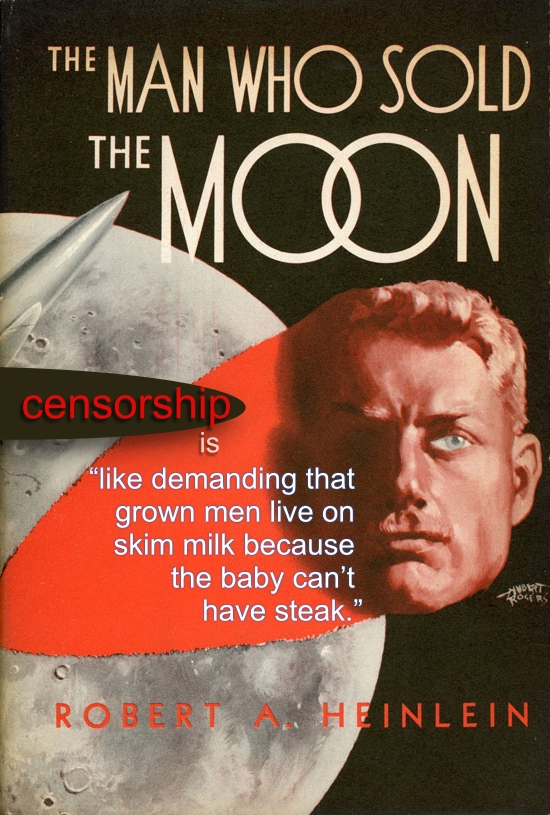
Robert A. Heinlein

censorship, n,

The whole principle is wrong. It’s like demanding that grown men live on skim milk because the baby can’t have steak.

Robert A. Heinlein, The Man Who Sold the Moon (1951), p. 188.

This quotation is reminiscent of one often misattributed to Mark Twain:

Censorship is telling a man he can’t have a steak just because a baby can’t chew it.

(Unknown)
Categories
Thought

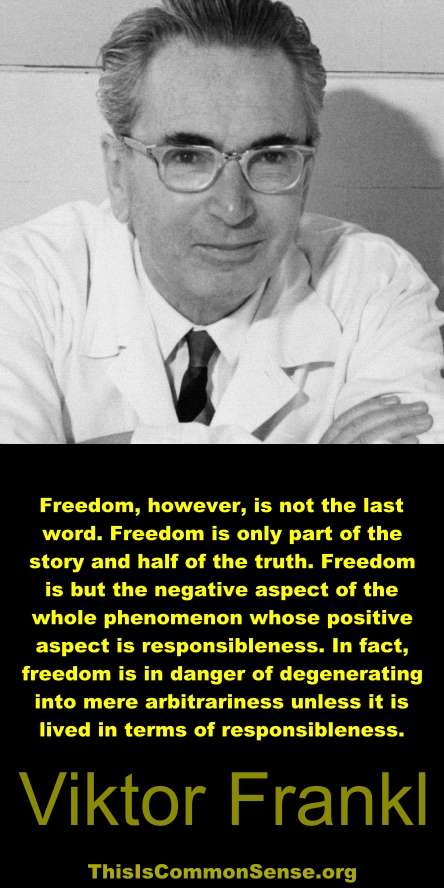
Viktor Frankl

Freedom, however, is not the last word. Freedom is only part of the story and half of the truth. Freedom is but the negative aspect of the whole phenomenon whose positive aspect is responsibleness. In fact, freedom is in danger of degenerating into mere arbitrariness unless it is lived in terms of responsibleness.

Viktor Frankl, Man’s Search for Meaning (1956), p. 209-210.
Categories
Thought

T.H. White

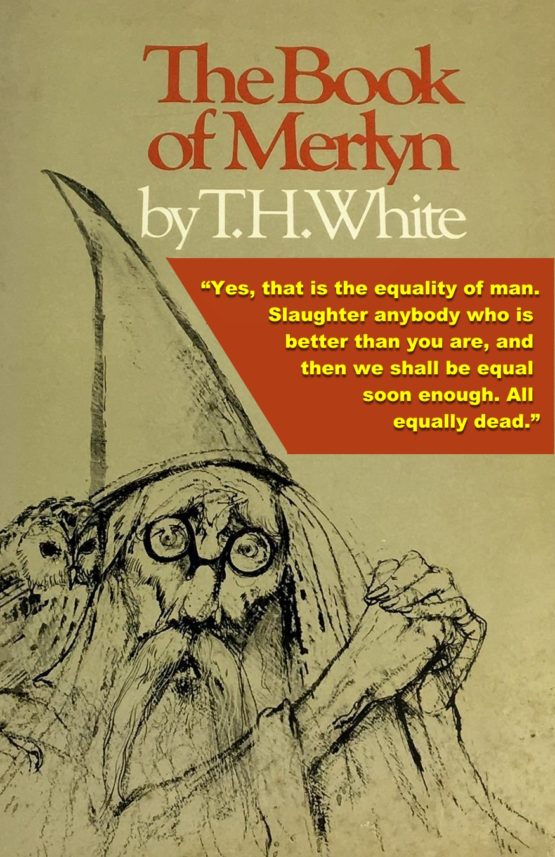
Yes, that is the equality of man. Slaughter anybody who is better than you are, and then we shall be equal soon enough. All equally dead

T.H. White, The Book of Merlyn (1977).
Categories
Thought

Avicenna

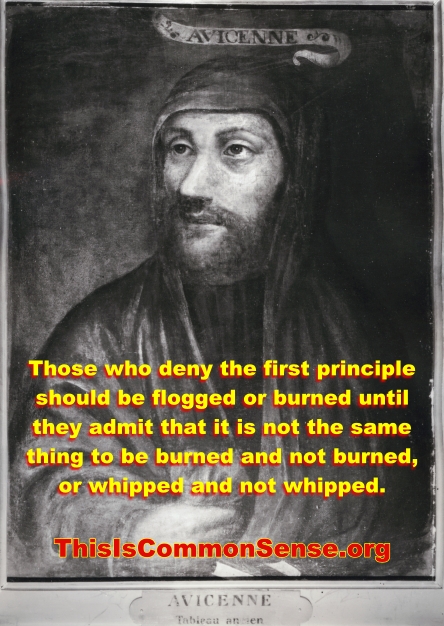
Those who deny the first principle should be flogged or burned until they admit that it is not the same thing to be burned and not burned, or whipped and not whipped.

Avicenna, Metaphysics: Book I.
Categories
Thought

Avicenna

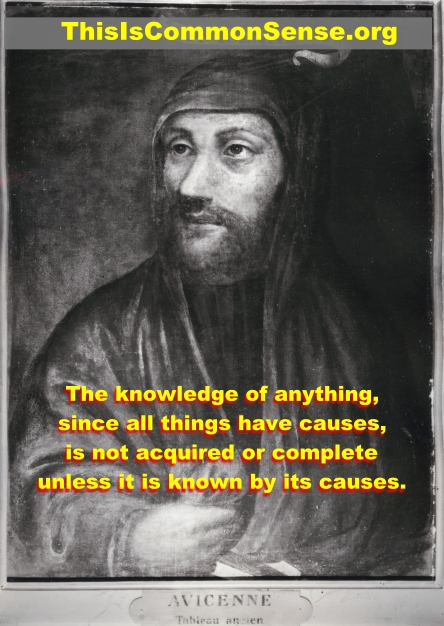
The knowledge of anything, since all things have causes, is not acquired or complete unless it is known by its causes.

Avicenna, “On Medicine” (c. 1020).
Categories
Thought

Voltaire

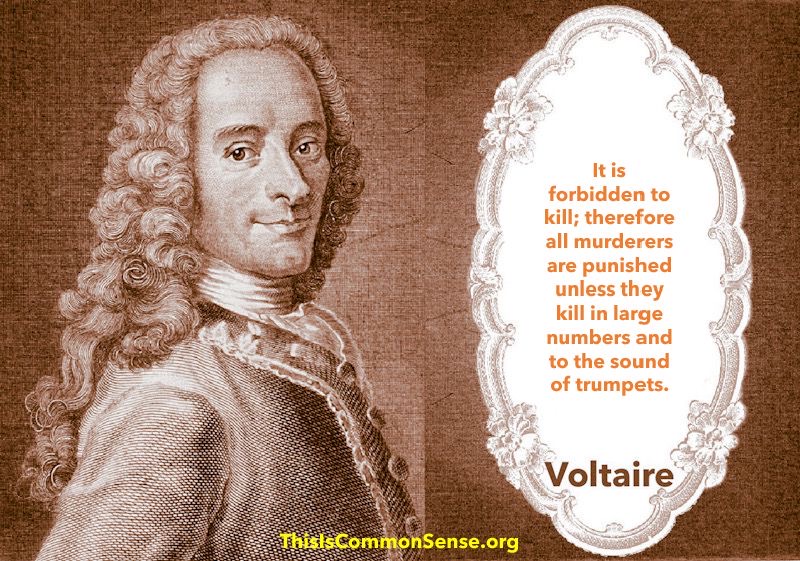
It is forbidden to kill; therefore all murderers are punished unless they kill in large numbers and to the sound of trumpets.

Voltaire, Philosophical Dictionary, “Rights.”