Categories
Thought

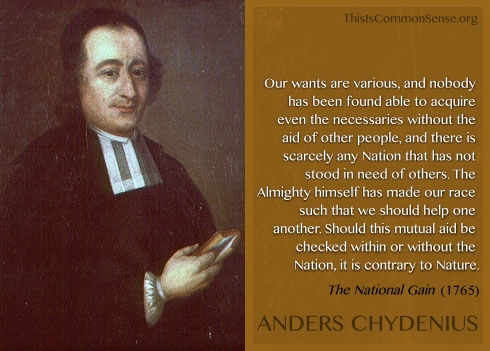
Anders Chydenius

Our wants are various, and nobody has been found able to acquire even the necessaries without the aid of other people, and there is scarcely any Nation that has not stood in need of others. The Almighty himself has made our race such that we should help one another. Should this mutual aid be checked within or without the Nation, it is contrary to Nature.

Anders Chydenius, The National Gain, §2 (1765).
Categories
Thought

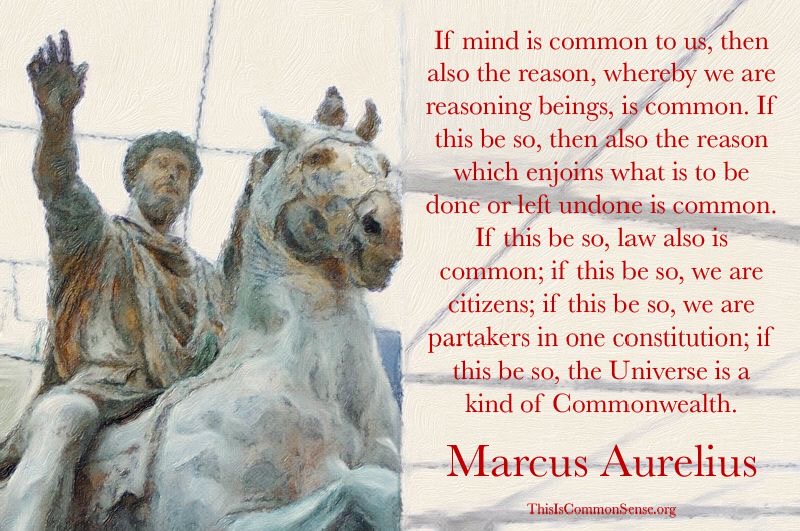
Marcus Aurelius

If mind is common to us, then also the reason, whereby we are reasoning beings, is common. If this be so, then also the reason which enjoins what is to be done or left undone is common. If this be so, law also is common; if this be so, we are citizens; if this be so, we are partakers in one constitution; if this be so, the Universe is a kind of Commonwealth.

Emperor Marcus Aurelius, Meditations (c. 121-180 A.D.), Book IV, 4 (A.S.L. Farquharson, translator).
Categories
Thought

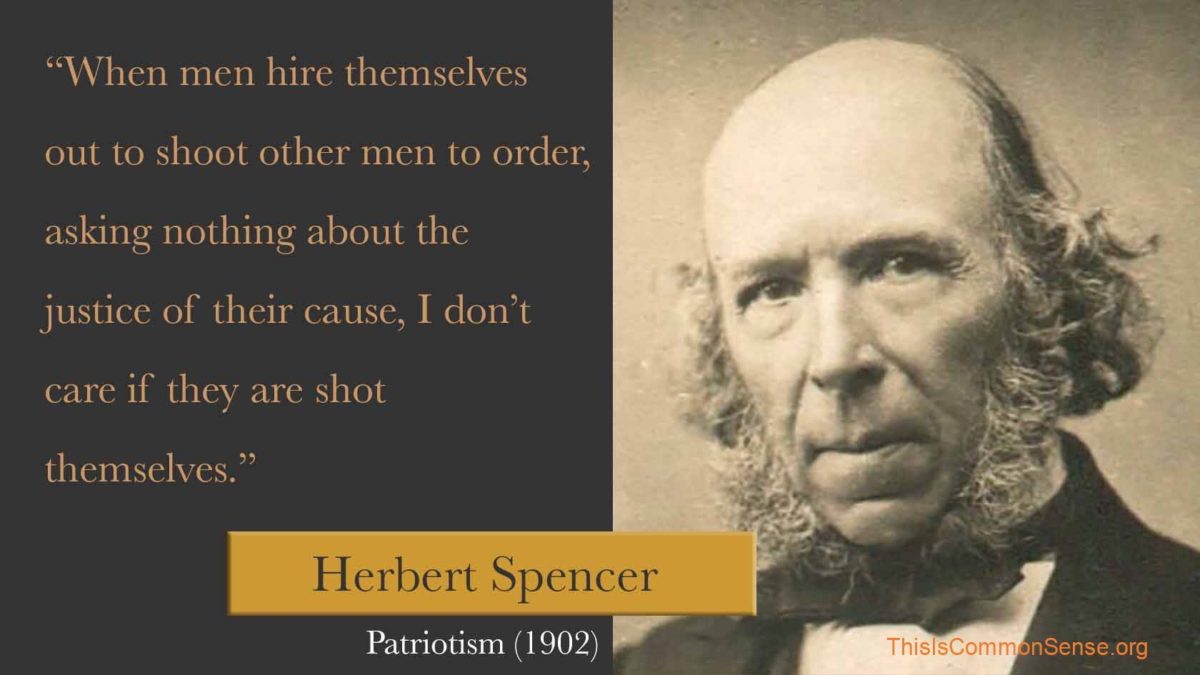
Herbert Spencer

When men hire themselves to shoot other men to order, asking nothing of the justice of their cause, I don’t care whether they are shot themselves.

Herbert Spencer, “Patriotism,” Facts and Comments (1902) — commenting on Britain’s “second war in Afghanistan” (1878-1880).
Categories
Thought

James Monroe

Our country may be likened to a new house. We lack many things, but we possess the most precious of all — liberty!

Categories
audio podcast Thought

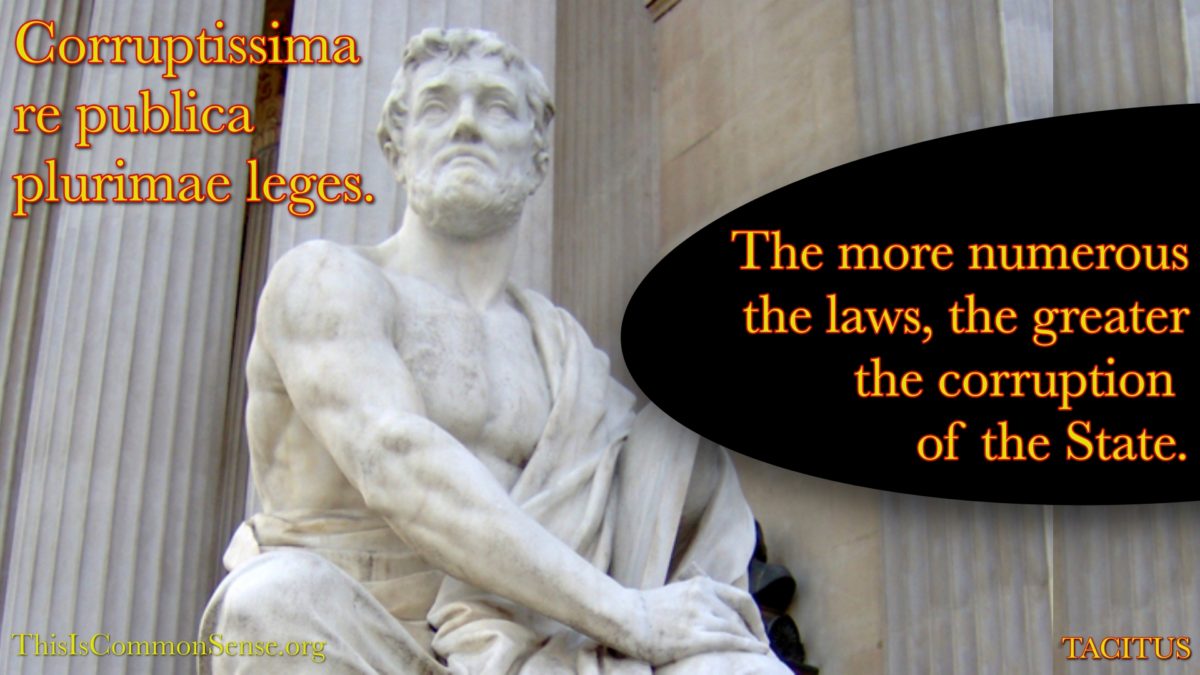
Listen: The More Numerous the Laws

Paul Jacob applies ancient principles to the news:

Categories
Thought

James Monroe

The best form of government is that which is most likely to prevent the greatest sum of evil.

Categories
Thought

Senator Sam Ervin

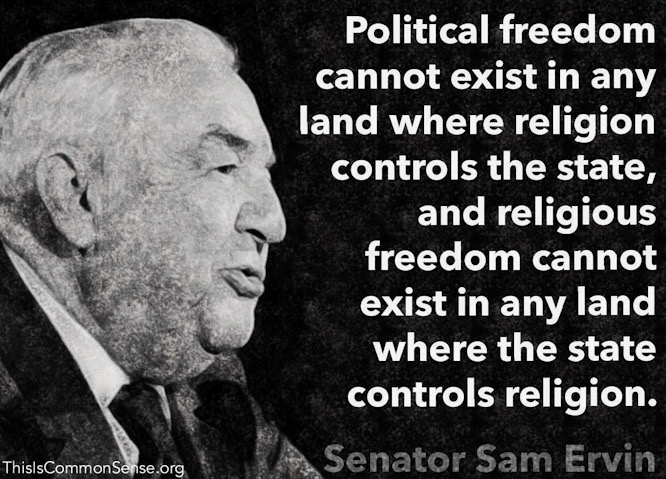
Political freedom cannot exist in any land where religion controls the state, and religious freedom cannot exist in any land where the state controls religion.

Samuel James Ervin, Jr., (1896-1985).
Categories
Thought

Gore Vidal

The United States was founded by the brightest people in the country — and we haven’t seen them since.

Gore Vidal, Matters of Fact and Fiction (1978)

Categories
Thought

Sir Francis Bacon

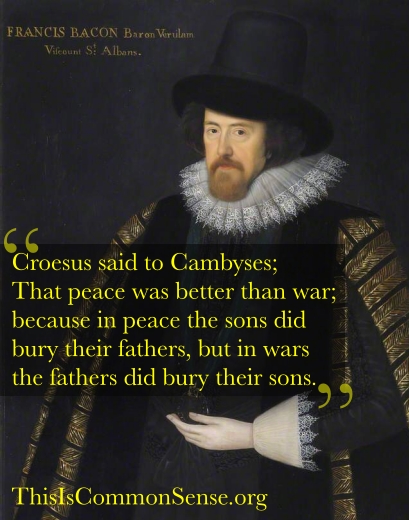
Croesus said to Cambyses; That peace was better than war; because in peace the sons did bury their fathers, but in wars the fathers did bury their sons.

Francis Bacon, Apophthegms, New and Old (published 1625).
Categories
Thought

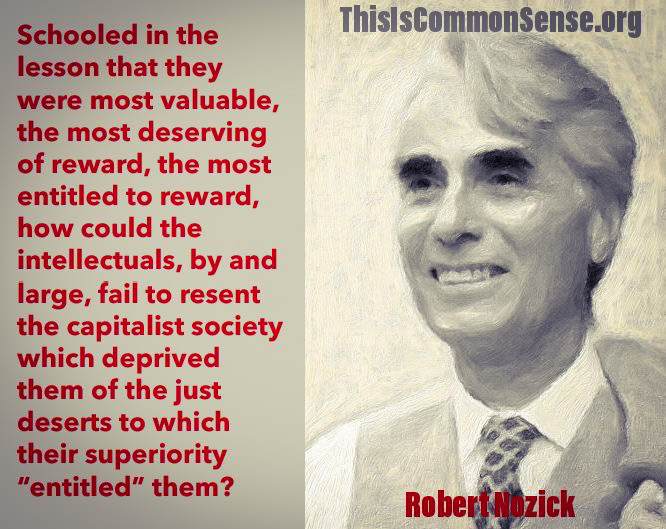
Robert Nozick

Though not part of the official curricula, in the schools the intellectuals learned the lessons of their own greater value in comparison with the others, and of how this greater value entitled them to greater rewards.

The wider market society, however, taught a different lesson. There the greatest rewards did not go to the verbally brightest. There the intellectual skills were not most highly valued. Schooled in the lesson that they were most valuable, the most deserving of reward, the most entitled to reward, how could the intellectuals, by and large, fail to resent the capitalist society which deprived them of the just deserts to which their superiority “entitled” them? Is it surprising that what the schooled intellectuals felt for capitalist society was a deep and sullen animus that, although clothed with various publicly appropriate reasons, continued even when those particular reasons were shown to be inadequate?

Robert Nozick, “Why Do Intellectuals Oppose Capitalism?Cato Policy Report January/February 1998