We have a pretty witty king,
John Wilmot, 2nd Earl of Rochester, Epigram about Charles II of England.
Whose word no man relies on.
He never said a foolish thing,
And never did a wise one.
Categories
John Wilmot
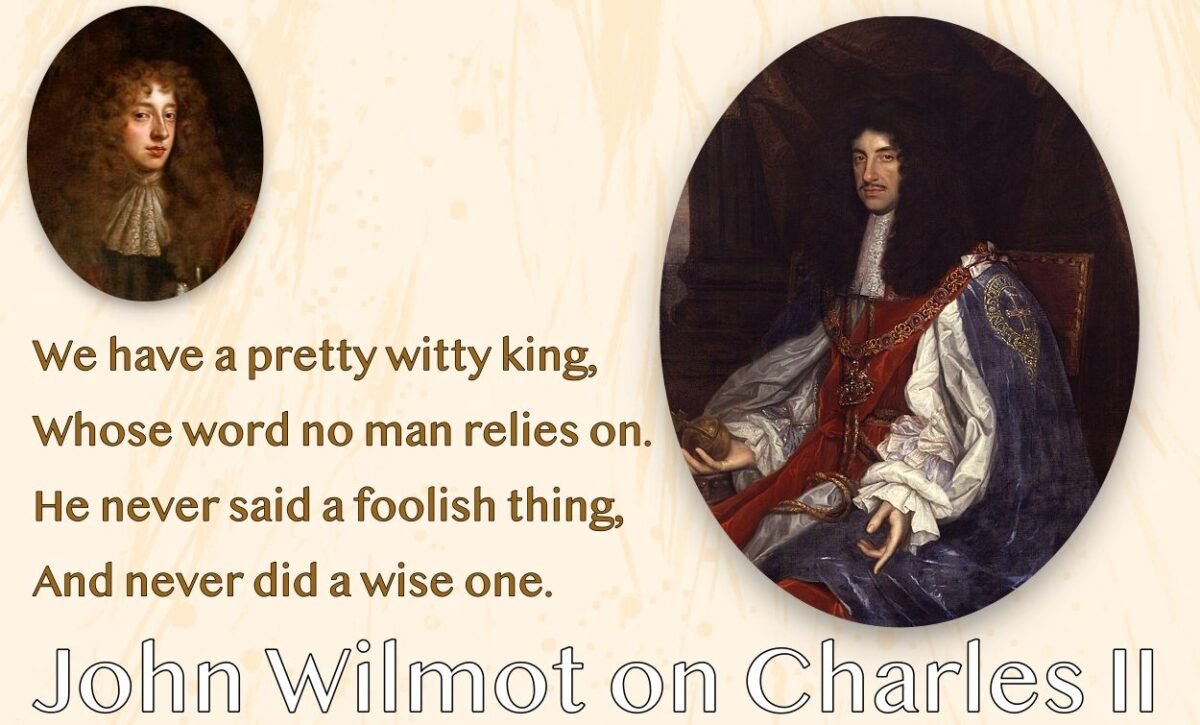
We have a pretty witty king,
John Wilmot, 2nd Earl of Rochester, Epigram about Charles II of England.
Whose word no man relies on.
He never said a foolish thing,
And never did a wise one.

If you wou’d be reveng’d of your enemy, govern your self.
From Poor Richard’s Almanack (1734).
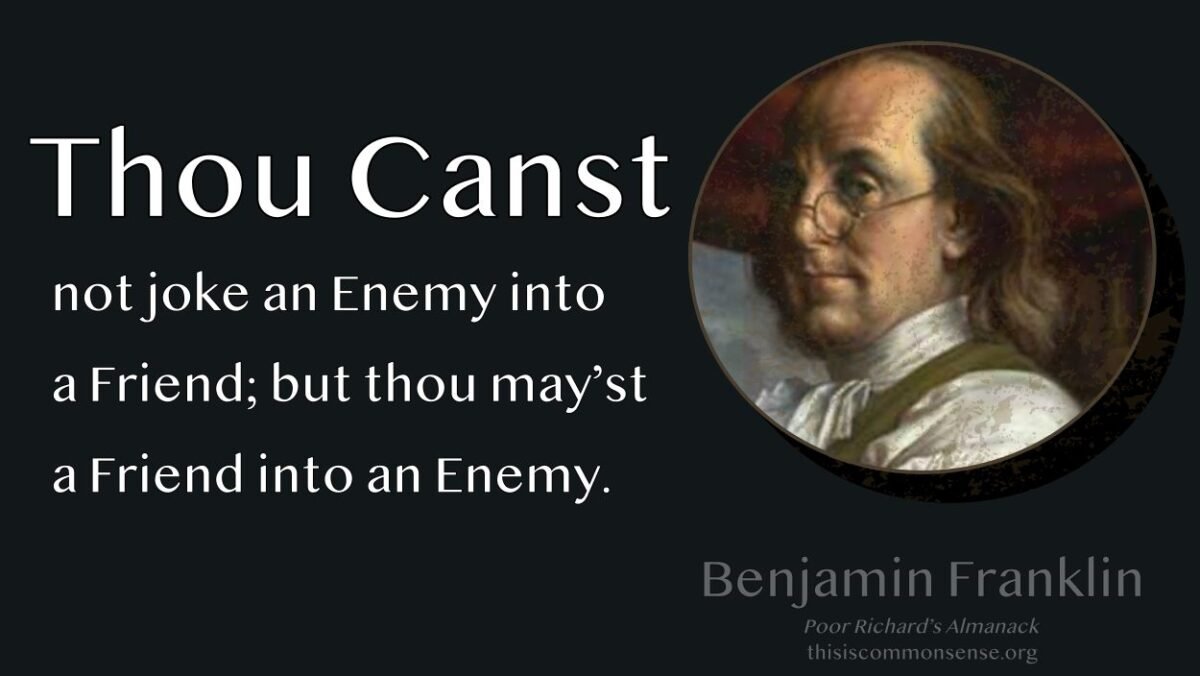
Thou canst not joke an Enemy into a Friend; but thou may’st a Friend into an Enemy.
From Poor Richard’s Almanack (1739).
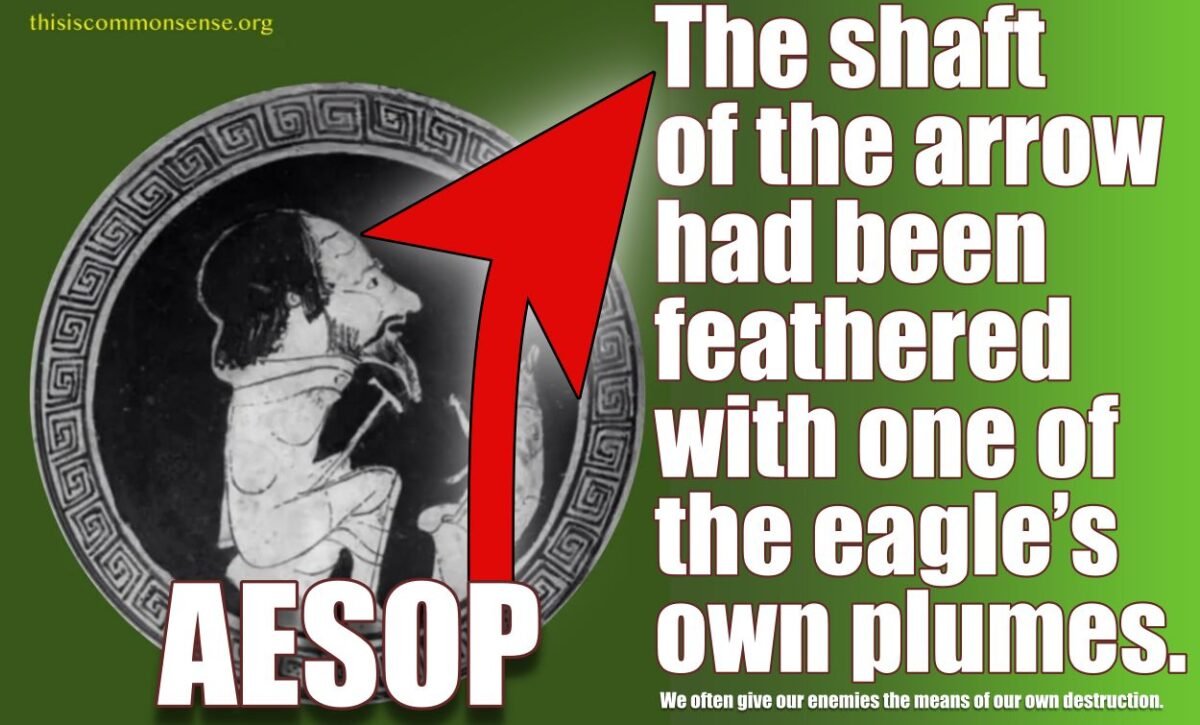
The shaft of the arrow had been feathered with one of the eagle’s own plumes. We often give our enemies the means of our own destruction.
From “The Eagle Wounded by an Arrow, Aesop’s Fables (c. 600 BC).
No man must encroach upon my province nor I upon his. He may advise me, moderately and without perniciousness, but he must not expect to dictate to me. He may censure me freely and without reserve but he should remember that I am to act by my deliberation and not his. He may exercise a republican boldness in judging, but he must not be peremptory and imperious in prescribing. Force may never be resorted to but, in the most extraordinary and imperious emergency.
William Godwin, Enquiry Concerning Political Justice (1793), Book II, Of Rights.
The proper method for hastening the decay of error is not by brute force, or by regulation which is one of the classes of force, to endeavour to reduce men to intellectual uniformity; but on the contrary by teaching every man to think for himself.
William Godwin, Enquiry Concerning Political Justice (1793), Vol. 2, bk. 8, ch. 6.

This is our purpose: to make as meaningful as possible this life that has been bestowed upon us; to live in such a way that we may be proud of ourselves; to act in such a way that some part of us lives on.
Oswald Spengler, as quoted in Good Advice (1982) edited by Leonard Safir and William Safire, p. 282
Truth, indeed, may not exist; science avers it to be only a relation; but what men took for truth stares one everywhere in the eye and begs for sympathy.
Henry Adams, Mont Saint Michel and Chartres (1904), Chapter XVI.
Notice this rent in my garment; I am at a loss to explain its presence! I am even more puzzled by the existence of the universe.
Jack Vance, The Eyes of the Overworld (1966), Chapter Five: “The Pilgrims.”
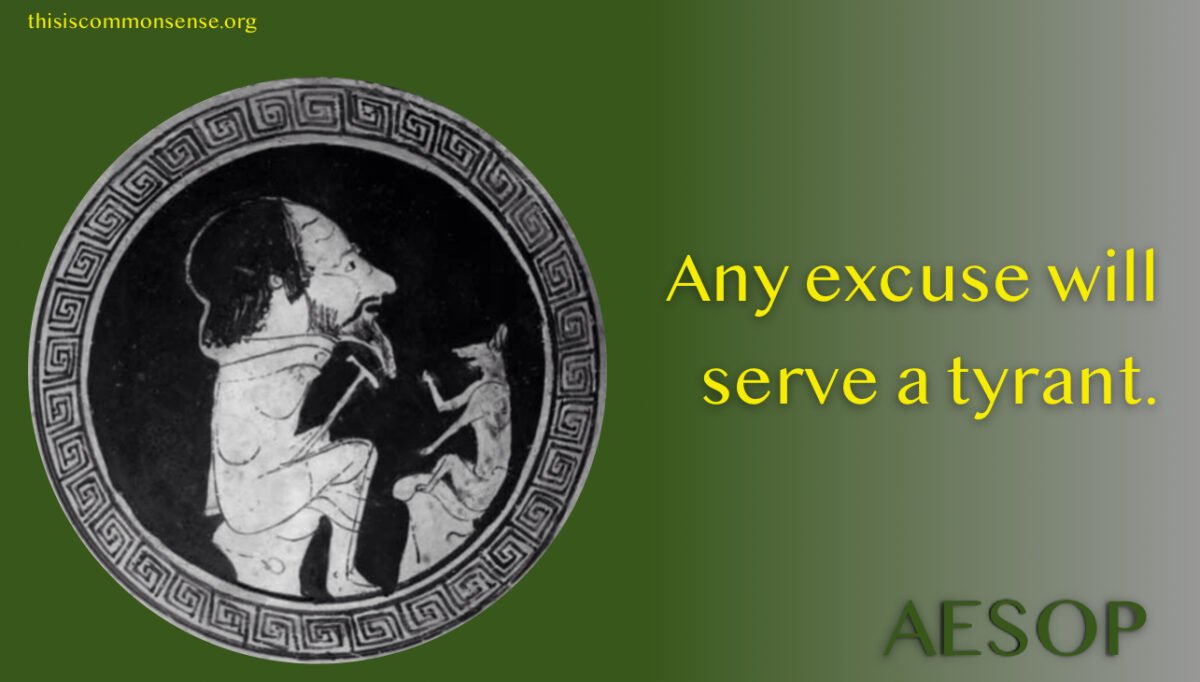
Any excuse will serve a tyrant.
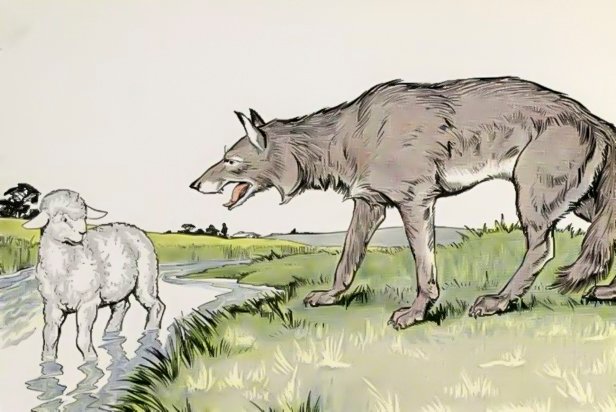
Aesop, Fables, “The Wolf and the Lamb.” Illustration: Aesop, with a fox, from the central medallion of a kylix, c. 470 BC; in the Gregorian Etruscan Museum, Vatican City.