Calumnies are answered best with silence.
Ben Jonson, Volpone (1606), Act II, scene ii.
Categories
Ben Jonson
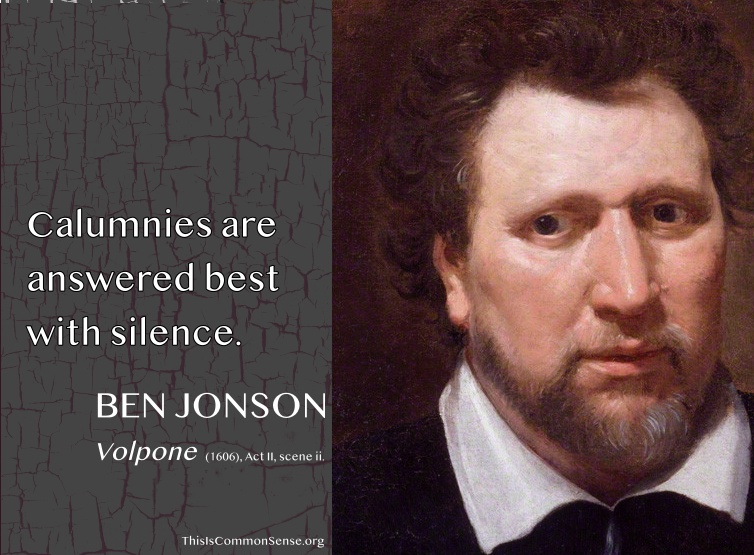
Calumnies are answered best with silence.
Ben Jonson, Volpone (1606), Act II, scene ii.
The push for a biologically sexless society is an arrogant utopian vision that cuts us off from our evolutionary history, promotes the delusion that humans are not animals, and undercuts respecting each individual for their unique individuality. Sex is neither simply a matter of socialization, nor a personal choice.
Robert Lynch, “From Sex To Gender: The Modern Dismissal of Biology,” Skeptic (April 7, 2023).

The demand for money is regulated entirely by its value, and its value by its quantity.
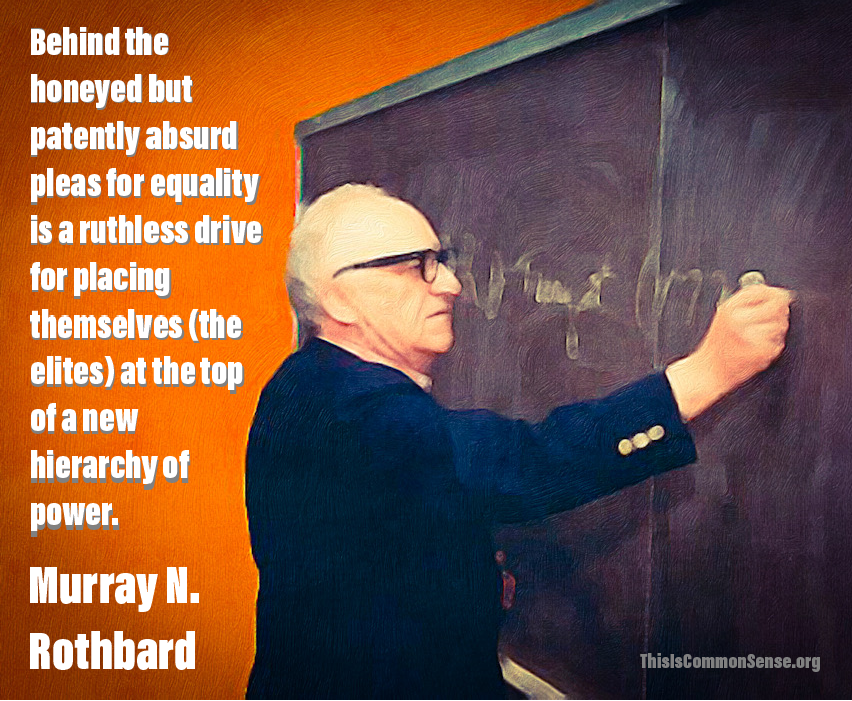
Behind the honeyed but patently absurd pleas for equality is a ruthless drive for placing themselves (the elites) at the top of a new hierarchy of power.
Murray N. Rothbard, “Egalitarianism and the Elites,” The Review of Austrian Economics, Volume 8, No. 2 (Summer 1995).
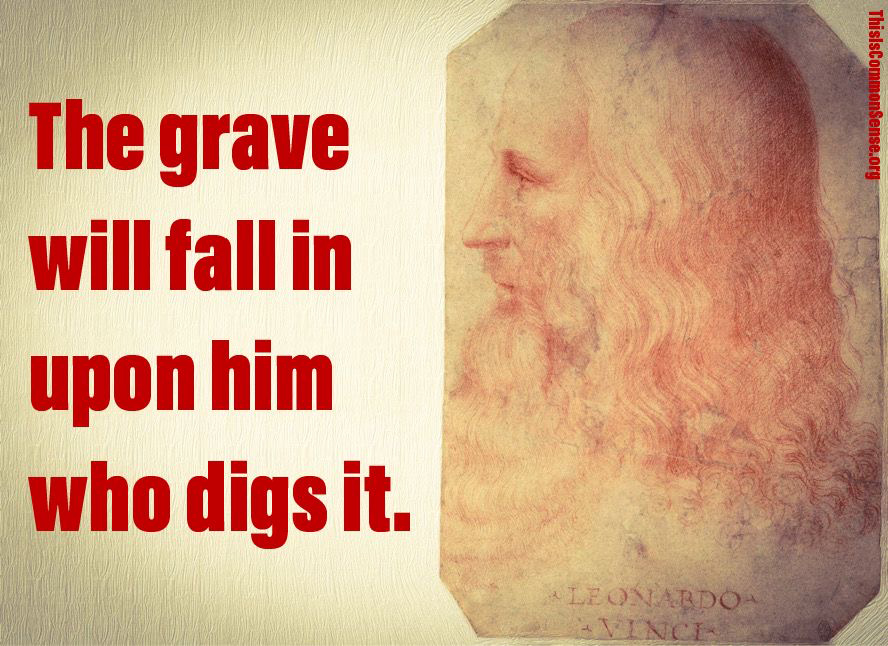
The grave will fall in upon him who digs it.
Leonardo da Vinci, The Notebooks of Leonardo da Vinci (1883), XIX Philosophical Maxims. Morals. Polemics and Speculations.

There is one good thing about Marx: he was not a Keynesian.
“A Conversation with Murray N. Rothbard,” Austrian Economics Newsletter, Volume 11, Number 2 (Summer 1990).
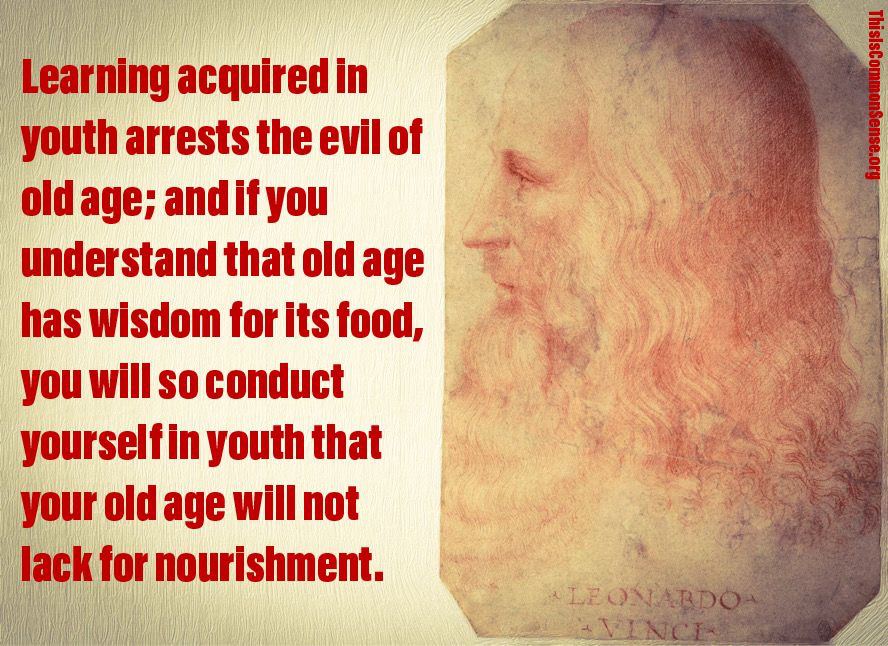
Learning acquired in youth arrests the evil of old age; and if you understand that old age has wisdom for its food, you will so conduct yourself in youth that your old age will not lack for nourishment.
Leonardo da Vinci, The Notebooks of Leonardo da Vinci (1883), XIX Philosophical Maxims. Morals. Polemics and Speculations.
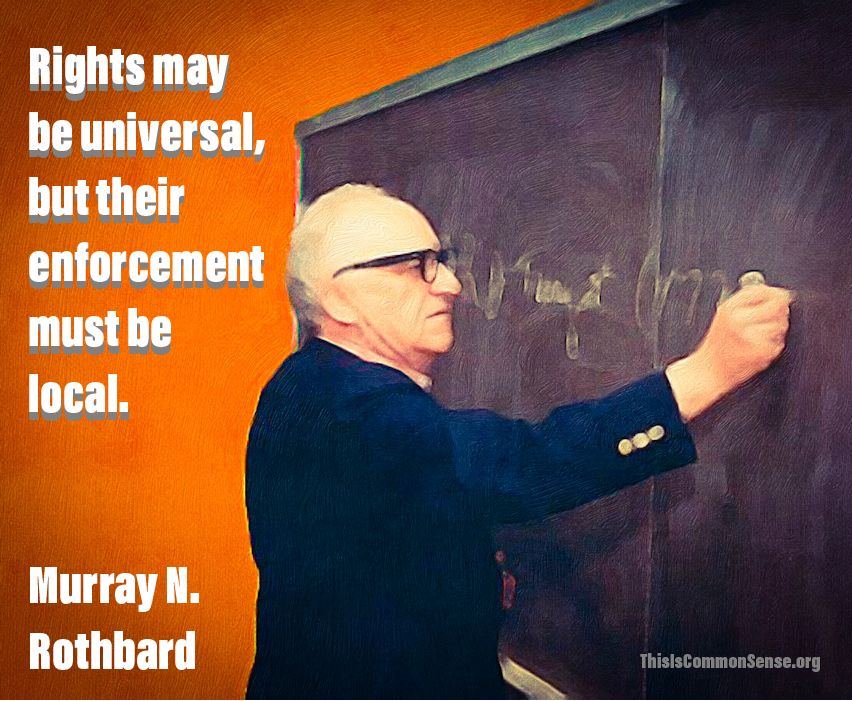
Rights may be universal, but their enforcement must be local.
Murray N. Rothbard, “Just War” (1970), as reprinted at LewRockwell.com.
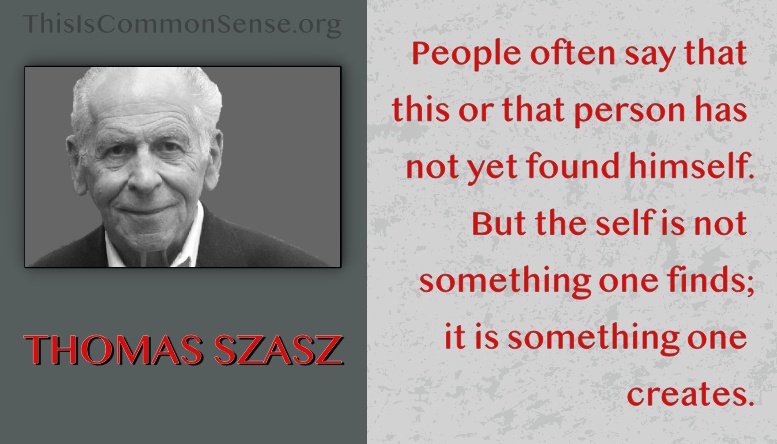
People often say that this or that person has not yet found himself. But the self is not something one finds; it is something one creates.
Thomas Szasz, The Second Sin (1973), p. 49.
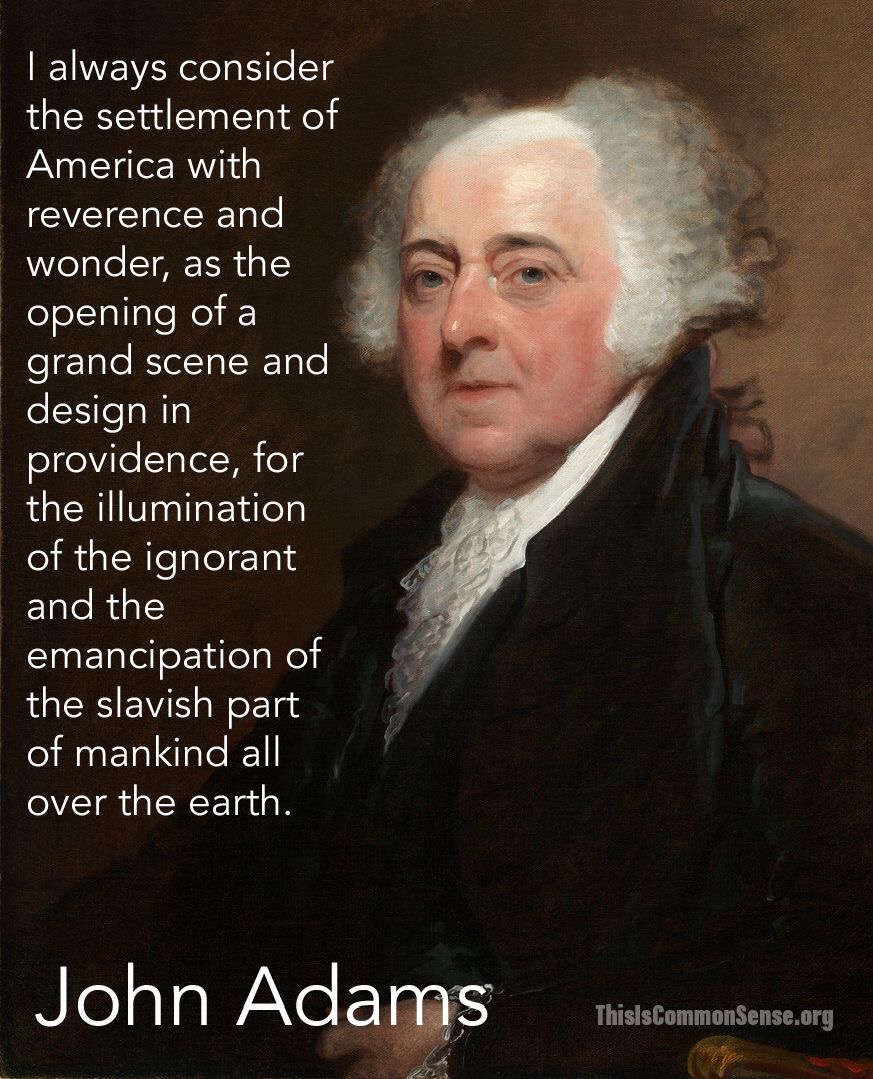
I always consider the settlement of America with reverence and wonder, as the opening of a grand scene and design in providence, for the illumination of the ignorant and the emancipation of the slavish part of mankind all over the earth.
John Adams, in Charles Francis Adams, The Works of John Adams, Second President of the United States: Life of John Adams (1856).