Categories
Thought

William Hazlitt

The slaves of power mind the cause they have to serve, because their own interest is concerned; but the friends of liberty always sacrifice their cause, which is only the cause of humanity, to their own spleen, vanity, and self-opinion.

William Hazlitt, from a review of Lord Byron’s Childe Harold in Yellow Dwarf (May 2, 1818).
Categories
Thought

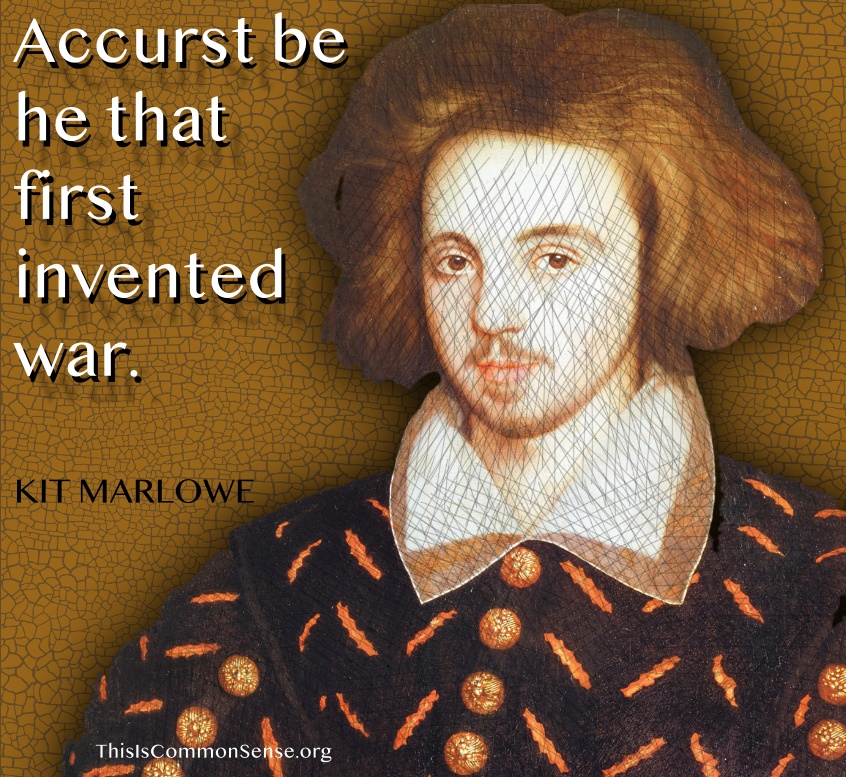
Christopher Marlowe

Accurst be he that first invented war.

Mycetes, in Christopher Marlowe’s Tamburlaine (c. 1588), Part 1, Act II, scene iv, line 1.
Categories
Thought

Alexander Pope

A little Learning is a dang’rous Thing;
Drink deep, or taste not the Pierian Spring:
There shallow Draughts intoxicate the Brain,
And drinking largely sobers us again.

Alexander Pope, An Essay in Criticism (1709).
Categories
Thought

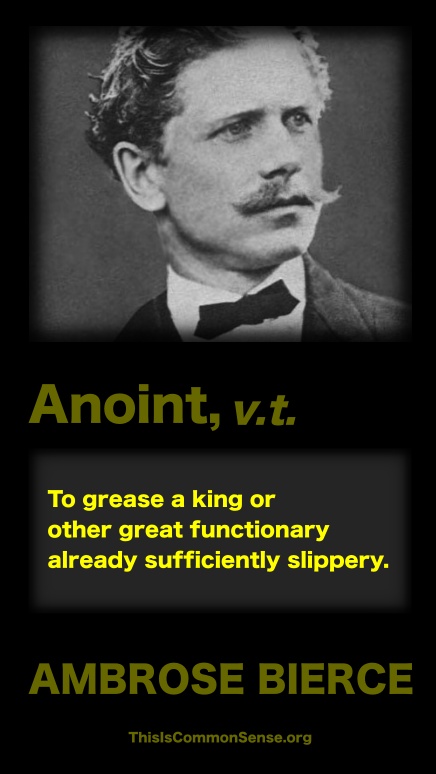
Ambrose Bierce

anoint, v.t.

To grease a king or other great functionary already sufficiently slippery.

Ambrose Bierce, The Devil’s Dictionary (1911).
Categories
Thought

Master Zhuang

A frog in a well cannot conceive of the ocean.

Zhuangzi (perhaps more famously transliterated from the Chinese as Chuang Tzu), from the book called Zhuangzi (third century B.C.).
Categories
Thought

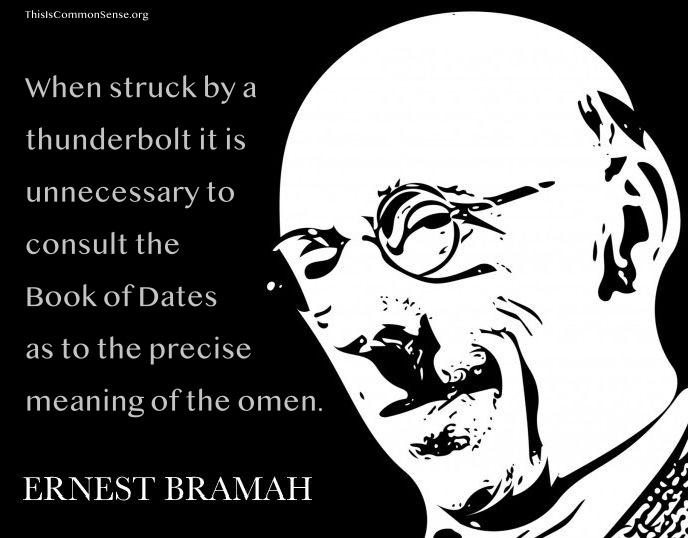
Ernest Bramah

When struck by a thunderbolt it is unnecessary to consult the Book of Dates as to the precise meaning of the omen.

Ernest Bramah, from “The Transmutation of Ling” in The Wallet of Kai Lung (1900).
Categories
Thought

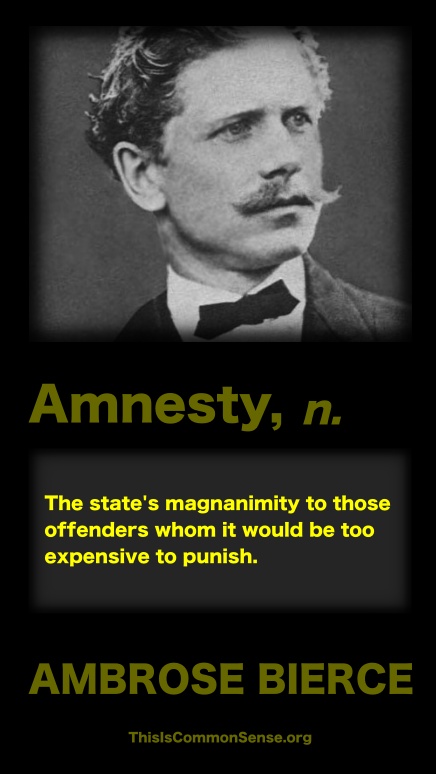
Ambrose Bierce

amnesty, n.

The state’s magnanimity to those offenders whom it would be too expensive to punish.

Ambrose Bierce, The Devil’s Dictionary (1911).
Categories
Thought

Ernest Bramah

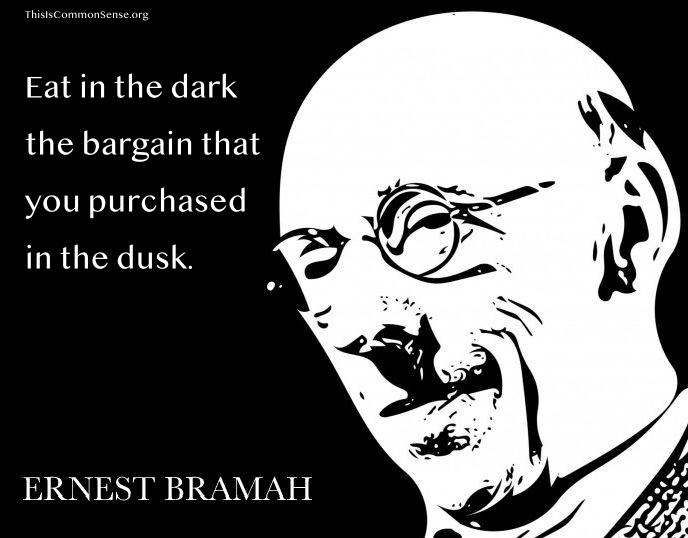
Eat in the dark the bargain that you purchased in the dusk.

Ernest Bramah, from “The Story of Kin Wen and the Miraculous Tusk” in Kai Lung Unrolls His Mat (1928).
Categories
Thought

Ambrose Bierce

cynic, n.

A blackguard whose faulty vision sees things as they are, not as they ought to be. Hence the custom among the Scythians of plucking out a cynic’s eyes to improve his vision.

Ambrose Bierce, The Devil’s Dictionary (1911).
Categories
Thought

Mark Twain

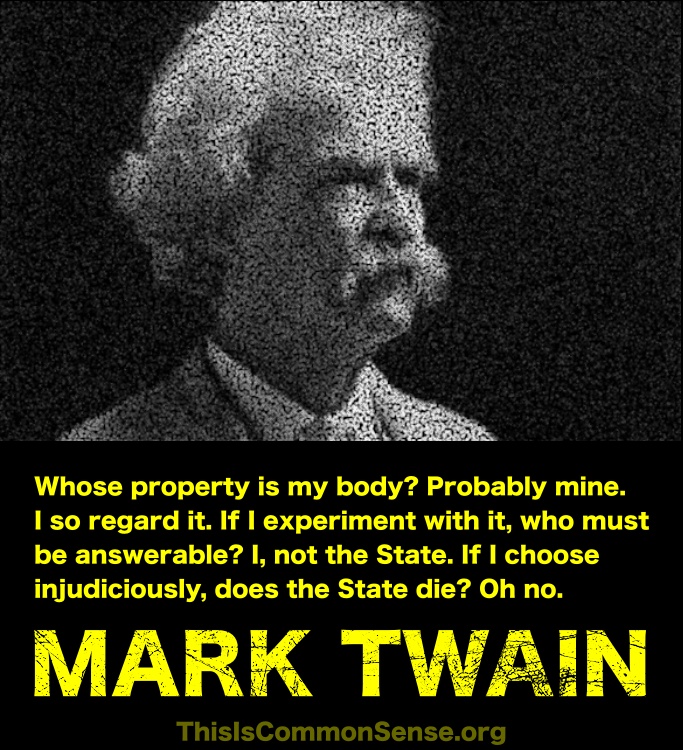
Whose property is my body? Probably mine. I so regard it. If I experiment with it, who must be answerable? I, not the State. If I choose injudiciously, does the State die? Oh no.