Categories
government transparency partisanship representation

#ThemToo Movement

No matter how partisan politics has become, there are a few issues that our politicians seem intent on supporting — or opposing — regardless of party.

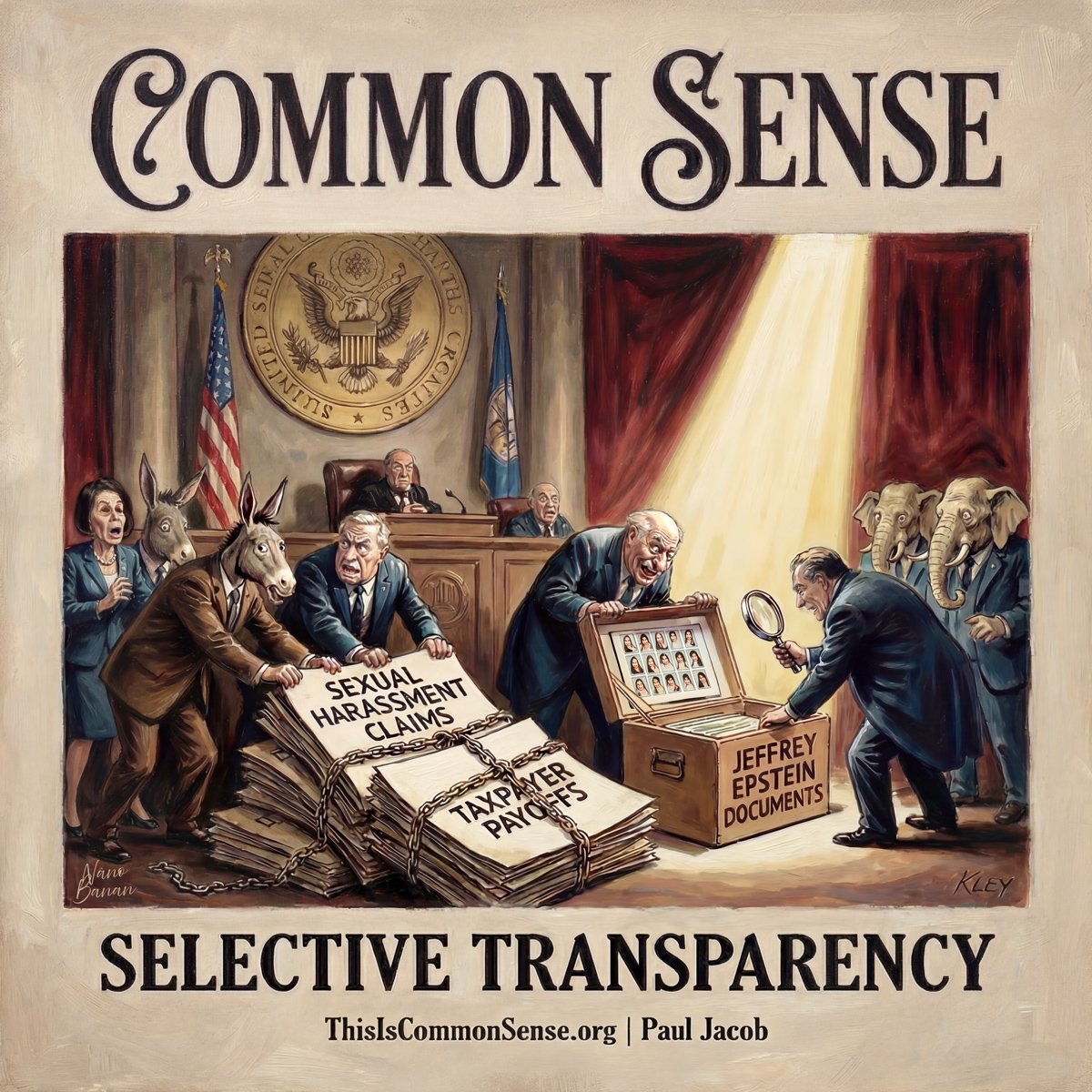
Example? Consider how soundly the House scuttled the recent effort to bring transparency to taxpayer payoffs for representatives’ and senators’ sexual harassment, rapes, and other improprieties. 

Last Wednesday, 357 members of the House of Representatives voted to refer to a committee a resolution that would have forced the release of records related to sexual harassment claims against lawmakers. While that sounds innocuous, in this case it effectively killed the measure. That’s how Representative Thomas Massie (R-Tenn.) explained it, and that’s how it was reported in the news: everyone who voted to refer the resolution to committee knew they were sending it to die.

“Both parties colluded to protect predators,” lamented Rep. Nancy Mace (R-S.C.), who had introduced the resolution. “They voted to keep sexual harassment records buried, and they did it together.”

How together? Well the 357 members who protected their comrades from the ire of their constituents included 175 Republicans and 182 Democrats. Remember that there are currently 218 Republicans serving in Congress and 213 Democrats (with three vacancies and no independent representation). Nine members did not vote, while one answered as merely “present.” 

The uncooperative Republicans (willing to stab members of their own party in the back!) numbered thirty-eight, while recalcitrant Democrats (cruelly eager to shine sunlight on their fellow vampires!) numbered twenty-seven. 

While the House overwhelmingly voted to protect its members from transparency and their own voters, back on November 18, 2025, representatives voted 427-1 to demand the immediate release of all federal documents related to Jeffrey Epstein. 

Even more bipartisan. But that time it was for transparency.

Just not theirs.

This is key.

And this is Common Sense. I’m Paul Jacob.


PDF for printing

Illustration created with Nano Banana

See all recent commentary
(simplified and organized)
See recent popular posts

Categories
national politics & policies representation

Must the War Go On?

“There is an easy way to end the gerrymandering wars,” a new video by The Recount asserts,and no one is talking about it.”

Except them. And us. And others

“We need more members of Congress,” the anonymous male narrator continues. “This might sound weird, especially since most of us don’t exactly love the ones we have now. But the reality here is simple: the U.S. has the worst ratio of citizens to elected representatives of every developed democracy in the world.”

It’s true. Congressional districts have been capped at 435 since 1929’s Permanent Apportionment Act. That year, the average congressperson represented 243,000 people. That’s too many. But today, the average congressperson represents 761,000 people.

“So uncap the house,” Jeff Mayhugh and A.D. Tippet argue in The Hill, “and rein in gerrymandering at least a bit.

“Our founders believed that smaller congressional districts would lead to a better relationship between citizens and their government,” the authors contend. “Gerrymandering undermines this idea by splitting neighbors from each other or packing them in districts with others from the same party to secure a seat for the political party in control.”

And then there’s this: “Smaller districts are more representative and also harder to manipulate.”

“With more seats, districts can be smaller and more representative of smaller enclaves and communities,” explains the video presentation, “and when that happens, the chances of Republicans winning seats in Massachusetts or Democrats winning seats in South Dakota goes up.”

Entitled “Why Expanding Congress Would End Gerrymandering,” The Recount’s video also correctly points out that creating a smaller representative-to-voter ratio by increasing the size of the House is “fully within Congress’s power” and “doesn’t take a constitutional amendment.”

But it would take a great deal of citizen . . . push.

This is Common Sense. I’m Paul Jacob.


PDF for printing

Illustration created with Krea and Firefly

See all recent commentary
(simplified and organized)
See recent popular posts