Categories
Today

Arthur Latham Perry born, 22nd Amendment ratified

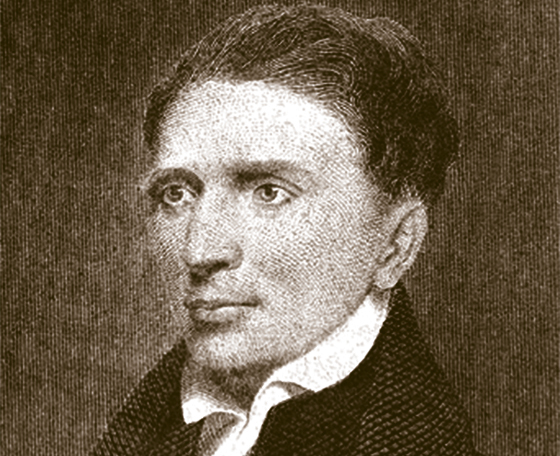
On February 27, 1830, American economist and free trade advocate Arthur Latham Perry was born.

| The Twenty-second Amendment to the United States Constitution, limiting Presidents to two terms, was ratified on February 27, 1951.

Categories
Thought

Yves Guyot:

“The effect of a protective duty on any commodity is to raise the price, not only of the amount imported, but of the whole quantity sold in the country; it is a private tax placed upon consumers for the benefit of producers.”


Yves Guyot (6 September 1843 – 22 February 1928) was a French politician and economist.

He was an uncompromising free-trader.

Categories
Today

22nd Amendment

The Twenty-second Amendment to the United States Constitution, limiting Presidents to two terms, was ratified on February 26, 1951.

February 26 marks the Dominican Republic’s Independence Day.

Categories
Thought

John Hancock:

“Security to the persons and properties of the governed is so obviously the design and end of civil government, that to attempt a logical proof of it would be like burning tapers at noonday, to assist the sun in enlightening the world.”


Categories
Today

Prussia, feb 25

In Law #46 of February 25, 1947, the Allied Control Council formally proclaimed the dissolution of Prussia.

Categories
Thought

Arthur Latham Perry

What is called the Progress of Civilization has been marked and conditioned at every step by an extension of the opportunities, a greater facility in the use of the means, a more eager searching for proper experdients, and a higher certainty in the securing of the returns, of mutual exchanges among men.

Categories
Thought

Arthur Latham Perry

Arthur Latham PerryWhat is called the Progress of Civilization has been marked and conditioned at every step by an extension of the opportunities, a greater facility in the use of the means, a more eager searching for proper experdients, and a higher certainty in the securing of the returns, of mutual exchanges among men.

Categories
Thought

John Hancock

John Hancock[T]he powers reserved by the people [under the Constitution] render them secure, and until they themselves become corrupt, they will always have upright and able rules.

Categories
Today

Marbury v. Madison, Feb 24

On February 24 1803, the Supreme Court, in Marbury v. Madison, established the principle of judicial review.

Categories
Today

ZOla and Menger

On February 23, 1898, Émile Zola was imprisoned in France after writing “J’accuse,” a letter accusing the French government of anti-Semitism and wrongfully imprisoning Captain Alfred Dreyfus.

Fifty-eight years earlier, Austrian economist Carl Menger was born.

Menger would go on to contribute to the development of the theory of marginal utility, which supplanted cost-of-production theories of value in economics, in his first book, translated into English as “Principles of Economics.” Though expert in mathematics (he served as tutor in economics and statistics to Archduke Rudolf von Habsburg, the Crown Prince of Austria not long after the publication of the Principles), his approach to marginal theory was the least mathematical of his famous “co-discovers” of the principle, William Stanley Jevons and Leon Walras. Rooted in a subjective theory of value, it was the most realistic and least model-based of the marginalist revolutionaries, and he was most interested in price formation, not “price determination,” which focused almost exclusively on equilibrium conditions. He developed an evolutionary theory of money, as well.

Menger’s second book was a defense of a particular kind of general theory in social science, and an explanation of the importance of “invisible hand” processes in the social world. The first theme caused a firestorm of debate in the German-speaking world, where “socialists of the chair” and other opponents of laissez faire went ballistic regarding the possibility of permanence of finding laws in the social world that were not of their own constructing. The second theme developed ideas found in Adam Smith, and extended them.

Menger inspired two major followers, Friedrich Freiherr von Wieser and Eugen von Böhm-Bawerk. The former named “marginal utility” and developed the first rigorous view of cost as opportunities foregone; the second advanced a time-preference theory of interest and theory of the structure of production. Later followers of this “Austrian School” included Ludwig von Mises and F.A. Hayek.