Categories
Today

Copernicus’s book, Boston massacre, Penn Jillette

On March 5, 1616, Nicolaus Copernicus’s book, De revolutionibus orbium coelestium, was placed on the Catholic Church’s Index of Forbidden Books. This censorship notwithstanding, the Earth continued to revolve around the Sun. The book had been first published in 1543 in Nuremberg.

| In 1770, the Boston Massacre took place on March 5.

| March 5 is magician Penn Jillette’s birthday. He turns 60 today, beginning his 61st year of life.

Categories
Thought

Yves Guyot

Wages are a speculation. The laborer who offers his labor to a trader or a contractor, argues thus with him: ‘I deliver to you so much labor. It is true that you run the risks of the enterprise. You are obliged to make advances of capital. You may gain or lose. That does not concern me. I do my work, I make it over to you at a certain price; you pay this to me whatever happens. Whether it redounds to your benefit or causes you loss is not my affair.’

Yves Guyot, The Tyranny of Socialism, Laissez Faire Books, 2015, LFB.org.

Categories
Thought

Yves Guyot

“Industrial progress is due to individuals, not to governments. No state discovered gravitation, and, if humanity had waited for governments to apply steam and electricity to our daily needs, we should have neither railways, telephones, nor telegraphs.”


Yves Guyot Where and Why Public Ownership Has Failed, p. 292

Guyot (September 6, 1843 – February 22, 1928), a French journalist, politician and economist, was an uncompromising free-trader.

Categories
Today

Lapland War, mar 4

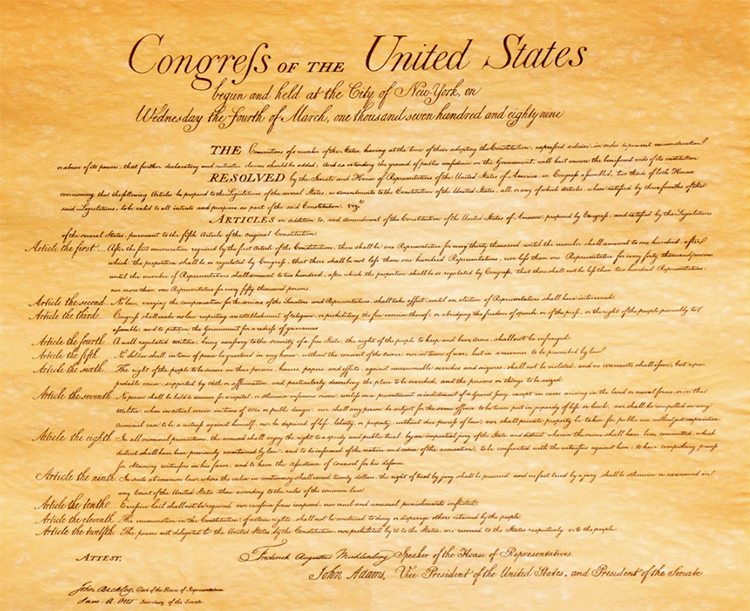
On March 4, 1789, the first Congress of the United States met in New York, New York, in accordance with the new Constitution. Two years later on the same date, Vermont was admitted as the fourteenth state of the union.

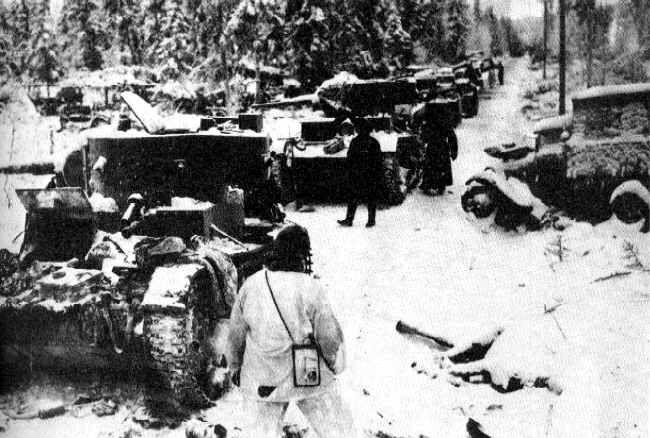
| In a twist in World War II allegiances, Finland declared war on Nazi Germany on March 4, 1945, beginning the Lapland War.

Categories
Today

Rodney King

On March 3, 1991, an amateur videographer captured the beating of Rodney King by Los Angeles police officers, thus ushering in the age of citizen surveillance of the state.

Categories
Thought

Rodney King

“People, I just want to say, you know, can we all get along? Can we get along? Can we stop making it, making it horrible for the older people and the kids? . . . It’s just not right. It’s not right. It’s not, it’s not going to change anything. We’ll, we’ll get our justice . . . Please, we can get along here; we all can get along. I mean, we’re all stuck here for a while. Let’s try to work it out.”

Categories
Thought

Murray N. Rothbard

“When we see that the most ardent advocates of the minimum wage law have been the AFL-CIO, and that the concrete effect of the minimum wage laws has been to cripple the low-wage competition of the marginal workers as against higher-wage workers with union seniority, the true motivation of the agitation for the minimum wage becomes apparent.”

Categories
links

Townhall: Helping Liberals Swallow the Best Medicine

I have readers who think I am just plain wrong about vaccines. They say there is no such thing as herd immunity, and that vaccines are dangerous. I do not deny that there can be side-effects. And I’m certainly no expert. But I don’t see how you can argue against the evidence of how vaccines beat so many diseases down to insignificance in the 20th century. And then, as resistance to vaccination has grown in recent years, the coming back of of those diseases into the school populations and the even the general population.

So I reiterate the thesis struck last week, in more detail, on Townhall. Pace my critics. (You will have to do a lot more explaining to do.) Click on over to Townhall for the full column, and then back here to give me grief, or (better yet!) support!

Oh, and some more viewing and reading:

Categories
video

Video: Instead of Internet Neutrality

Big moves and much talk about net neutrality in recent days. If your head is swimming, maybe try these two videos from Reason TV:


Categories
Thought

Arthur Latham Perry

One of the chief charms of Political Economy is the open secret, that it deals not with rigidities and inflexible qualities and mathematical quantities and the unchanging laws of matter, but with the billowy play of desires and estimates and purposes and satisfactions, all of which are mental states, and all of which are subject in the general to ascertainable laws, though laws of a quite different kind from those of Mechanics. Values come and they go. Within certain limits and under certain conditions they may be anticipated and even predicted, but never with the precision of an eclipse or the result of a known chemical combination.