Categories
video

Video: Executing Innocents

The horror of an evil crime prompts us to demand the death penalty. But the horror of executing — killing — innocent people should make us worry about that same death penalty, no?

Categories
Today

April 18

On April 18, 1689, Bostonians rebelled against the government of Sir Edmund Andros.

On this day in April, in 2007, the Supreme Court of the United States, split 5-4, upheld the Partial-Birth Abortion Ban Act.

April 18 marks the 1772 birthday of David Ricardo, English political economist and one of the most influential thinkers in economic theory.

Categories
Thought

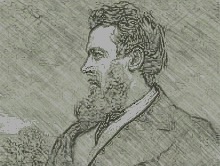
Frédéric Bastiat

“I wonder how we could have ever thought of doing anything so fantastic as to pay many millions of francs for the purpose of removing the natural obstacles that stand between France and other countries, and at the same time pay many other millions for the purpose of substituting artificial obstacles that have exactly the same effect; so that the obstacle created and the obstacle removed neutralize each other and leave things quite ‘as they were before, the only difference being the double expense of the whole operation.’”


Frédéric Bastiat, from Economic Sophisms, a book against the artificial obstacles created by the protective tariff.

Categories
Today

Ronald Hamowy

April 17 marks the 1937 birth of Ronald Hamowy, Canadian historian, who first came to international prominence for his writings in the short-lived New Individualist Review. Hamowy died in 2012.

Categories
Thought

Frédéric Bastiat

Nature has provided, by means as simple as they are infallible, that there should be dispersion, diffusion, coordination, simultaneous progress, all constituting a state of things that your restrictive laws paralyze as much as they can; for the tendency of such laws is, by isolating communities, to render the diversity of condition much more marked, to prevent equalization, hinder integration, neutralize countervailing circumstances, and segregate nations, whether in their superiority or in their inferiority of condition.

Frédéric Bastiat, from Economic Sophisms, “To Equalize the Conditions of Production” — the “such laws” mentioned are protectionist measures, and protectionism was the chief target of Bastiat’s famous book.
Categories
Thought

Frédéric Bastiat

[I]f two countries are placed under unequal conditions of production, it is that one of the two that is least favored by nature that has most to gain by free trade.

Frédéric Bastiat, from Economic Sophisms, “To Equalize the Conditions of Production.”
Categories
Thought

Frédéric Bastiat

“The state can put its taxes to either a good or a bad use. It puts them to a good use when it performs services for the public equivalent to the value it receives from the public. It puts them to a bad use when it squanders its revenues without giving the public anything in return.”


Frédéric Bastiat, from Economic Sophisms (included in the Laissez Faire Books ebook edition, What Is Seen and What Is Not Seen, 2014)

Categories
Today

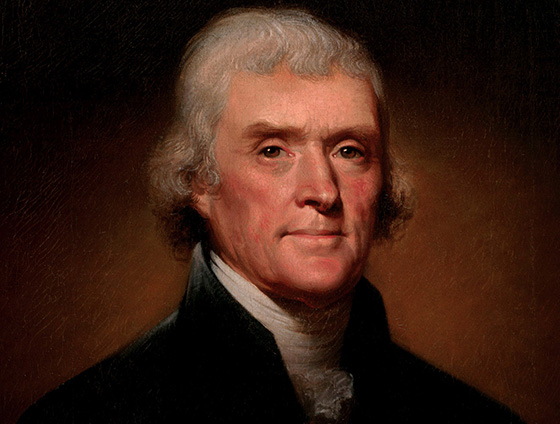
Thomas Jefferson

On April 13, 1743, Thomas Jefferson was born. Author of “Notes on the State of Virginia” and the first draft of the United States’ Declaration of Independence, Jefferson was also a scientist, philosopher, inventor, diplomat, and American politician who served as third President of the United States.

Categories
Thought

Frédéric Bastiat

To maintain that human labor will ever come to want employment, would be to maintain that the human race will cease to encounter obstacles. In that case labor would not only be impossible; it would be superfluous.


Frédéric Bastiat, first essay, Economic Sophisms (included in the Laissez Faire Books ebook edition, What Is Seen and What Is Not Seen, 2014)

Categories
links

Townhall: Totally Eye-Popping

How best to describe a whopping campaign fundraising effort? How about not assume that big is bad, or that it is the voters who are being shortchanged? We know who really loses when candidates collect surprisingly huge donations.

This weekend, I point fingers at the real losers. Click on over to Townhall, then back here, for an eye-popping amount of further reading: