American author, art critic, and commentator Camille Paglia was born April 2, 1947.
Categories
Camille Paglia

American author, art critic, and commentator Camille Paglia was born April 2, 1947.
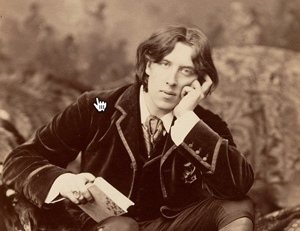
A poet can survive everything but a misprint.
Oscar Wilde, “The Children of the Poets,” The Pall Mall Gazette (October 14, 1886).
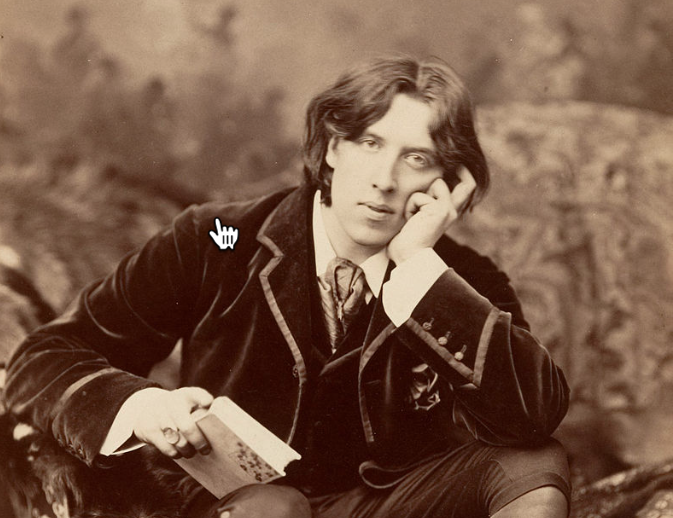
The chief advantage that would result from the establishment of Socialism is, undoubtedly, the fact that Socialism would relieve us from that sordid necessity of living for others which, in the present condition of things, presses so hardly upon almost everybody. In fact, scarcely anyone at all escapes.
Oscar Wilde, “The Soul of Man under Socialism,” Fortnightly Review, February 1891.
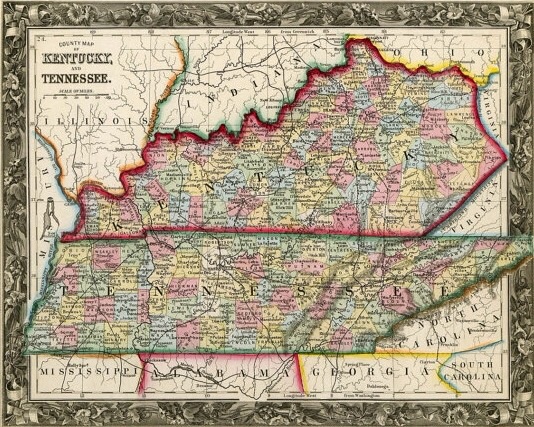
On June 1, 1792, Kentucky was admitted as the 15th state of the United States. Four years later, Tennessee became the 16th state.

On April Fools’ Day, 1957, the BBC offered for viewers of the current affairs program “Panorama” the infamous spaghetti tree report hoax. In the spirit of the day, Common Sense offers these “historic” events:
On April 1, 1787, James Madison, father of the Constitution, removed the General Welfare clause from his draft of the U.S. Constitution, telling friends that, “I fear future big-government-loving politicians will undoubtedly abuse the clause’s vague concept to drown the people in federal overreach.”
On April 1, 1918, Woodrow Wilson became the first and only President of the United States to be impeached and removed from office for lying about munitions being aboard the Lusitania in an effort to whip up war fever against Germany and push the nation into World War I.
On April 1, 2002, the U.S. Congress refused to grant President George W. Bush’s request for a declaration of war against Iraq.
On April 1, 2014, President Barack Obama admitted to being a Kenyan, er, Keynesian, but argued that the Constitution did not bar Keynesians from office.

I really do inhabit a system in which words are capable of shaking the entire structure of government, where words can prove mightier than ten military divisions.
Václav Havel, Speech of October 1989, accepting a peace prize.
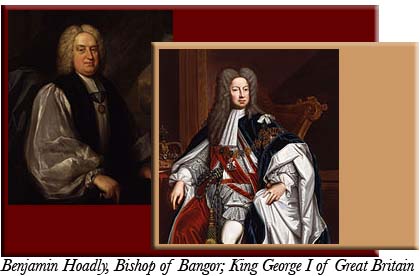
On March 31, 1717, a sermon on “The Nature of the Kingdom of Christ,” by Benjamin Hoadly, the Bishop of Bangor, provoked the Bangorian Controversy.
The sermon’s text was John 18:36, “My kingdom is not of this world,” and from that Hoadly deduced — supposedly at the request of King George I himself, who was present in the assembly — that there was no Biblical justification for any church government. Hoadly identified the church with the kingdom of Heaven, noting that Christ had not delegated His authority to any representative.
King George’s preference for the Whig Party, and for latitudinarianism in ecclesiastical policy, is widely thought to have been a strategic maneuver to degrade church power in political government.
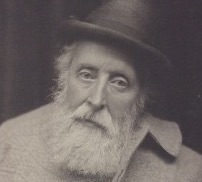
I am strongly and steadily opposed to all plans of state employment. Besides the old fatal objection that we have no right to compel some to pay for others, such works interfere with the regular labor market, they are badly supervised and badly conducted and therefore tend to demoralize the men employed; they often keep labor collected at certain spots when it should be dispersed, discouraging the men from following and finding other work.
Auberon Herbert, from the appendix to the 1885 edition of The Right and Wrong of Compulsion by the State.
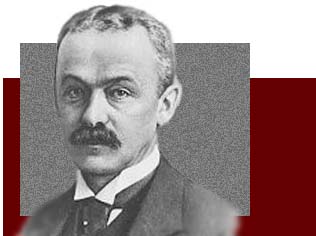
On March 30, 1864, German sociologist and economist Franz Oppenheimer was born. This sociologist is most famous for his 1908 book The State, in which he elaborated some consequences of two means for acquiring wealth, the “economic means,” by which he meant private production or by trade, and the “political means,” by which he meant forcible extraction from one group or person by another person or group. Oppenheimer taught in Palestine in the mid-1930s, and fled the Nazis to the United States, via Japan in 1938. In 1941 he became a founder of The American Journal of Economics and Sociology, and died two years later.
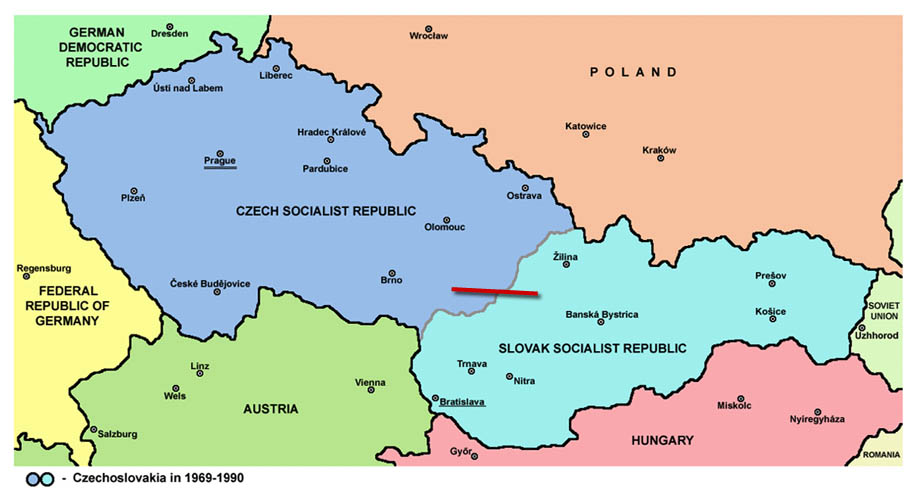
On March 29, 1990, the Czechoslovak parliament proved unable to reach an agreement on what to call the country after the “Velvet Revolution” — in which the Communist Party was booted from sole power. This sparked the “Hyphen War,” a tongue-in-cheek moniker for the dispute between Czechs and Slovaks about official recognition of the two nations’ equal status. (The Slovak representatives wanted to insert a hyphen into the name, to make the Slovak part stand out.) Eventually, the dispute was resolved with the “Velvet Divorce,” in which the two countries split up, on New Year’s Day, 1993.