On April 7, 1933, Prohibition in the United States was repealed for beer of no more than 3.2 percent alcohol by weight, eight months before the ratification of the XXI amendment.
Categories
Prohibition Begins to End
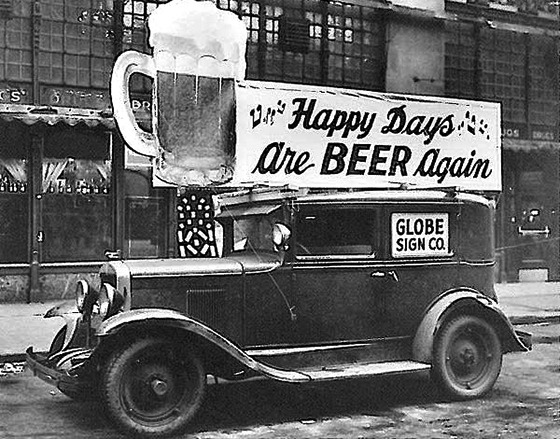
On April 7, 1933, Prohibition in the United States was repealed for beer of no more than 3.2 percent alcohol by weight, eight months before the ratification of the XXI amendment.

On April 6, 1930, Mohandas K. Gandhi raised a lump of mud and salt, declaring, “With this, I am shaking the foundations of the British Empire.”
Thus began the Salt Satyagraha.
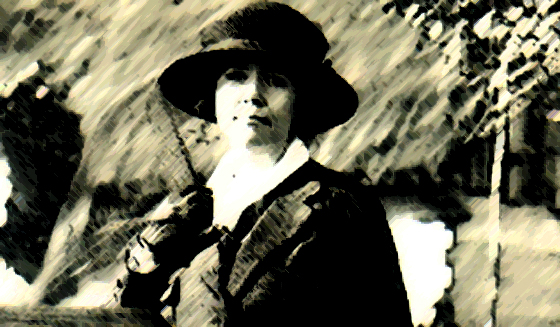
In our ignorance, we could not see that the Kaiser’s Germany and the Communist International were merely two aspects of the Old World’s reaction against the new, the American principle of individual liberty and human rights.
Rose Wilder Lane, Give Me Liberty (1936).

The humanitarian in theory is the terrorist in action.
Isabel Paterson, The God of the Machine, 1943.
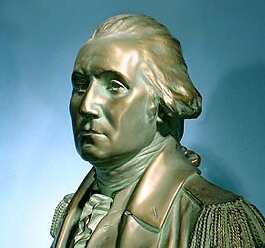
On April 5, 1792, U.S. President George Washington exercised his authority to veto a bill, the first time this power was used in the United States.
Life is a thin narrowness of taken-for-granted, a plank over a canyon in a fog. There is something under our feet, the taken-for-granted. A table is a table, food is food, we are we — because we don’t question these things. And science is the enemy because it is the questioner. Faith saves our souls alive by giving us a universe of the taken-for-granted.
Rose Wilder Lane, journal entry (1923), as quoted in The Ghost in the Little House, ch. 7, by William V. Holtz (1993).
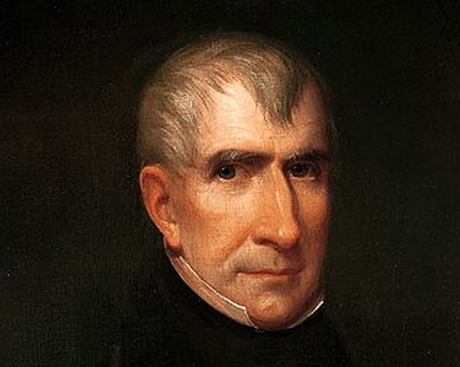
On April 4, 1841, William Henry Harrison died of pneumonia, becoming the first President of the United States to die in office and the one with the shortest term served (he died on his 32nd day as president). Renowned Indian killer (having risen to fame for his part in 1811’s Battle of Tippecanoe), a proponent of the expansion of slavery into Northwest Territories, and a Whig, Harrison won the presidency in part by turning the Democrats’ “log cabin and hard cider” aspersions on his character as the basic symbols of the campaign.
Though hardly a “limited government man,” some limited government history buffs proclaim him the Greatest President, on the ostensibly droll and possibly cynical grounds that he spent so little time in office.
On a sadder note, Martin Luther King, Jr., was assassinated on this day in 1968.

If you needed money, you could get money.
Kenyetta Wilbourn Snapp, 40, in a series of exclusive interviews.
The children are not the focus, money is the focus. And what happens to the money no one knows because the money does not reach the classroom.
Beverly Jones, former New Jersey teacher of the year,
from the movie The Cartel
Another big scandal in the City of Corruption, Detroit. Click on over to Townhall.com for this week’s column-length foray into Common Sense. Then come back here for more information.
This week’s image, at top, is a satirical drawing based on a published photo of Ms. Snapp, mentioned in this weekend’s column.
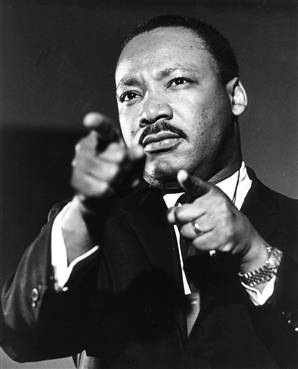
On April 3, 1968, Martin Luther King, Jr., delivered his “I’ve Been to the Mountaintop” speech.

The truth about the Democratic Party’s selection method, according to Reason tv:
Note: Chicago Tribune columnist John Kass has credited one Paul Jacob for being among the first to raise the issue of superdelegates — via a Townhall column (and Common Sense):
More than a month ago, libertarian Paul Jacob, writing on TownHall.com, examined how Democratic powerbrokers had rigged the game with superdelegates. It’s too bad that those young millennials feeling the Bern don’t read TownHall.com.