Categories
links

Townhall: Kasich — Governor, Pope or Schizo?

On Saturday, we regaled you with the video clip of Gov. John Kasich, more than straddling the proverbial fence, indeed . . . jumping around it like a rodeo clown — or perhaps someone in a tad less control.

Today, at Townhall.com, we aim to edify . . . with an analysis of same. Click on over, then come back here, for more Governor John Kasich fun!

Categories
Thought

The Marquis de Lafayette

“I would never have drawn my sword in the cause of America, if I could have conceived that thereby I was founding a land of slavery.”


Lafayette, as quoted in a letter by Thomas Clarkson (October 3, 1845), published in The Liberty Bell (1846), p. 64.

Categories
Today

The 1636 Militia

On December 13, 1636, the Massachusetts Bay Colony organized three militia regiments to defend the colony against the Pequot Indians.

The National Guard of the United States traces its heritage back to this event.

Categories
video

Video: Kasich — For & Against Term Limits

Asked about reforming Washington toward the end of a rambling hour-long talk yesterday to employees at C&S Wholesale Grocers in Keene, New Hampshire, presidential candidate and Ohio Gov. John Kasich came out squarely against term limits.

And then, 100 percent for them.

“We put term limits in in Ohio. You know what its effect is? It means the staff’s running the place now.”

A minute later: “Do I favor term limits? I do.”

But he added . . . “I favor long — ours is eight years; it ought to be twelve. In Congress, it ought to be twelve. We ought to have term limits, okay. That‘s what we ought to have.”

“But that’s not going to fix anything,” Kasich declared. Before, in his next breath, he admitted, “It’ll fix a couple things.”

“You gotta understand,” the governor emphasized, “what fixes things is the character and the leadership.”

Kasich went on to say that he “could have stayed in Congress for a hundred years.” But that a “politician . . . should go in, do public service and get out.”

Okay, then.

https://www.youtube.com/watch?v=kH66fvi_u0g&feature=youtu.be&t=48m9s

Categories
Today

Tolvajärvi Victory

On December 12, 1939, Finnish forces defeated those of the Soviet Union in the first major victory of what became known as the Winter War, in the Battle of Tolvajärvi.

December 12th birthdays include:

* Erasmus Darwin (1731) – English physician, slave trade abolitionist, inventor and poet

* John Jay (1745) — First Chief Justice of the United States

* William Lloyd Garrison (1805) — American abolitionist, editor of The Liberator

Categories
Thought

Arthur Latham Perry

“What is called the Progress of Civilization has been marked and conditioned at every step by an extension of the opportunities, a greater facility in the use of the means, a more eager searching for proper expedients, and a higher certainty in the securing of the returns, of mutual exchanges among men.”

Arthur Latham Perry, Principles of Political Economy, 1891.

Categories
Thought

The Marquis de Lafayette

“Humanity has gained its suit; Liberty will nevermore be without an asylum.”


Lafayette, Letter to friends (1780), published in Memoirs de La Fayette, Vol. II, p. 50.

Categories
Today

Bagge It

On December 11, 1957, American cartoonist and Reason magazine contributor Peter Bagge was born.

Categories
Today

Passy, Dunant and Huck

On December 10, 1884, Mark Twain’s Adventures of Huckleberry Finn was first published. This novel, narrated in the first person by the title character, is a dark comedy of the antebellum South and slavery, and has been considered by many American critics and writers to qualify as the “Great American Novel.”

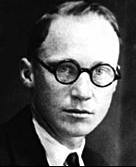
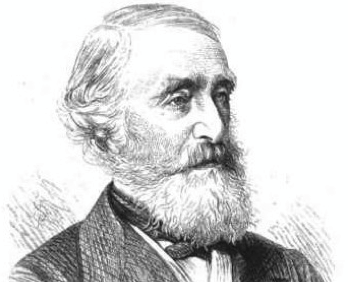
On this date in 1901, the first Nobel Peace Prizes were awarded — to economist Frédéric Passy (pictured above), co-founder of the Inter-Parliamentary Union; and to Henry Dunant the founder of the International Committee of the Red Cross.

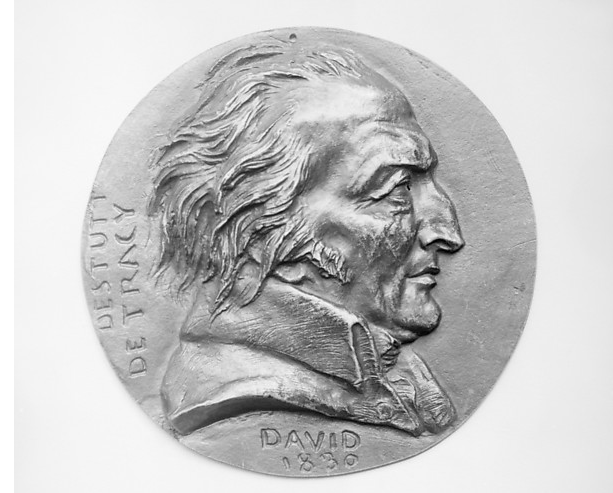
Passy was an admirer of Cobden, and an active member in the French Liberal School of Political Economy that developed in the tradition of J.B. Say, Destutt de Tracy, Charles Comte and Charles Dunoyer, and Frédéric Bastiat. His published works include Leçons d’économie politique (1860-61); La Démocratie et l’Instruction (1864); L’Histoire du Travail (1873); Malthus et sa Doctrine (1868); and La Solidarité du Travail et du Capital (1875).

Categories
Thought

Arthur Latham Perry

“Wantonly and enormously heavy lies the hand of the national Government upon the masses of the people at present. But the People are sovereign, and not their transient agents in the government; and the signs are now cheering indeed, that they have not forgotten their native word of command, nor that government is instituted for the sole benefit of the governed and governing people, nor that the greatest good of the greatest number is the true aim and guide of Legislation.”

Arthur Latham Perry, 1890, preface to Principles of Political Economy, 1891.