The Declaration of Independence was signed by members of the Continental Congress of the United States, on August 2, 1776.
Categories
Declaration signed!
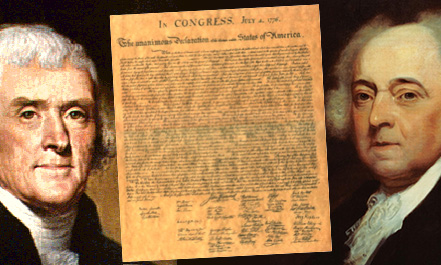
The Declaration of Independence was signed by members of the Continental Congress of the United States, on August 2, 1776.
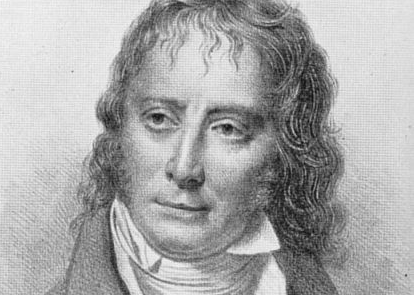
“Commerce makes the action of arbitrary power over our existence more oppressive than in the past, because, as our speculations are more varied, arbitrary power must multiply itself to reach them. But commerce also makes the action of arbitrary power easier to elude, because it changes the nature of property, which becomes, in virtue of this change, almost impossible to seize.
“Commerce confers a new quality on property, circulation. Without circulation, property is merely a usufruct; political authority can always affect usufruct, because it can prevent its enjoyment; but circulation creates an invisible and invincible obstacle to the actions of social power.
“The effects of commerce extend even further: not only does it emancipate individuals, but, by creating credit, it places authority itself in a position of dependence.”
Benjamin Constant, The Liberty of the Ancients Compared with That of the Moderns, 1819.
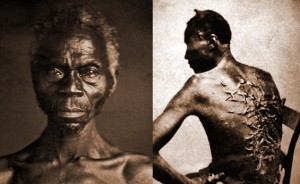
On August 1, 1834, Great Britain’s Slavery Abolition Act of 1833 took force, freeing slaves throughout the British empire.
Technically, it freed slaves under the age of six. On the August 1 date in 1838 and 1840, the rest of the empire’s slaves were freed, practically speaking.
August 1 births include Francis Scott Key (1779), composer of the poem “The Star-Spangled Banner”; American authors Richard Henry Dana, Jr. (1815) 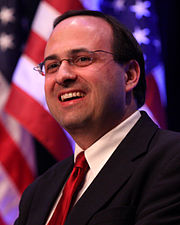 and Herman Melville (1819); and Thomas E. Woods, Jr. (1972), historian and popularizer of Austrian economics (pictured at right), podcaster of the Tom Woods Show.
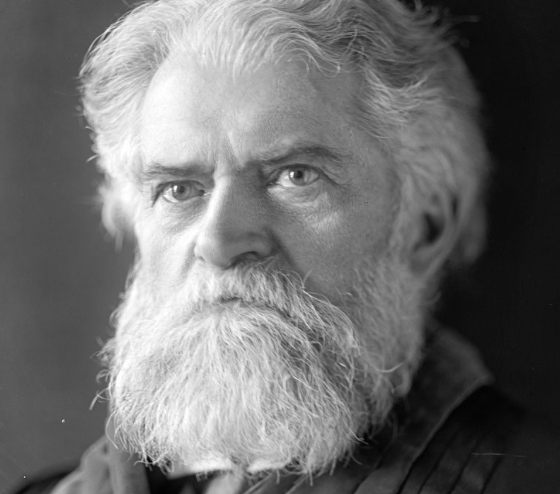
[W]ith the progress of society, government has within its sphere grown more powerful and efficient, this sphere has not been greatly enlarged. But the sphere of individual activity has greatly enlarged, and with the spread of knowledge the individual has become better able to maintain his rights against society, and governments are becoming less and less able to manage him.
Simon Newcomb, Principles of Political Economy (New York: Harper & Brothers, 1886), p. 447.
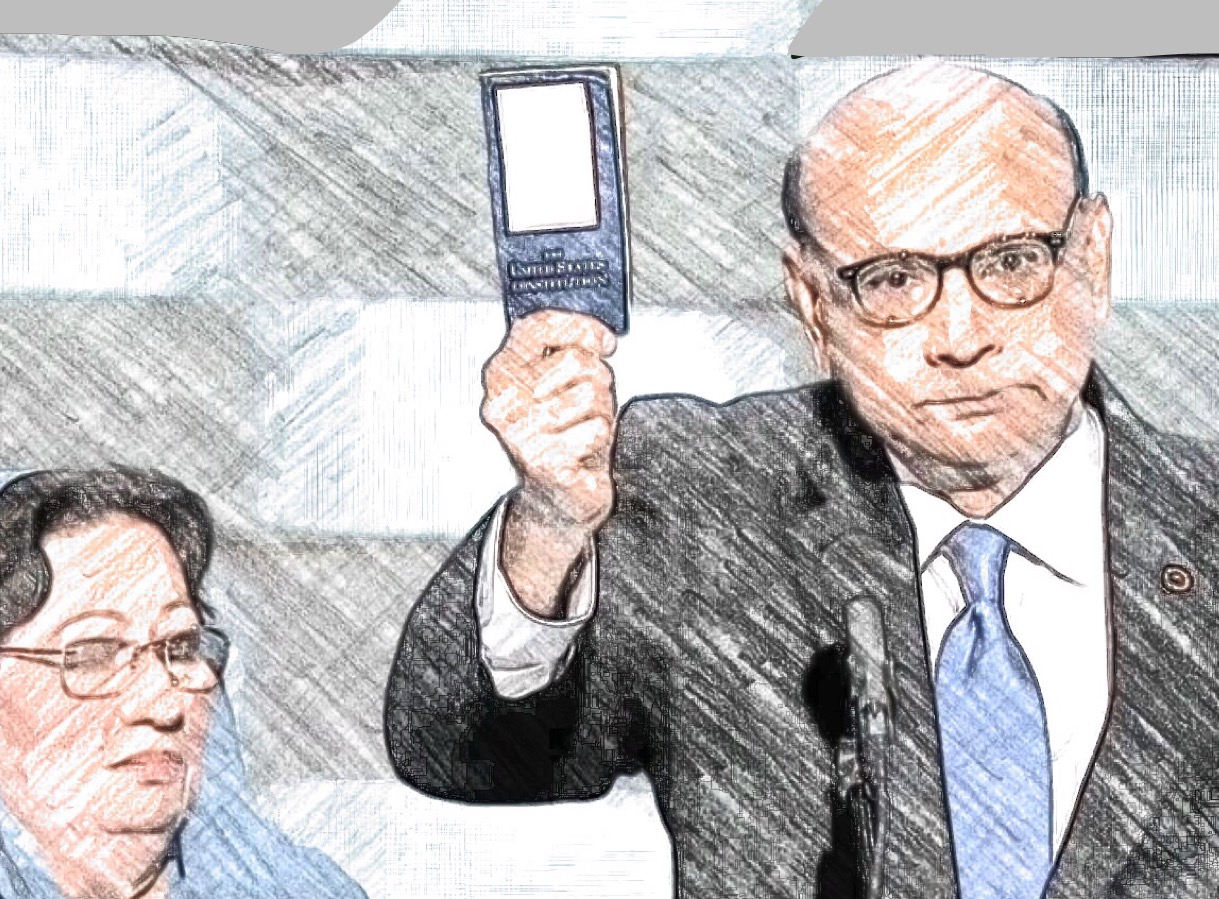
What a question! But, even if you have read the document, it might be worth your time to click on over to Townhall.com, and then migrate back here for more reading.
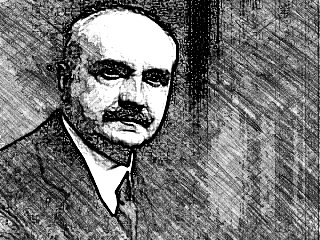
American life is a powerful solvent. As it stamps the immigrant, almost before he can speak English, with an unmistakable muscular tension, cheery self-confidence and habitual challenge in the voice and eyes, so it seems to neutralize every intellectual element, however tough and alien it may be, and to fuse it in the native good-will, complacency, thoughtlessness, and optimism.
George Santayana, Character and Opinion in the United States (1920).

On July 31, 1703, Daniel Defoe — who would later become famous as the author of Robinson Crusoe and other literary works — was placed in a pillory for the crime of seditious libel. The sedition pertained to a satirical pamphlet he had published, “The Shortest-Way with the Dissenters; Or, Proposals for the Establishment of the Church.”  The mob pelted him with flowers.
On the same date in 1912, Milton Friedman was born. Friedman became one of the most influential economists of the 20th century, and one of the most effective advocates of free markets, as well. His books include Capitalism and Freedom and two famous collaborations, A Monetary History of the United States (with Anna Schwartz) and Free to Choose (with his wife, Rose Friedman).

Free trade — Bernie hates it; Hillary has supported special agreements that increase its scope while still putting the government in a quasi-management position (and, pulled by Bernie’s supporters, has has some “second thoughts”); and the Donald has likened it unto “rape.”
But the case for the free market is pretty clear. Economist Bob Murphy makes the case, here, and puts protectionism in its place.
A child educated only at school is an uneducated child.
George Santayana, “Why I Am Not a Marxist” Modern Monthly: Volume: 9 (April 1935); Page: 77-79.
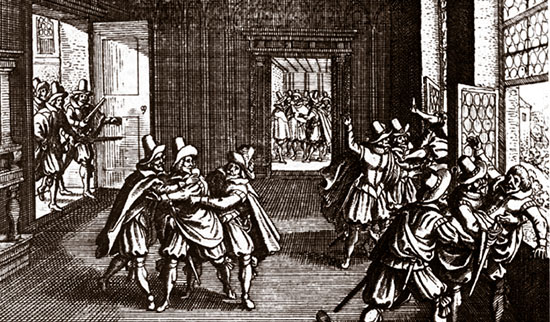
On July 30, 1419, the First Defenestration of Prague: Jan Želivský, a Hussite priest at the church of the Virgin Mary of the Snows, led his congregation on a procession through the streets of Prague to the New Town Hall, on Charles Square. While they were marching, a stone was thrown at Želivský from the window of the town hall. The mob, enraged, stormed the hall. Once inside, the group threw the judge, the burgomaster, and some thirteen members of the town council out of the window and into the street, where they were killed by the fall or dispatched by the mob.
King Wenceslaus IV of Bohemia, upon hearing this news, was so stunned, the legend goes, that he died soon after.
On July 30, 1619, the first representative assembly in the Americas, the House of Burgesses, convened for the first time in Jamestown, Virginia. On the same date in 1676, Nathaniel Bacon issued the “Declaration of the People of Virginia,” beginning Bacon’s Rebellion against the rule of Governor William Berkeley.
On this date in 1863, representatives of the United States and tribal leaders (including the Shoshone’s Chief Pocatello) signed the Treaty of Box Elder.
July 30 birthdays include Henry Ford (1863), Gen. Smedley Butler (1881), C. Northcote Parkinson (1909), and former California Governor Arnold Schwarzenegger (1947).
Vanuatuans celebrate Independence Day on July 30.