Categories
Thought

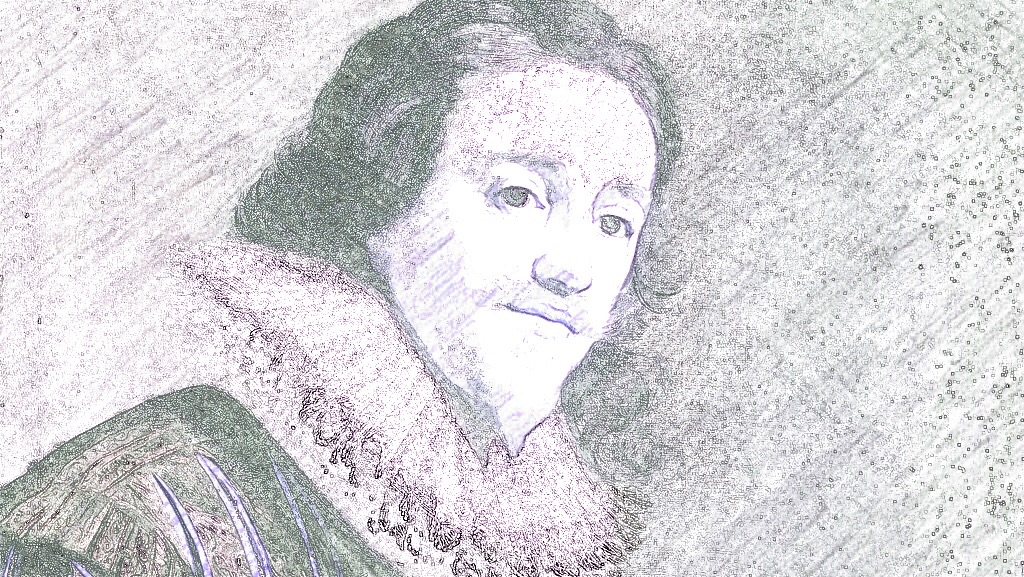
George Santayana

A child educated only at school is an uneducated child.


George Santayana, “Why I Am Not a Marxist” Modern Monthly: Volume: 9 (April 1935); Page: 77-79.

Categories
Today

Out the Window!

On July 30, 1419, the First Defenestration of Prague: Jan Želivský, a Hussite priest at the church of the Virgin Mary of the Snows, led his congregation on a procession through the streets of Prague to the New Town Hall, on Charles Square. While they were marching, a stone was thrown at Želivský from the window of the town hall. The mob, enraged, stormed the hall. Once inside, the group threw the judge, the burgomaster, and some thirteen members of the town council out of the window and into the street, where they were killed by the fall or dispatched by the mob.

King Wenceslaus IV of Bohemia, upon hearing this news, was so stunned, the legend goes, that he died soon after.

On July 30, 1619, the first representative assembly in the Americas, the House of Burgesses, convened for the first time in Jamestown, Virginia. On the same date in 1676, Nathaniel Bacon issued the “Declaration of the People of Virginia,” beginning Bacon’s Rebellion against the rule of Governor William Berkeley.

On this date in 1863, representatives of the United States and tribal leaders (including the Shoshone’s Chief Pocatello) signed the Treaty of Box Elder.

July 30 birthdays include Henry Ford (1863), Gen. Smedley Butler (1881), C. Northcote Parkinson (1909), and former California Governor Arnold Schwarzenegger (1947).

Vanuatuans celebrate Independence Day on July 30.

Categories
Today

de Tocqueville

On July 29, 1805, Alexis de Tocqueville was born. His most famous book, Democracy in America (1835, 1840), quickly became a classic of social and political research and analysis, and remains the most important early book about the United States of America. He is often referred to as a founder of sociology as well as a major figure in the development of classical liberalism.

Categories
Thought

Simon Newcomb

Class after class of men have seen a large part of their employment taken from them by machinery, so that at the present time there is scarcely any demand for the labor which millions of men had to perform a century ago. And yet, in spite of this, the laborer gets higher wages than he did a century ago, and is as fully employed as he ever was. In the whole history of the contest we do not find a case of a general and permanent fall of wages from the introduction of machinery.


Simon Newcomb, Principles of Political Economy (New York: Harper & Brothers, 1886), p. 388.

Categories
Today

The Fourteenth

On July 28, 1868, the 14th Amendment to the Constitution of the United States was certified.

State Ratifications of the 14th Amendment

Categories
Thought

George Santayana

Liberty may be maimed, but not killed; reason may be bent, but not broken.


George Santayana, Egotism in German Philosophy, 1915

Categories
Today

B of E

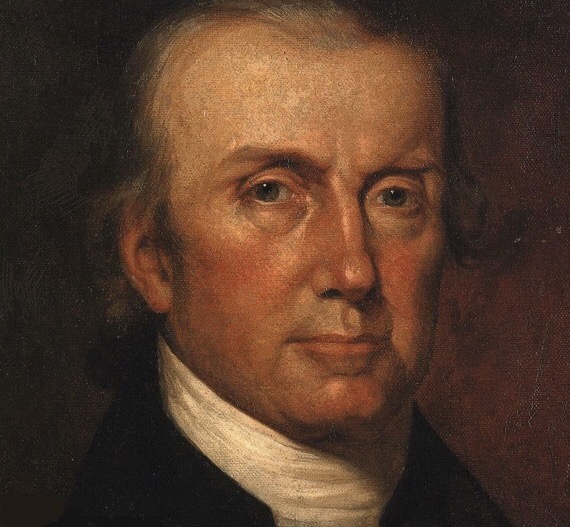
July 27 births include that of Samuel Smith (1872; pictured), an American who served as a captain, major, and lieutenant colonel in the Continental Army, and later as a politician in several capacities in the state of Maryland; Hillaire Belloc (1870), author of a classic analysis of modern political governance, The Servile State; and American singer and songwriter Bobbie Gentry (1944).

On July 27, 1694, the Bank of England received a royal charter, beginning a long history of central banking in England. Subsequent inflationary booms and deflationary busts are subsequently considered “mysterious” by people connected with the bank.

Categories
Thought

Banking and the Business Cycle

During recent years a number of pseudo-economists have indulged in much glibness about the passing of the ‘economy of scarcity’ and the arrival of the ‘economy of abundance.’ Sophistry of this sort has claimed the public ear far too long; it is high time that the speciousness of such fantastic views be clearly and definitely exposed. Attention needs to be focused on the hard elementary fact that man’s darkest curse has ever been his poverty, and that it yet is and promises to continue so for numberless generations. No economist worthy of the name, moreover, should need to be reminded that in the absence of “scarcity” there would be no system of ‘economy’ and no ‘science of economics.’


C.A. Phillips, T.F. McManus, and R.W. Nelson Banking and the Business Cycle: A Study of the Great Depression in the United States (Laissez Faire Books, 2014), originally published 1937.

Categories
Today

Atahualpa

On July 26, 1533, Francisco Pizarro’s Spanish conquistadors strangled to death Atahualpa, the 13th and last emperor of the Incas, thereby ending 300 years of Inca civilization. The conquistadors were greedy and murderous, but the Inca civilization, arguably, was worse: totalitarian and radically inegalitarian. But they made great high-mountain roads. (Arguments about infrastructure promoted by Big Government continue to this very day.)

On this day in 1948, U.S. President Harry S. Truman signed Executive Order 9981 desegregating the U.S. military.

Categories
Thought

Louis Baudin

The Inca’s way of dealing with his whole empire seems not to have differed from his conduct in setting up his capital. His procedure there too was marked by the elaboration of a rational program, its execution by authoritarian decree, and finally the laying down of regulations designed to prevent any occasion of disturbance and to render the organization definite and permanent. Naturally, this system, so logical in its plan, was bound to encounter obstacles in adapting itself to realities.

Louis Baudin, A Socialist Empire: The Incas of Peru.