Categories
Today

Yves Guyot

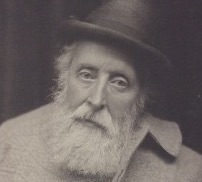
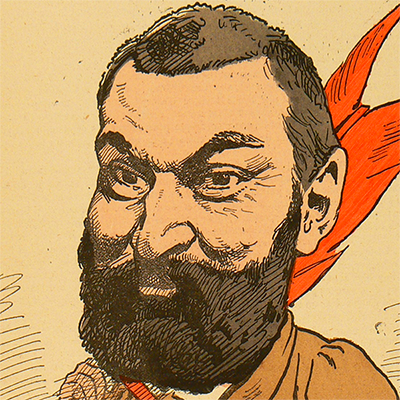
On September 6, 1843, Yves Guyot was born. A journalist, economist, and political activist, he once endured a six-month prison term for his campaign against the prefecture of police. He served as minister of public works under the premiership of P.E. Tirard in 1889, retaining his portfolio in the cabinet of Charles de Freycinet until 1892. A free-trade liberal, he lost his seat in the election of 1893 owing to his militant attitude against socialism. His many books included The Principles of Social Economy (1892), The Tyranny of Socialism (1894), The Comedy of Protection (1906), Socialistic Fallacies (1910), and Where and why Public Ownership Has Failed (1914). He served as editor of Journal des Économistes, following the Belgian economist Gustave de Molinari.

Categories
Thought

Dr. Johnson

Example is always more efficacious than precept.


Samuel Johnson, The History of Rasselas, Prince of Abissinia (1759), Chapter 29.

Categories
Thought

Thomas Jefferson and Peyton Randolph

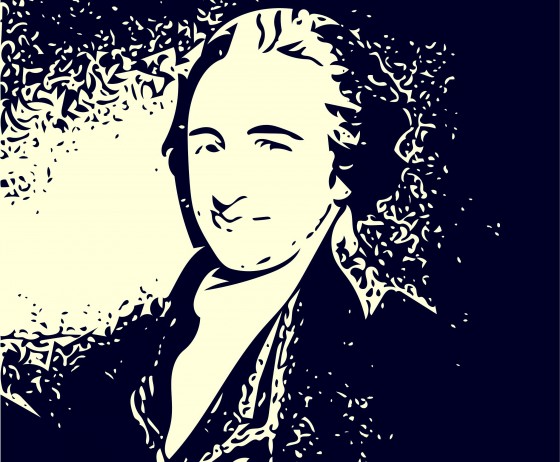
This House, being deeply impressed with apprehension of the great dangers, to be derived to British America, from the hostile Invasion of the City of Boston, in our Sister Colony of Massachusetts bay, whose commerce and harbor are, on the first Day of June next, to be stopped by an Armed force, deem it highly necessary that the said f first day of June be set apart, by the Members of this House, as a day of Fasting, Humiliation and Prayer, devoutly to implore the divine interposition for averting the heavy Calamity which threatens destruction to our Civil Rights, and the Evils of civil War; to give us one heart and one Mind to firmly oppose, by all just and proper means, every injury to American Rights; and that the Minds of his Majesty and his Parliament, may be inspired from above with Wisdom, Moderation, and Justice, to remove from the loyal People of America, all cause of danger, from a continued pursuit of Measure, pregnant with their ruin.


Thomas Jefferson’s Fast Day Resolution, as passed by the Colony of Virginia’s House of Burgesses, Peyton Reynolds presiding, May 24th, 1774.

Categories
Today

First President of Congress

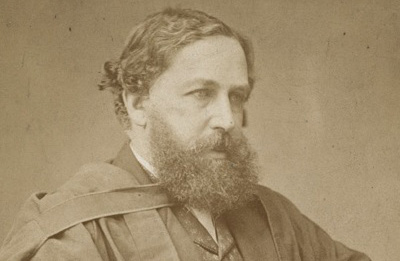
Responding to British Parliament’s enactment of the Coercive Acts in the American colonies, the first session of the Continental Congress convened at Carpenter’s Hall in Philadelphia, on September 5, 1774. Virginian Peyton Randolph (pictured) was appointed as the first president of Congress. John Adams, Patrick Henry, John Jay and George Washington were among the delegates.

Categories
links

Townhall: Rigging the Ballot for the Rich

People power is getting rocky in the Rocky Mountain State. Click on over to Townhall for the full story. Then come back here . . . for more than just that story.

Categories
Today

Rome Fell

Odoacer, a German “barbarian,” ousted Romulus Augustus, the last emperor of the Western Roman Empire, thus ending that empire on September 4, 476.

Categories
video

Video: Dilbert’s Creator on Free Speech and Alt-Right

The Rubin Report, an interesting excerpt from the most recent video:

Dave Rubin’s podcast is available on iTunes and other venues, such as Libsyn.

Categories
Today

Dixy Lee Ray

On September 3, 1914, Dixy Lee Ray was born. Her stint as governor of the State of Washington was a controversial one, as she economized in startling ways, and proved largely unsympathetic to environmentalist politics. Indeed, she later wrote Trashing the Planet, which took on trendy “solutions” to environmental problems, based in no small part on her own experience and perspective as a scientist. She was an early critic of the developing “global warming” pseudo-“consensus.”

Categories
Today

Henry George

September 2 marks the 1839 birthday of American economist and reformer Henry George. George is most famous for his 1879 treatise, Progress and Poverty, but made many other contributions, including advocacy of the secret ballot and his able economic policy polemic Protection or Free Trade (1886).

Categories
Thought

Eugene Field

Human thought is like a monstrous pendulum: it keeps swinging from one extreme to the other. Within the compass of five generations we find the Puritan first an uncompromising believer in demonology and magic, and then a scoffer at everything involving the play of fancy.


Eugene Field, The Writings in Prose and Verse of Eugene Field: The love affairs of a Bibliomaniac (1896), “The Mania of Collecting Seizes Me,” (chapter 4), p. 44.