A much-awaited, much-dreaded speech:
https://youtu.be/Ae4VZTVEFC4
The culture of violence around it:
The speechmaker’s wrap-up:
A much-awaited, much-dreaded speech:
https://youtu.be/Ae4VZTVEFC4
The culture of violence around it:
The speechmaker’s wrap-up:
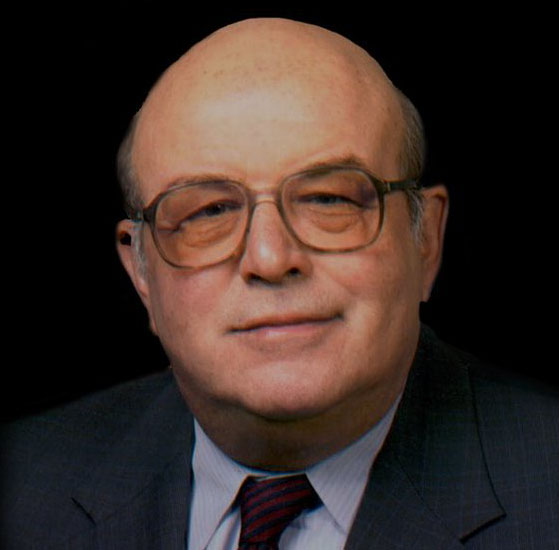
All mass murderers — all of the state terrorists on a grand scale, whatever their ethnicity or that of their victims — must be arraigned before the court of history. It is impermissible to let some of them off the hook, even if the acts of others may be characterized as unique in their brazen embrace of evil and their sickening horror. As Lord Acton said, the historian should be a hanging judge, for the muse of history is not Clio, but Rhadamanthus, the avenger of innocent blood.
Ralph Raico, “The Taboo Against Truth: Holocausts and Historians,” Liberty, September 1989.
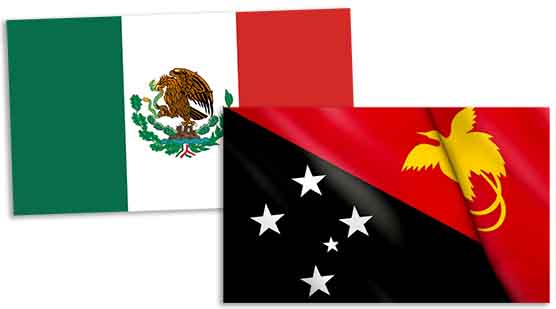
September 16 marks the Independence Days for Mexico (celebrating the declaration of independence from Spain in 1810) and Papua New Guinea (commemorating the exit from Australia in 1975).
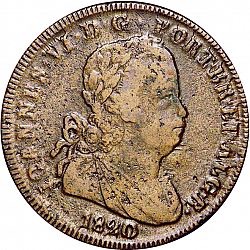
On September 15, 1820, an uprising occurred in Lisbon, Portugal, following similar insurrection in Porto the previous month. This was no bloodthirsty mob, but, instead, a popular demand for constitutional government. Unfortunately, the country was beset with imperial and monarchical problems for some time to come.
The United Nations established September 15 as International Day of Democracy, in 2007. An Independence Day is celebrated on this date in Guatemala (a Patriotic Day), El Salvador, Honduras, Nicaragua, and Costa Rica, commemorating independence from Spain in 1821.
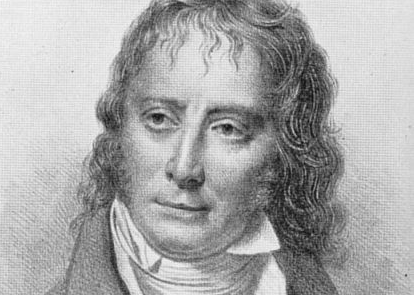
Political liberty, by submitting to all the citizens, without exception, the care and assessment of their most sacred interests, enlarges their spirit, ennobles their thoughts, and establishes among them a kind of intellectual equality that forms the glory and power of a people.
Benjamin Constant The Liberty of the Ancients Compared with That of the Moderns, 1819
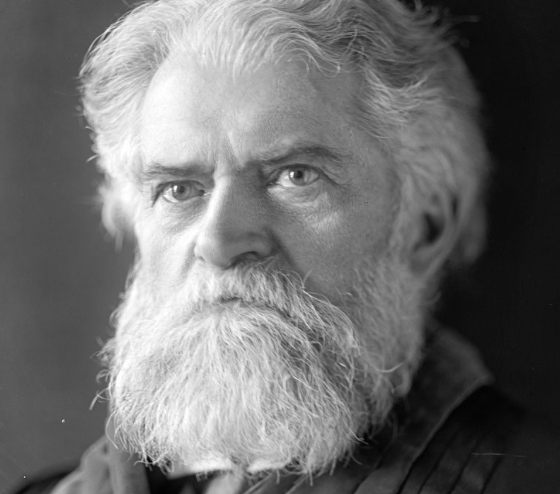
A common mistake is that the conclusions of the plain unlettered man differ from those of economists in being more immediately founded on observed facts and less on deduction. The truth is that the plain unlettered man is more prone to rely on deduction from unproved hypotheses than the economist is. All classes must equally use deduction, because it is only by this logical process that we form any conclusion about the future effect of any present cause. Drawing the conclusion that rain will follow a certain direction of the wind with certain appearances of the clouds is an act of logical deduction. The main point in which men’s logical methods differ lies in the care with which hypotheses are formed by induction from observed facts, and the readiness of men to test them. Now it is the plain man who is most prone to form hasty generalizations from insufficient facts, to consider the conclusions which he thence deduces as final, and to be blind to all facts which do not tally with his theory.
Simon Newcomb, Principles of Political Economy, 1886, p. 40
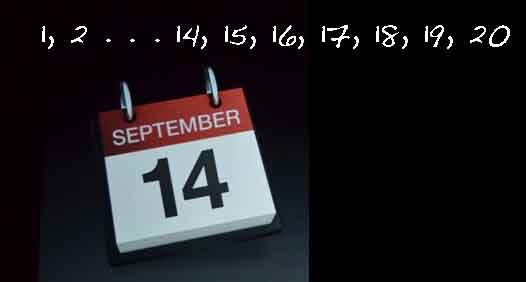
In 1752, throughout the British Empire, September 2 was followed, the next day, by September 14, as the government adopted the Gregorian calendar, skipping eleven days.
On September 14, 1944, Maastricht becomes the first Dutch city to be liberated by allied forces.
‘Speaking truth to power’ is not easy when you support that power. Perhaps this is the reason why so few Western historians are willing to tell the whole truth about state crimes during this century.
Ralph Raico, “The Taboo Against Truth: Holocausts and Historians,” Liberty, September 1989.
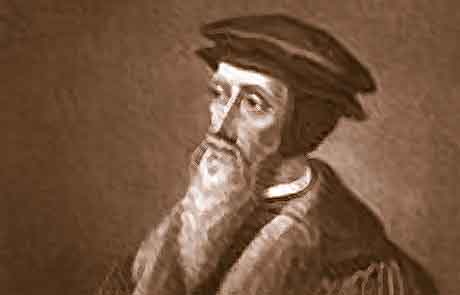
John Calvin [pictured above] returned to Geneva on September 13, 1541, after three years of exile. His subsequent work in church reform and theology became known as Calvinism, and profoundly influenced the course of European and (eventually) American civilization, including several concepts of servitude and liberty.
On the same date in 1989, Desmond Tutu led South Africa’s largest march aganst Apartheid.

As we explore the world of thoughts our changing understandings change its shape. Things we thought we knew disappear as unexpected beings take their place, and we move among different and higher platforms of understanding. The real secret of philosophy has perhaps always been the joy of escaping into this wonderland and playing in it freely, a joy that has even tempted sensible men to give up their practical lives. The necessarily unphilosophical State has never been able to understand the temptation of a liberating joy as anything but disloyalty.
Corey Abel, review of Liberty, Individuality, and Democracy in Jorge Luis Borges by Alejandra Salinas (Lanham MD, Lexington Books: 2017), in Voegelinview.