On May 13, 1888, Brazil abolished slavery with the passage of the Lei Áurea (“Golden Law”).
Brazilian slavery
On May 13, 1888, Brazil abolished slavery with the passage of the Lei Áurea (“Golden Law”).
Sincere enthusiasm is the only orator who always persuades. It is like an art the rules of which never fail; the simplest man with enthusiasm persuades better than the most eloquent with none.
La Rochefoucauld, Réflexions ou sentences et maximes morales, (1665, 1678), eighth maxim.
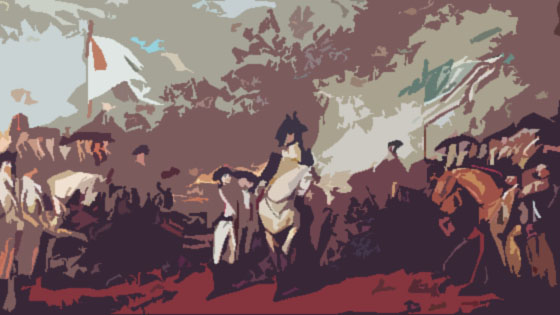
On May 12, 1943, Axis forces in North Africa surrendered.
Suspicion is a virtue as long as its object is the public good, and as long as it stays within proper bounds. . . . Guard with jealous attention the public liberty. Suspect every one who approaches that jewel.
Patrick Henry, Virginia Ratifying Convention (June 5, 1788), speech regarding the Federal Constitution.
On May 11, 1858, Minnesota was admitted as the 32nd U.S. State.
Nine years later, to the day, the Grand Duchy of Luxembourg’s independence and neutrality were affirmed in the Second Treaty of London.
One thing I hate about the New Deal is that it is killing what, to me, is the American pioneering spirit. I simply do not know what to tell my own boys, leaving school and confronting this new world whose ideal is Security and whose practice is dependence upon government instead of upon one’s self. . . . All the old character-values seem simply insane from a practical point of view; the self-reliant, the independent, the courageous man is penalized from every direction.
Rose Wilder Lane, Journal entry (April 15, 1937), as quoted in The Ghost in the Little House, ch. 14, by William V. Holtz (1993)
When someone has behaved like an animal, he says: ‘I’m only human!’ But when he is treated like an animal, he says: ‘I’m human, too!’
On May 10, 1872, Victoria Woodhull became the first woman nominated for President of the United States.
In a landmark Supreme Court decision on May 10, 1893, the tomato was ruled a vegetable, not a fruit.
Tell me to what you pay attention and I will tell you who you are.
José Ortega y Gasset, Man and Crisis (1962), p. 94.
On May 9, 1800, abolitionist revolutionary (and, technically, terrorist) John Brown was born.
In 1883 on this date, Spanish philosopher José Ortega y Gasset was born.