Categories
Thought

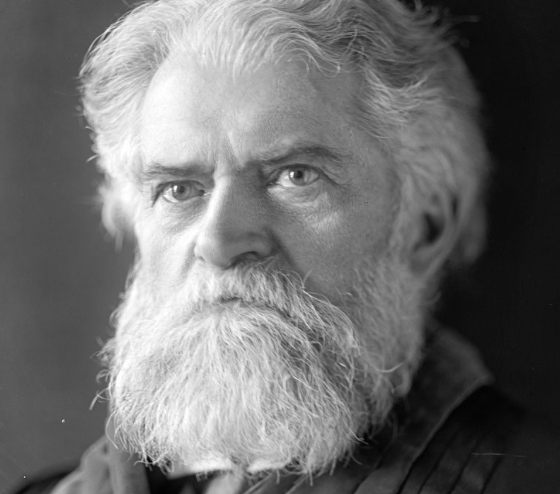
Yves Guyot

“It is not the astronomer’s business to consider whether it would be better if the sun were nearer or farther from the earth, or if he turned round her, instead of turning round him. Nor is it the chemist’s business to consider whether carbonic acid and carbonic oxide are noxious gases that ought not to exist. It has never been thought desirable to make Newton responsible for tiles falling on the people’s heads.

“Economists, however, are held answerable for the laws which they discover.”

Categories
video

Fair Shares?

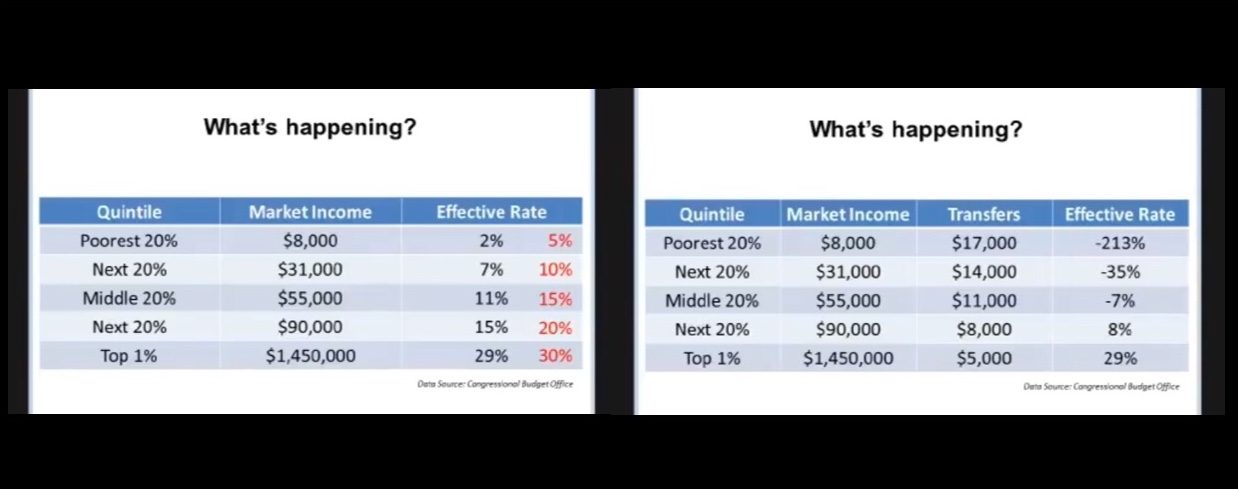
Some data about who is and is not paying their alleged ”fair share“ in taxes:

https://youtu.be/Anx4e1i4k5w

Categories
Today

Tell and Shaw

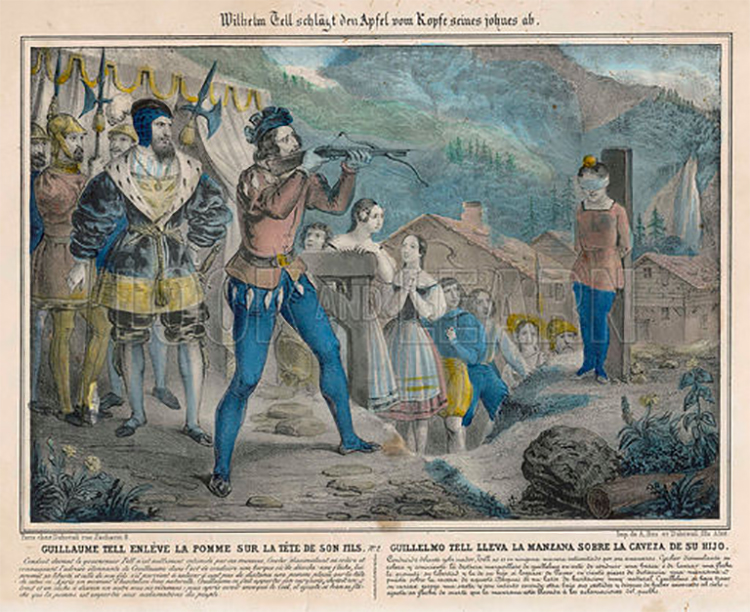
On November 18, 1307, legend has it, William Tell shot a crossbow bolt to pierce an apple, toppling it off his son’s head. He was forced to do this by the local Austrian authority, whose hat hung on a pole in the Altdorf town square Tell had refused to bow to when entering the village. Tell endures as a Swiss folk hero, and provides the subject of a famous opera by Rossini — the music of which is associated with, in many ears, Bugs Bunny and the Lone Ranger.

In 1926, on this date, George Bernard Shaw formally refused to accept the money for his Nobel Prize for Literature, saying, “I can forgive Alfred Nobel for inventing dynamite, but only a fiend in human form could have invented the Nobel Prize.”

Categories
Thought

Simon Newcomb

A common mistake is that the conclusions of the plain unlettered man differ from those of economists in being more immediately founded on observed facts and less on deduction. The truth is that the plain unlettered man is more prone to rely on deduction from unproved hypotheses than the economist is. All classes must equally use deduction, because it is only by this logical process that we form any conclusion about the future effect of any present cause. Drawing the conclusion that rain will follow a certain direction of the wind with certain appearances of the clouds is an act of logical deduction. The main point in which men’s logical methods differ lies in the care with which hypotheses are formed by induction from observed facts, and the readiness of men to test them. Now it is the plain man who is most prone to form hasty generalizations from insufficient facts, to consider the conclusions which he thence deduces as final, and to be blind to all facts which do not tally with his theory.

Simon Newcomb, Principles of Political Economy, 1886, p. 40.

Categories
Today

Confederation

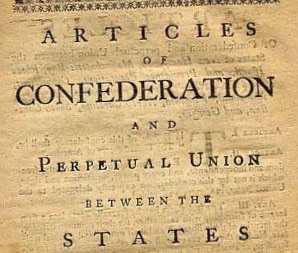
On November 17, 1777, the Articles of Confederation were submitted to the states for ratification.

On that date in 1800, the United States Congress held its first session in Washington, D.C.

Categories
Thought

Yves Guyot

If you try to lessen or restrict competition for your private benefit, you are not denying the truth of an economic law; you are only trying to turn it to your own advantage.


Categories
Thought

Louis Baudin

It is incumbent upon us to take action if we do not wish to become the subjects of a new Inca empire.

Categories
Today

Inca’s End

Francisco Pizarro and his men captured Inca Emperor Atahualpa at the Battle of Cajamarca on November 16, 1532. However murderous and greedy Pizarro undoubtedly was, the Inca’s empire was as evil as the Soviet Union, so, well, some recognition is due.

Categories
Today

The Original Confederation, Formalized

On November 15, 1777, the Continental Congress approved, and sent to the states for ratification, the “Articles of Confederation — after 16 months of deliberation. The first article gave the official name of the confederacy:

The Stile of this Confederacy shall be

The United States of America.

Categories
Thought

Lao Tzu

A journey of a thousand leagues starts with a single step.