Categories
Thought

James A. Garfield

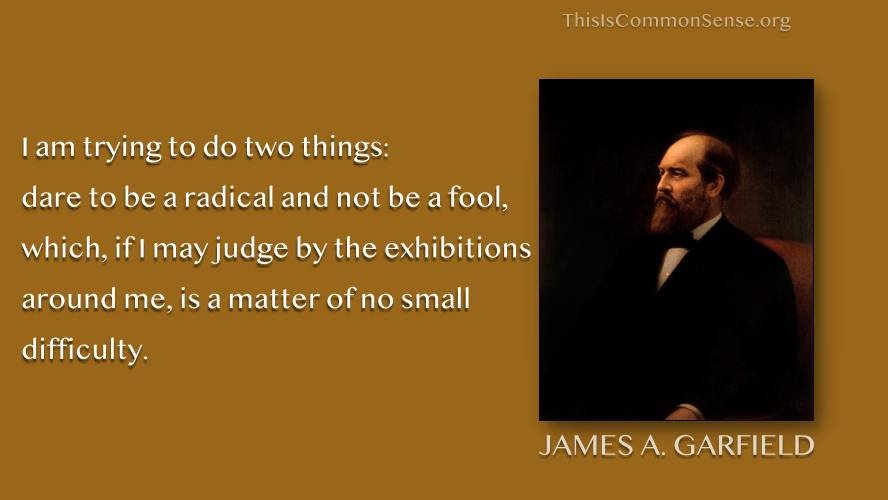
I am trying to do two things: dare to be a radical and not be a fool, which, if I may judge by the exhibitions around me, is a matter of no small difficulty.

James A. Garfield, in a letter to Burke Aaron Hinsdale (January 1, 1867); quoted in The Life of Gen. James A. Garfield (1880) by Jonas Mills Bundy, p. 77.
Categories
Today

The Weehawken Duel

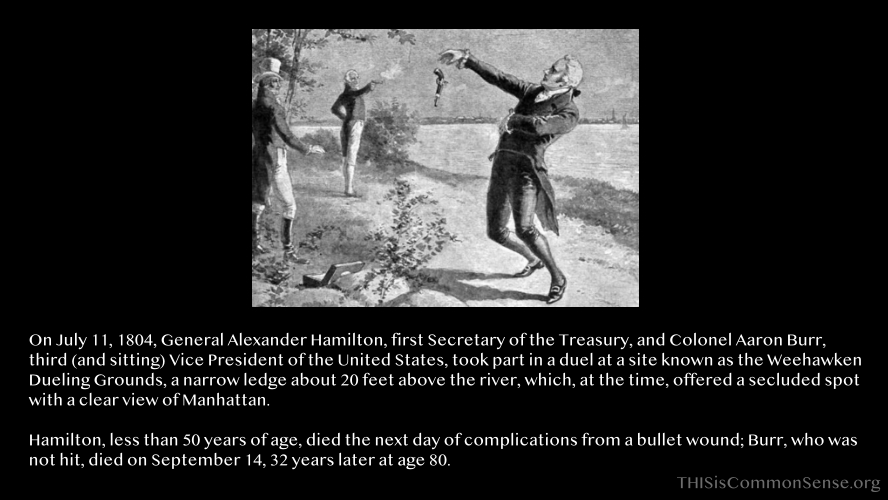
On July 11, 1804, General Alexander Hamilton, first Secretary of the Treasury, and Colonel Aaron Burr, third (and sitting) Vice President of the United States, took part in a duel at a site known as the Weehawken Dueling Grounds, a narrow ledge about 20 feet above the river, which, at the time, offered a secluded spot with a clear view of Manhattan. 

Hamilton, less than 50 years of age, died the next day of complications from a bullet wound; Burr, who was not hit, died on September 14, 32 years later at age 80.

Categories
deficits and debt partisanship too much government

Upstart?

The spectacular fallout between Donald Trump and Elon Musk over the Big Beautiful Bill in particular (but deficit spending and debt accumulation in general) promises political watchers a big, ugly brawl.*

Now, billionaire Musk appears to be serious about his proposed “third party,” the “America Party.” A name perfectly designed to ruffle Trumpian feathers. It might steal some of the thunder of “America First” and “Make America Great Again.”

The president mocks the notion, saying that third parties “have never succeeded in the United States.”

Well, that is not exactly true. For a long time, it was second parties that had problems. 

The first party, the Federalists, basically lost for a generation, finally withering away against the onslaught of that most American party of all, the Democratic-Republican. 

When the victorious party reformed under the leadership of Andrew Jackson and Martin Van Buren to become the Democratic Party, the Whig Party emerged to counter-act Jackson’s imperial presidency. The Whigs had some success — if with a string of presidents almost no one remembers — only to lose ground to Democrats and then a whiggish replacement, the Republican Party.

Yes, Trump’s own party was a “third” party once.

And it achieved power largely because the Democrats split into two for the 1860 election, leaving a sectional plurality candidate (Abraham Lincoln) to win the Electoral College as a Republican.

In modern times, Republicans and Democrats have ably squelched challenger parties

So Trump’s right — in spirit.

Now enter Andrew Yang, enthusiastic for the upstart. But how can his Universal Basic Income agenda fit with Elon’s fight against over-spending? 

This is Common Sense. I’m Paul Jacob.


* Though, some wonder if the Trump-Musk feud isn’t all an act.

PDF for printing

Ilustration created with Krea and Firefly

See all recent commentary
(simplified and organized)
See recent popular posts

Categories
Thought

David D. Friedman

In the ideal socialist state, power will not attract power freaks. People who make decisions will show no slightest bias towards their own interests. There will be no way for a clever man to bend the institutions to serve his own ends. And the rivers will run uphill.

David Director Friedman, The Machinery of Freedom (1973), p. 108.
Categories
Today

Anti-Bankster

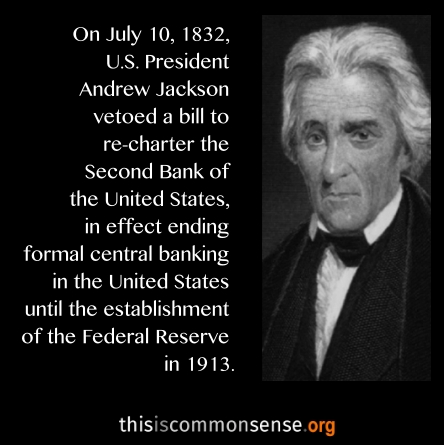
On July 10, 1832, U.S. President Andrew Jackson vetoed a bill to re-charter the Second Bank of the United States, in effect ending formal central banking in the United States until the establishment of the Federal Reserve in 1913.

Categories
insider corruption scandal

The Devil and the Deep Blue Dress

There is a slim possibility that Jeffrey Epstein did actually kill himself, but what possibility is there that he wasn’t running an elaborate blackmail/spy endeavor — a “honey pot” scam — for major Deep State outfits, foreign or domestic?

Or both.

So when Axios scooped everybody, Monday, with the story that the FBI had closed the Epstein case, most rolled their eyes. Not that they didn’t believe Axios. They didn’t believe the aptness of judgment in closing the case.

Even if Epstein did actually commit suicide, it was still a huge criminal justice failure for that act to not have been prevented. And for the notorious Epstein files (remember that the Attorney General had said she had them on her desk) to suddenly go poof! . . . does not inspire confidence. 

Frankly, there’s no reason to trust the government. Especially on this.

Why? We all pretty much believe the initial reports. We remember the image of Bill Clinton — it is surely seared into many a brain, alas for those brains — posing in a blue dress, portrait hung up prominently in Epstein’s trap, I mean, townhouse.

The ties to Israeli intelligence and politics and U.S. spymasters has been fairly well established — at least Whitney Webb’s readers seem certain — and that brings us to the bottom line:

Donald Trump is not shining light upon the Stygian Deep State here, nor “draining the swamp.”

“I can’t believe you’re asking a question on Epstein,” the president said, interposing himself between a reporter and Attorney General Pam Bondi. Trump eagerly added context: all the “successes” and “tragedies” of the current day. Videos? Computer files? Victims? Lolita Island? Brushed aside.

As if unimportant.

Thus America’s unexpected encounter with the dark, Deep State. They insist we blithely accept that there is nothing to see here.

This is Common Sense. I’m Paul Jacob.


PDF for printing

Illustration created with Krea and Firefly

See all recent commentary
(simplified and organized)
See recent popular posts
Categories
Thought

Stewart Brand

Science is the only news. When you scan through a newspaper or magazine, all the human interest stuff is the same old he-said-she-said, the politics and economics the same sorry cyclic dramas, the fashions a pathetic illusion of newness, and even the technology is predictable if you know the science. Human nature doesn’t change much; science does, and the change accrues, altering the world irreversibly.

Stewart Brand, Whole Earth Discipline (2009), p. 216.
Categories
Today

A Declaration Read

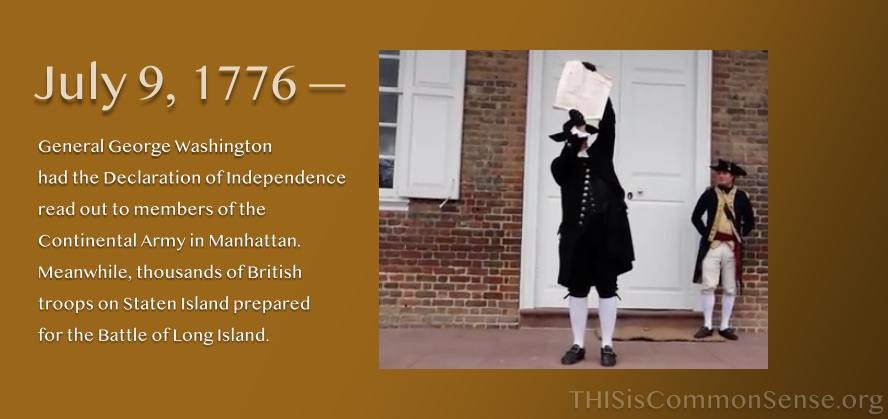
On July 9, 1776, General George Washington had the Declaration of Independence read out to members of the Continental Army in Manhattan. Meanwhile, thousands of British troops on Staten Island prepared for the Battle of Long Island.

Categories
partisanship

No-Play Partisanship

In the Great Lakes State, the governor is entrusted to call special elections when a legislative seat is left vacant. Last November, the senator representing the 35th state senate district was elected to the U.S. Congress, leaving her state senate seat officially vacant. 

“With McDonald Rivet heading to Congress,” a Michigan Advance headline asked last November, “who will fill her open Michigan Senate seat?”

When the Legislature convened in early January, Gretchen Whitmer, governor of Michigan, had yet to call the election. 

“After 85 days with no action, Whitmer still won’t call special election to fill McDonald-Rivet’s former Senate seat,” reads a January 30th headline in The Midwesterner.

“If there’s an opening on the Democrat side,” GOP chairman and State Senator Jim Runestad said of Gov. Whitmer in February, “she’s ‘Johnny on the spot,’ appointing someone within days.” 

In the past, Whitmer has averaged just 17 days to set a special election, in one case calling it within 24 hours of the vacancy . . . when it helped Democrats. 

“Whitmer confirms 35th district special election will happen,” WCMU Radio titled its early April story . . . showing remarkable restraint not to add the word “someday.”

“At some point there will be one,” the governor had offered, “but I don’t have an announcement to make yet.”

“145 Days and Counting” topped a Michigan News Source article in late May. The state’s Lieutenant Governor explained that he had “spent time in the district” and thinks “people are certainly ready for it.”

It’s now July, 186 days counting and still no representation for Michigan’s 35th state senate district. 

Michigan Democrats have a one-seat Senate majority at present, 19-18. If the 35th goes Republican, it would even up the Senate. While the district did vote for a Democrat for Congress last November, it also went for President Trump. Gov. Whitmer does not trust those people to vote her way.

Deny political representation to 270,000 people? Whitmer’s up for it if doing so serves her partisan interests. 

This is Common Sense. I’m Paul Jacob.


Note: The Michigan Freedom Fund website, RestoreMiVoice.org, asks: “How long will the Great Lakes Bay Region be without a voice in the State Senate?” Call Governor Witmer at (517) 335-7858 or email her at Gretchen.Whitmer@michigan.gov and demand an answer.

PDF for printing

Illustration created with Krea and Firefly

See all recent commentary
(simplified and organized)
See recent popular posts


Categories
Thought

James A. Garfield

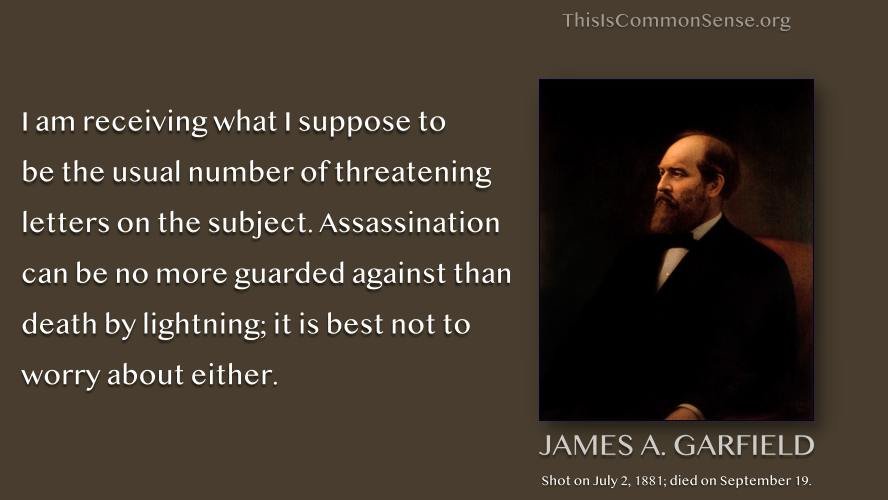
I am receiving what I suppose to be the usual number of threatening letters on the subject. Assassination can be no more guarded against than death by lightning; it is best not to worry about either.

James A. Garfield, as quoted in Garfield of Ohio: The Available Man (1970) by John M. Tyler. Garfield, the 20th president of the United States, was shot on July 2, 1881, and died of the wound and iatrogenic interventions on September 19 of that year.