Categories
links

Townhall: The Man Who Saved the Evergreen Constitution

A major win — a double win! — for citizens-in-charge government.

Click on over to Townhall for the big story. And the come back here for a little more:

Categories
Today

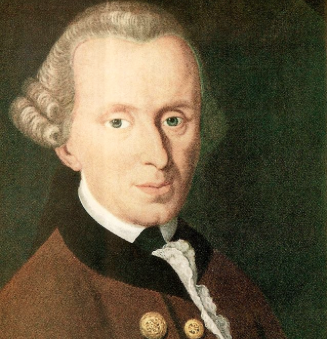
Immanuel Kant

On April 22, 1724, philosopher Immanuel Kant was born.

Aside from being the pre-eminent modern philosopher and originator of transcendental idealism, Kant was also a major figure of Enlightenment thought, a classical liberal, and the originator of the notion of the Categorial Imperative. He was an early and important astronomical theorist in his early career, but produced his greatest works towards the end of his life, including The Critique of Pure Reason and The Groundwork for the Metaphysics of Morals. He was also author of the 1795 essay “Perpetual Peace: A Philosophical Sketch.”

Arthur Schopenhauer is widely known as an admiring and astute critic of Kant’s thought, while philosophical opponents include Friedrich Nietzsche and Ayn Rand. Kant’s approach to ethics continues to excite interest today, with some of the revival a result of the work of John Rawls.

Kant died on February 12, 1804, in Königsberg, Prussia (now Kaliningrad, Russia), where he had lived the bulk of his life.

Categories
Thought

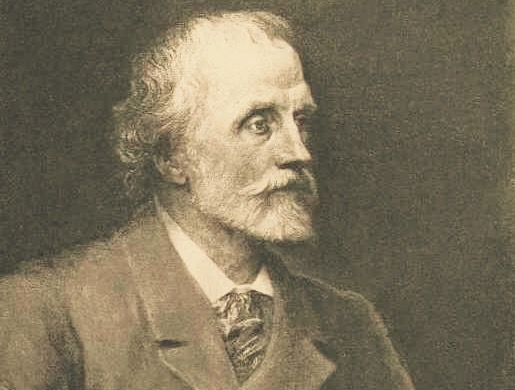
George Meredith

Kissing don’t last; cookery do!


George Meredith, The Ordeal of Richard Feverel (1859), chapter 28.

Categories
video

Tom Sowell on Schooling, Discrimination, Everything

An excerpt from Dave Rubin’s recent big interview with Thomas Sowell:

And here is the first part of that interview:

Categories
Thought

Dave Barry

Scientists tell us that the fastest animal on earth, with a top speed of 120 ft/sec, is a cow that has been dropped out of a helicopter.

Categories
Today

F-Word Defined

The Manifesto of Fascist Intellectuals was first published in Il Mondo, then by most Italian newspapers on April 21, 1925 — the national, anniversary-day celebration of the Founding of Rome (ca.  April 21, 753 BC).

Nowadays, all sorts of people call their political opponents “fascist,” often on the shakiest of rationales. It might be a good idea to look up this original document, for a good idea what politics’ “f-word” originally meant. Here is an excerpt:

Fascism was . . . a political and moral movement at its origins. It understood and championed politics as a training ground for self-denial and self-sacrifice in the name of an idea, one which would provide the individual with his reason for being, his freedom, and all his rights. The idea in question is that of the fatherland. It is an ideal that is a continuous and inexhaustible process of historical actualization. It represents a distinct and singular embodiment of a civilization’s traditions which, far from withering as a dead memory of the past, assumes the form of a personality focussed on the end towards which it strives. The fatherland is, thus, a mission.

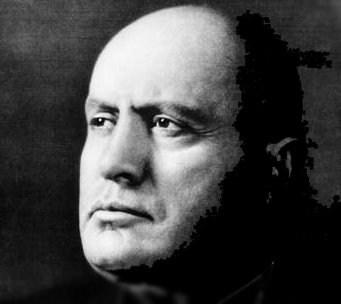
The manifesto was written by Giovanni Gentile, in support of the regime of Benito Mussolini (pictured above).

Categories
Today

New Amsterdam

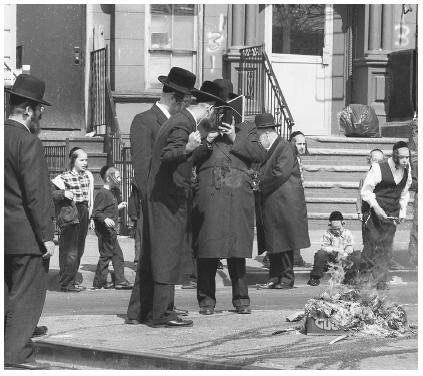
On April 20, 1657, freedom of religion was granted to the Jews of New Amsterdam (which was later renamed New York City).

Categories
Thought

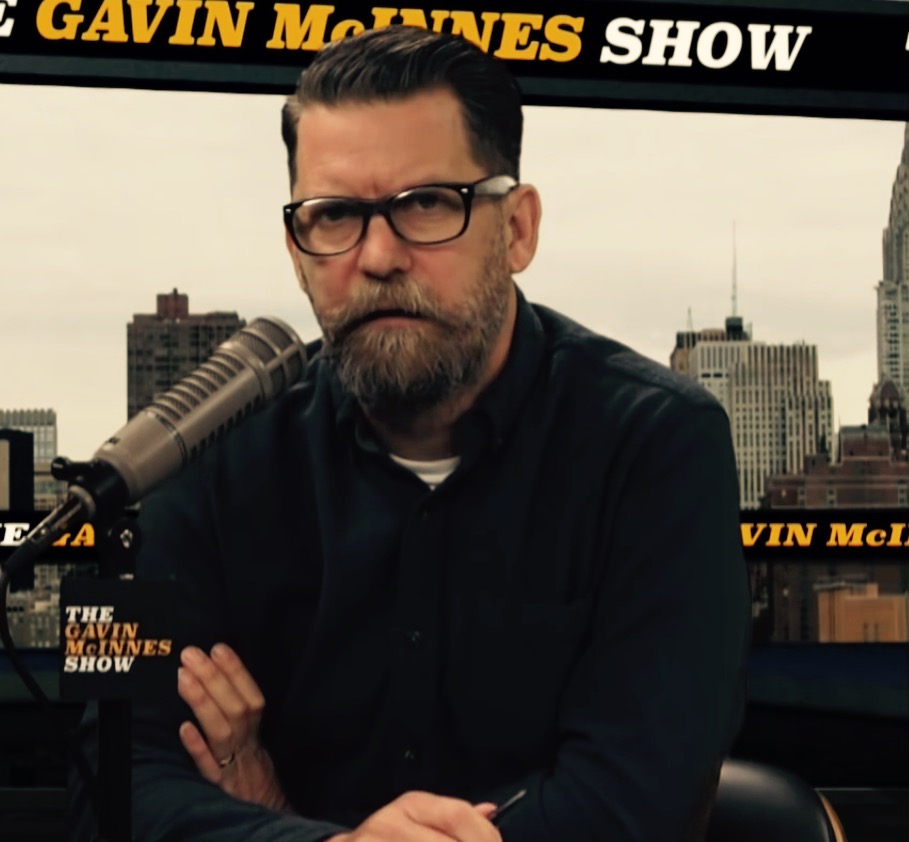
Gavin McInnes

Only use lizard sources.


Gavin McInnes, on The Gavin McInnes Show, characterizing modern p.c. University standards of essay writing, making fun of postmodern pedagogy. For full context, see:

The relevant section begins about 3:34 in the video. The full quotation makes complete sense.

Categories
Today

The Revolution Begins

On April 19, 1775, the American Revolution began when the “shot heard around the world” was fired between the 700 British troops on a mission to capture Patriot leaders Sam Adams and John Hancock and to seize a Patriot arsenal and the 77 armed minutemen under Captain John Parker waiting for them on the Lexington town green. The Battle of Lexington ended with eight Americans killed and ten wounded, along with one wounded British soldier.

In Concord, a couple of hours later, British troops were encircled by hundreds of armed Patriots. The British commander ordered his men to return to Boston without directly engaging the Americans, but on the 16-mile journey they were constantly attacked by Patriot marksmen firing at them Indian-style from behind trees, rocks, and stone walls. By the time the British reached the safety of Boston, nearly 300 soldiers had been killed, wounded, or were missing in action. The Patriots suffered fewer than 100 casualties. (See Liberty’s Kids for a video on these events, or the video featured on this page.)

On April 19, 1782, John Adams secured the Dutch Republic’s recognition of the United States as an independent government.

Categories
Thought

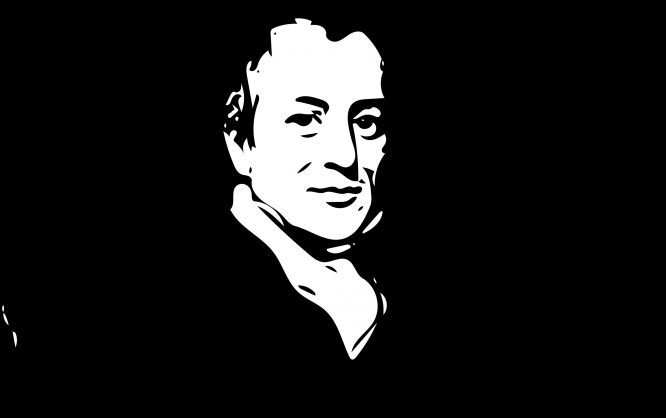
David Ricardo

Neither machines, nor the commodities made by them, rise in real value, but all commodities made by machines fall, and fall in proportion to their durability.