Categories
Today

The Fourth

July Fourth events include:

1054 – A supernova was spotted by Chinese, Arab, and possibly Amerindian observers near the star Zeta Tauri, remaining, for several months, bright enough to be seen during the day. Its remnants form the Crab Nebula.

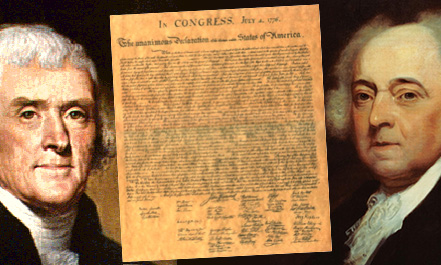
1776 — The Second Continental Congress approved the Declaration of Independence, thus formalizing its policy of secession from the rule of the Kingdom of Great Britain.

1803 — The Louisiana Purchase was announced to the American people.

1804 – Nathaniel Hawthorne, American author of The Scarlet Letter, House of Seven Gables, The Blithesdale Romance, and other classics, was born.

1826 – Thomas Jefferson, third president of the United States, died a few hours before John Adams, second president of the United States, on the fiftieth anniversary of the adoption of the United States’ Declaration of Independence.

1826 – Stephen Foster, composer of “Old Black Joe,“ ’“Beautiful Dreamer,” and many other classic American songs, was born.

1827 – Slavery was abolished in New York State.

1831 – Samuel Francis Smith wrote “My Country, ’Tis of Thee” for Boston’s July 4th festivities, set to the tune of Great Britain’s national anthem, “God Save the King/Queen.”

2009 – The Statue of Liberty’s crown re-opened to the public after eight years of closure that resulted from security concerns following the September 11, 2001, attacks.


Categories
Thought

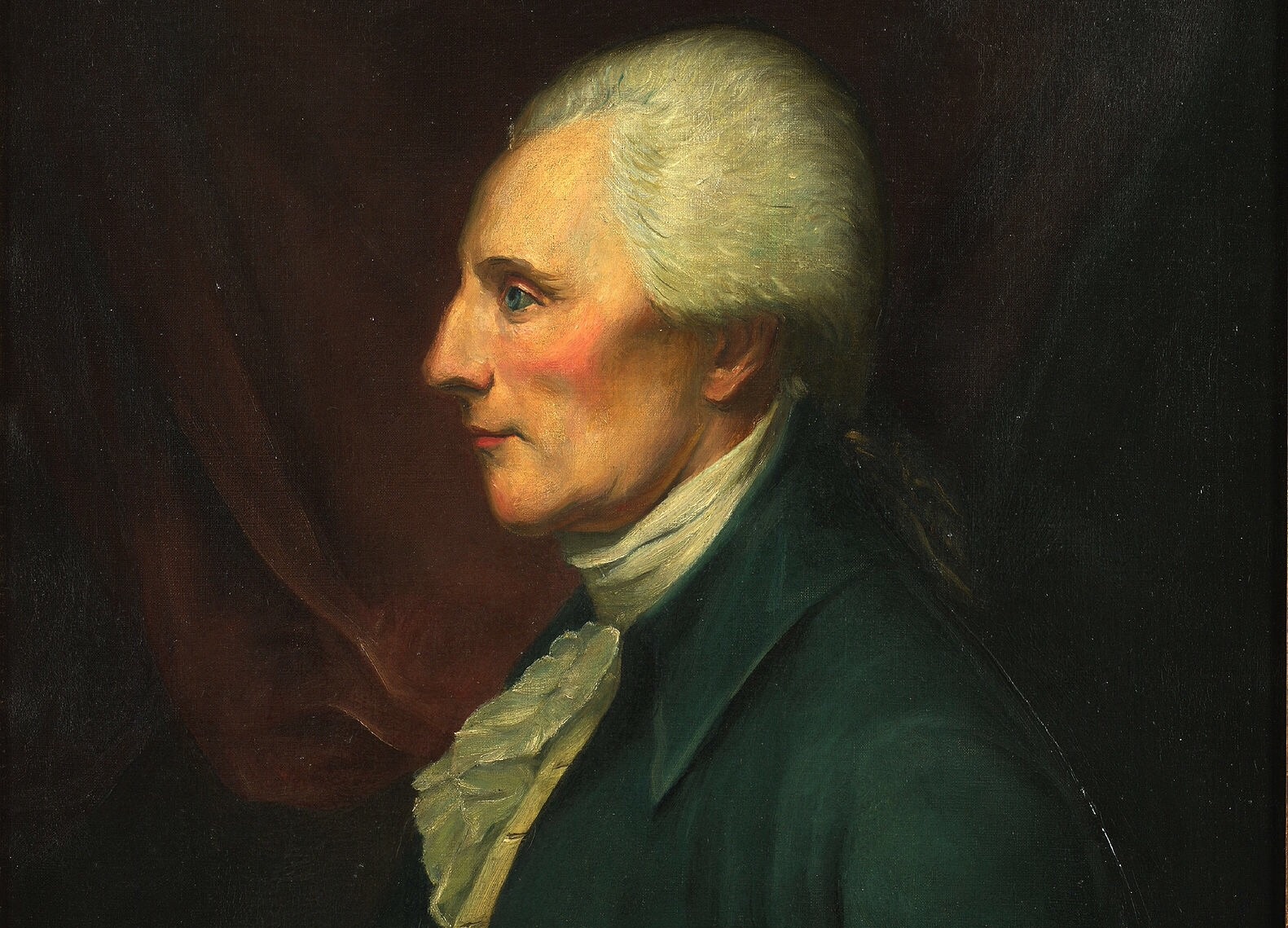
George Mason

Introduced by George Mason at the Virginia Convention in the Capitol in Williamsburg.
Unanimously adopted June 12, 1776:

A DECLARATION OF RIGHTS made by the representatives of the good people of Virginia, assembled in full and free Convention, which rights do pertain to them, and their posterity, as the basis and foundation of government.

  1. THAT all men are by nature equally free and independent, and have certain inherent rights, of which, when they enter into a state of society, they cannot, by any compact, deprive or divest their posterity; namely, the enjoyment of life and liberty, with the means of acquiring and possessing property, and pursuing and obtaining happiness and safety.
  2. That all power is vested in, and consequently derived from, the people; that magistrates are their trustees and servants, and at all times amenable to them.
  3. That government is, or ought to be, instituted for the common benefit, protection, and security, of the people, nation, or community; of all the various modes and forms of government that is best, which is capable of producing the greatest degree of happiness and safety, and is most effectually secured against the danger of mal-administration; and that whenever any government shall be found inadequate or contrary to these purposes, a majority of the community hath an indubitable, unalienable, and indefeasible right, to reform, alter, or abolish it, in such manner as shall be judged most conducive to the publick weal.
  4. That no man, or set of men, are entitled to exclusive or separate emoluments or privileges from the community, but in consideration of publick services; which, not being descendible, neither ought the offices of magistrate, legislator, or judge, to be hereditary.
  5. That the legislative and executive powers of the state should be separate and distinct from the judicative; and, that the members of the two first may be restrained from oppression, by feeling and participating the burthens of the people, they should, at fixed periods, be reduced to a private station, return into that body from which they were originally taken, and the vacancies be supplied by frequent, certain, and regular elections, in which all, or any part of the former members, to be again eligible, or ineligible, as the laws shall direct.
  6. That elections of members to serve as representatives of the people, in assembly, ought to be free; and that all men, having sufficient evidence of permanent common interest with, and attachment to, the community have the right of suffrage, and cannot be taxed or deprived of their property for publick uses without their own consent, or that of their representatives so elected, nor bound by any law to which they have not, in like manner, assented, for the publick good.
  7. That all power of suspending laws, or the execution of laws, by any authority without consent of the representatives of the people, is injurious to their rights, and ought not to be exercised.
  8. That in all capital or criminal prosecutions a man hath a right to demand the cause and nature of his accusation, to be confronted with the accusers and witnesses, to call for evidence in his favour, and to a speedy trial by an impartial jury of his vicinage, without whose unanimous consent he cannot be found guilty, nor can he be compelled to give evidence against himself; that no man be deprived of his liberty except by the law of the land, or the judgement of his peers.
  9. That excessive bail ought not to be required, nor excessive fines imposed, nor cruel and unusual punishments inflicted.
  10. That general warrants, whereby any officer or messenger may be commanded to search suspected places without evidence of a fact committed, or to seize any person or persons not named, or whose offence is not particularly described and supported by evidence, are grievous and oppressive, and ought not to be granted.
  11. That in controversies respecting property, and in suits between man and man, the ancient trial by jury is preferable to any other, and ought to be held sacred.
  12. That the freedom of the press is one of the greatest bulwarks of liberty, and can never be restrained but by despotick governments.
  13. That a well regulated militia, composed of the body of the people, trained to arms, is the proper, natural, and safe defence of a free state; that standing armies, in time of peace, should be avoided, as dangerous to liberty; and that, in all cases, the military should be under strict subordination to, and be governed by, the civil power.
  14. That the people have a right to uniform government; and therefore, that no government separate from, or independent of, the government of Virginia, ought to be erected or established within the limits thereof.
  15. That no free government, or the blessings of liberty, can be preserved to any people but by a firm adherence to justice, moderation, temperance, frugality, and virtue, and by frequent recurrence to fundamental principles.
  16. That religion, or the duty which we owe to our CREATOR and the manner of discharging it, can be directed only by reason and conviction, not by force or violence; and therefore all men are equally entitled to the free exercise of religion, according to the dictates of conscience; and that it is the mutual duty of all to practice Christian forbearance, love, and charity towards each other.
Categories
Today

Happy Birthday, Dave

July 3 marks the 1947 birthday of Dave Barry, American columnist and author.

Five years later on the same date, Puerto Rico’s Constitution was approved by the Congress of the United States.

Categories
Today

Lee Resolution

On July 2, 1776, the Continental Congress un-tabled the Lee Resolution and voted to sever ties with the Kingdom of Great Britain.

One year later, to the day, Vermont became the first American territory to abolish slavery.

Categories
Thought

C.-F. Volney

All the social virtues are only the habitude of actions useful to society and to the individual who practices them; That they refer to the physical object of man’s preservation; That nature having implanted in us the want of that preservation, has made a law to us of all its consequences, and a crime of everything that deviates from it; That we carry in us the seed of every virtue, and of every perfection; That it only requires to be developed; That we are only happy inasmuch as we observe the rules established by nature for the end of our preservation; And that all wisdom, all perfection, all law, all virtue, all philosophy, consist in the practice of these axioms founded on our own organization:

Preserve thyself; Instruct thyself; Moderate thyself; Live for thy fellow citizens, that they may live for thee.

Constantin-François de Chassebœuf, Comte de Volney, The Law of Nature, conclusion.

Categories
links

Townhall: The Big Diffs

The story behind the story is the story of division. And error.

And damnfoolishness.

Click over to Townhall. Then click back here for the stories behind the story behind the . . .

This column will appear here on ThisIsCommonsense.com on Tuesday.

Categories
Today

Lew Rockwell

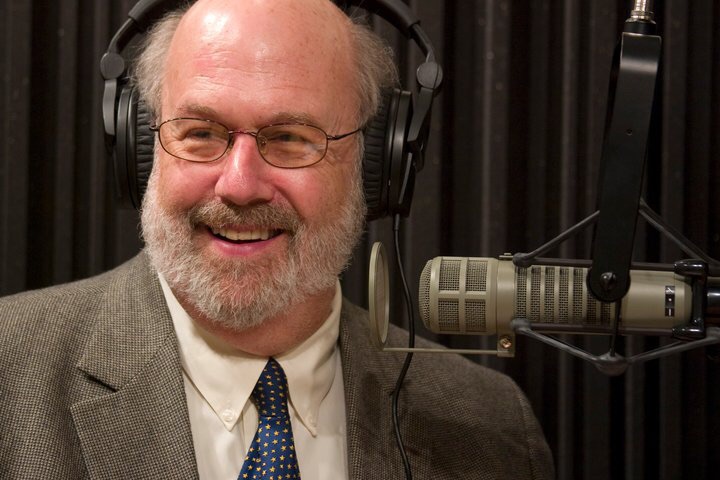
On July 1, 1944, American activist and founder of the Ludwig von Mises Institute, Lew Rockwell, was born.

Policy, Schmolicy

“If you are on the Left, let me ask you this: do you believe that Chuck Schumer and Nancy Pelosi are as afraid for the future as they have made you feel?”

https://youtu.be/7pRcWSNHiLs

Categories
Today

Dial 999

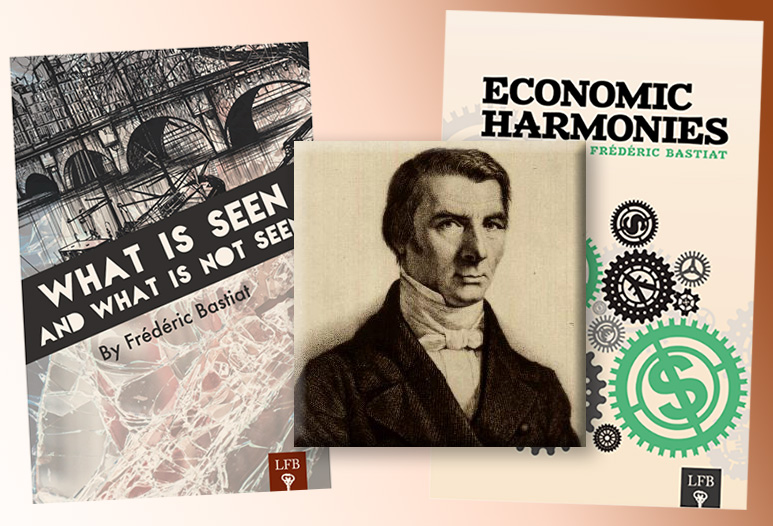
On June 30, 1801, Frédéric Bastiat was born. Bastiat became one of the most important French Liberal School economists, following Condilliac and Jean-Baptiste Say, best known for his books Economic Harmonies and Economic Sophisms and two monographs, “The Seen and the Unseen,” and “The Law.” He was a brilliant stylist and perceptive critic of state-managed trade. His influence on conservative, libertarian and “limited-government thought” has been vast.

The emergency number of “999” was introduced in London, June 30, 1937, the first of its kind — arguably the best innovation in better government service in modern times.

Categories
Thought

Koheleth

A living dog is better than a dead lion.