Categories
links

Townhall: Don’t Ask, We Won’t Fire You

This weekend, the culture war grinds on with a bizarre Cultural Revolution-style fracas (leading to a firing, of course) at a major Catholic university.  Click on over to Townhall to get your weekend’s fill of progressive bizarrerie.

Then come back here if that just was not enough!

Links in the column:
Additional Links:

This column will appear on this site on Wednesday.
Categories
Today

Czech, Slovak

November 25, 1975, Suriname gained independence from the Netherlands.

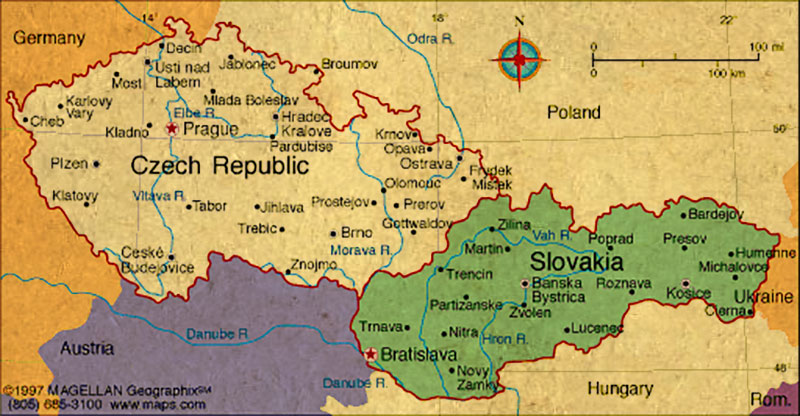
On the same month and date 17 years later, the Federal Assembly of Czechoslovakia voted to split the country into the Czech Republic and Slovakia (officially disjoined as of January 1, 1993). This split has been called “The Velvet Divorce” (following, in style and method, “The Velvet Revolution”).

Categories
Thought

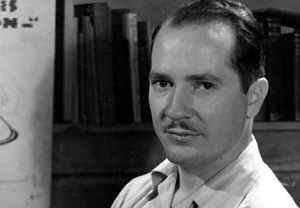
Robert A. Heinlein

I also think there are prices too high to pay to save the United States. Conscription is one of them. Conscription is slavery, and I don’t think that any people or nation has a right to save itself at the price of slavery for anyone, no matter what name it is called. We have had the draft for twenty years now; I think this is shameful. If a country can’t save itself through the volunteer service of its own free people, then I say: Let the damned thing go down the drain!

Robert A. Heinlein, Guest of Honor Speech at the 29th World Science Fiction Convention, Seattle, Washington (1961).
Categories
Common Sense

Hate Crime Stats Explained in Detail

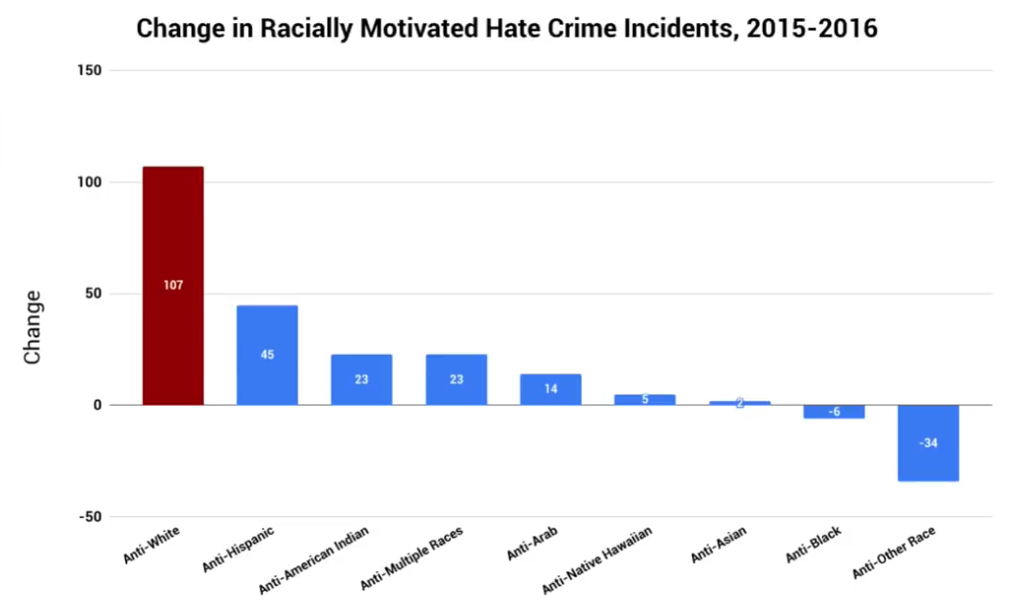
Matt Christiansen peers underneath the “negligent, maybe even maliciously deceptive” mainstream press accounts of the most recent FBI hate crime report. What is there? Well, the facts are very different from what journalists are saying:

Categories
Today

Happy Birthday, Baruch!

November 24th marks the birthdays of philosopher Baruch Spinoza (1632) and three influential Americans: ragtime composer Scott Joplin (1868), self-help writer Dale Carnegie (1888), and conservative editor, writer, and television personality William F. Buckley Jr. (1925).

Categories
Thought

Will Rogers

Ancient Rome declined because it had a Senate; now what’s going to happen to us with both a Senate and a House?

Categories
crime and punishment media and media people Popular

What’s Up With Hate?

Reported hate crimes are up.

Last year, you may remember, major media outlets noted an alarming pattern, quoting the work of a “nonpartisan researcher” who seemed more intent on linking Donald Trump to the perceived trend than anything else.

This year’s increase?

Well, the most recent FBI report shows hate crimes for 2017 up a whopping 17 percent!

Sounds alarming.

But is it? I mean, really?

Maybe. CNN offers a fascinating investigation of several rather big-story hate crimes that did not make it into the statistics. Yes, disturbing.

But what did CNN not report?

YouTuber Matt Christiansen drilled down, focusing on several aspects of the FBI report that are missing from accounts brought to us by major news outlets.

The uptick in sheer numbers of hate crimes may be mostly the result of the increased number of law enforcement agencies that have been brought into the data-collecting project. How many new agencies? One thousand.*

And consider the demographics changes year-to-year as well. Religious-based crimes saw a small increase in the number of anti-Jewish events and a similar decrease in anti-Muslim ones. All in all, notes Christiansen, there has been little change in the proportions of the statistical categories — which would not be what one would expect if Trump were the Malign Influence.

Also bad for that narrative? The biggest detectable change in the distribution of race-based crimes — more than twice the increase in numbers of crimes against Hispanics — was against (get ready for it) whites.

This is Common Sense. I’m Paul Jacob.


* That is from the FBI press release; oddly, I did not find that statement when looking directly at the report.

PDF for printing


» See popular posts from Common Sense with Paul Jacob HERE.


Categories
Today

Areopagitica

On November 23, 1644, British poet John Milton published Areopagitica, a pamphlet decrying censorship.

Categories
Thought

Ray Bradbury

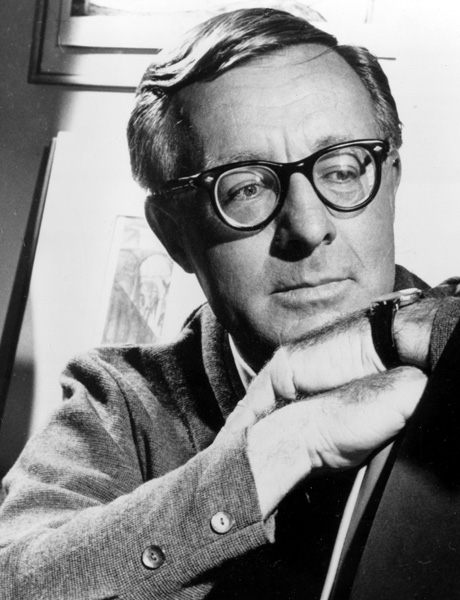
I foresaw political correctness 43 years ago. . . . whereas back then I wrote about the tyranny of the majority, today I’d combine that with the tyranny of the minorities. These days, you have to be careful of both. They both want to control you. . . . I say to both bunches, Whether you’re a majority or minority, bug off! To hell with anybody who wants to tell me what to write. Their society breaks down into subsections of minorities who then, in effect, burn books by banning them. All this political correctness that’s rampant on campuses is B.S. You can’t fool around with the dangerous notion of telling a university what to teach and what not to.


Ray Bradbury, referring to his 1953 novel of book-burning, Fahrenheit 451 in a Playboy interview (May 1996).

Categories
Today

The Day JFK Was Shot

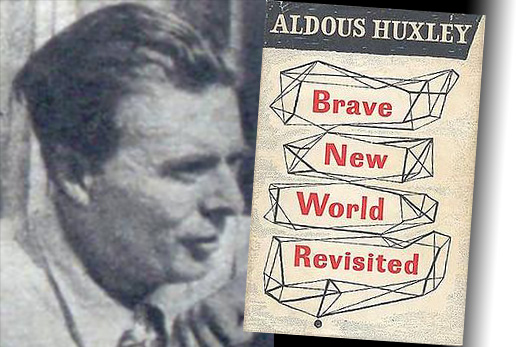
November 22 marks the death dates of a number of eminent writers, including that of English-American novelist and essayist Aldous Huxley and Irish-English novelist, theologian and medieval scholar C.S. Lewis, both of whom died in 1963, the same day as the assassination of American President John F. Kennedy. British novelist Anthony Burgess died exactly 30 years later.

The date also marks the birth of the great British novelist George Eliot (Mary Ann Evans), in 1819.

Recommended reading from these authors include:

Silas Marner (1861), a short and brilliant novel by George Eliot. Her most generally esteemed classic is the much longer Middlemarch (1872).

Earthly Powers (1980), a massive novel about life in the 20th century, by the ever-iconoclastic and hard-to-pin-down Anthony Burgess. His most famous novel is undoubtedly A Clockwork Orange (1963).

“The Humanitarian Theory of Punishment” (1949) and Till We Have Faces (1956), the former being C.S. Lewis’s thoughtful essay on the nature of modern tyranny, and the latter being what some regard his best fiction effort, a retelling of the Psyche myth. He is most famously known for The Screwtape Letters (1942) and The Chronicles of Narnia (1950-1956).

Brave New World (1931) and Brave New World Revisited (1958), the former is Aldous Huxley’s classic dystopian satire on technological tyranny-by-hedonism, and the latter is the author’s survey of the issues raised by — and the degrees to which reality conforms to — his earlier fictional prophecy. The two books have been printed under one cover as well as separately.