July 7 is Independence Day in the Solomon Islands, commemorating the island nation’s political separation in 1978.
The “separation” may be over-stated, however: though self-government was achieved in 1976, and political independence for the islands obtained two years later, Solomon Islands remains a constitutional monarchy with the Queen of Solomon Islands, currently Great Britain’s Queen Elizabeth II, as its head of state. Sir Frank Utu Ofagioro Kabui has been the Governor General since 2009, and Manasseh Damukana Sogavare has served as Prime Minister since late April.
The Antifa beating of journalist Andy Ngo has been a big deal online, but not in the major press. Why? Because it is perceived as ideological. I read the Washington Post every day, and the only coverage I noticed was in a quotation from the major paper in Portland, Oregon, in the Post’s “Hot on the Right” column (placed to the right of “Hot on the Left”):
“Portland mayor, police come under fire after right-wing writer attacked at protest,” from the Oregonian: “Portland Mayor Ted Wheeler and the city’s police force have come under criticism after an attack on a conservative writer at dueling protests on Saturday. … Andy Ngo, a right-leaning provocateur with online news and opinion outlet Quillette, which identifies Ngo as an editor and photojournalist, went to the left-wing demonstration around noon on Saturday. Around 1:30 p.m., Ngo was attacked by a group of masked individuals who kicked, punched and threw milkshakes at him. He quickly left the scene and was admitted to a local hospital, he said on Twitter. … Police were lined up along the perimeter of the park before the attack, but no one intervened to break up the fight.”
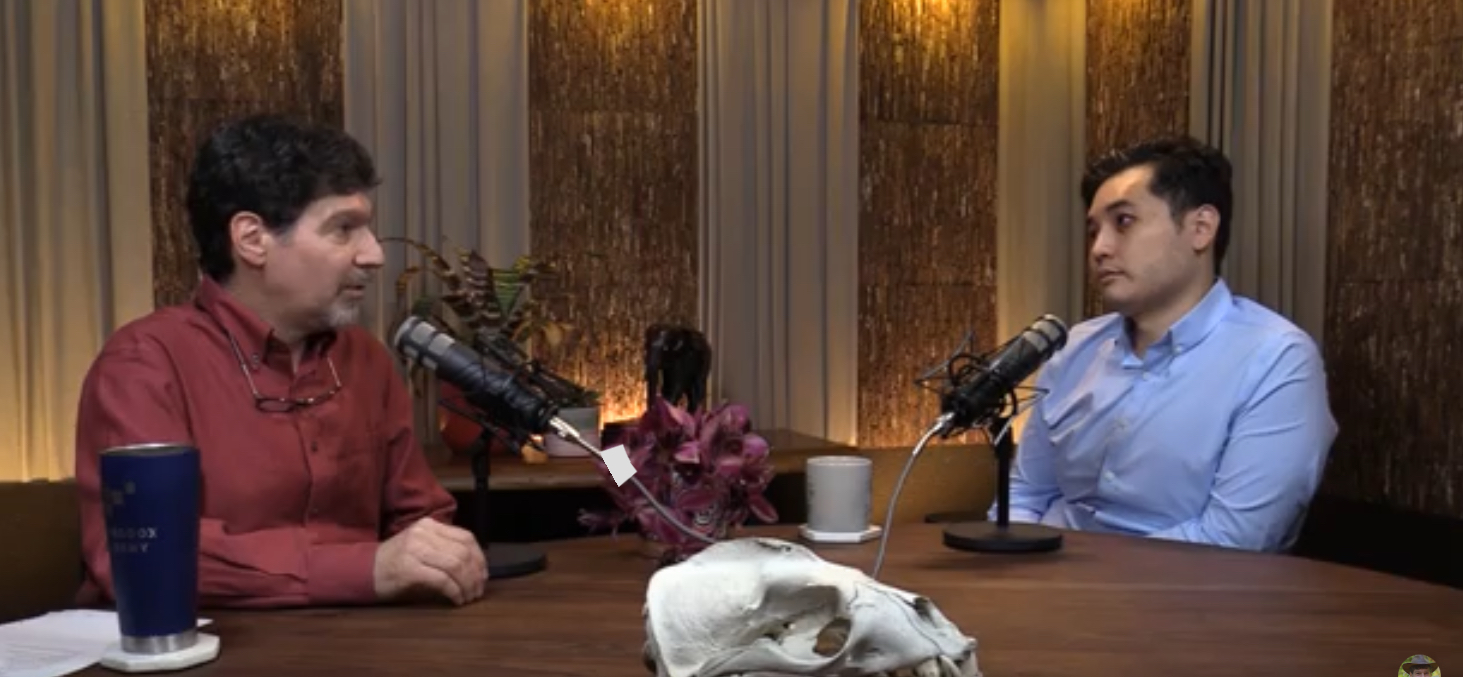
A good thing, then, that Brett Weinstein, late of Evergreen College, provides an in-depth interview:
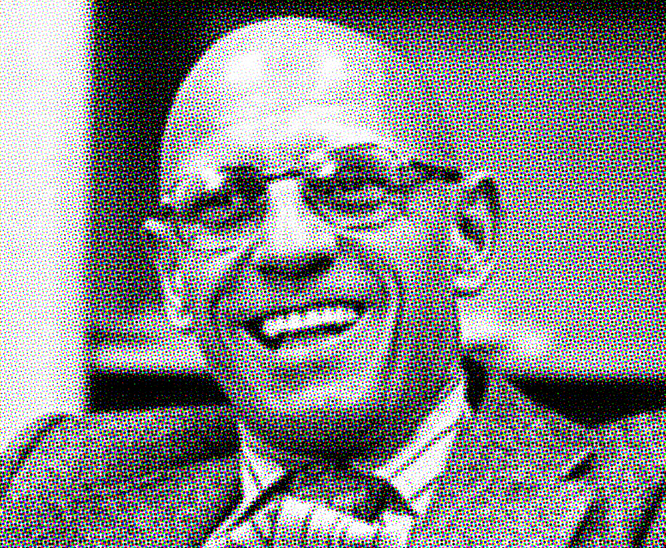
Sometimes, because my position has not been made clear enough, people think I’m a sort of radical anarchist who has an absolute hatred of power. No! What I am trying to do is to approach this extremely important and tangled phenomenon in our society, the exercise of power, with the most reflective, and I would say prudent attitude. Prudent in my analysis, in the moral and theoretical postulates I use: I try to figure out what’s at stake. But to question the relations of power in the most scrupulous and attentive manner possible, looking into all the domains of its exercise, that’s not the same thing as constructing a mythology of power as the beast of the apocalypse.
Michel Foucault, “Power, Moral Values, and the Intellectual,” interview in History of the Present 4 (Spring 1988).
July 6 serves better as a “Today in Tyranny” marker than anything positive, at least when you consider these events:
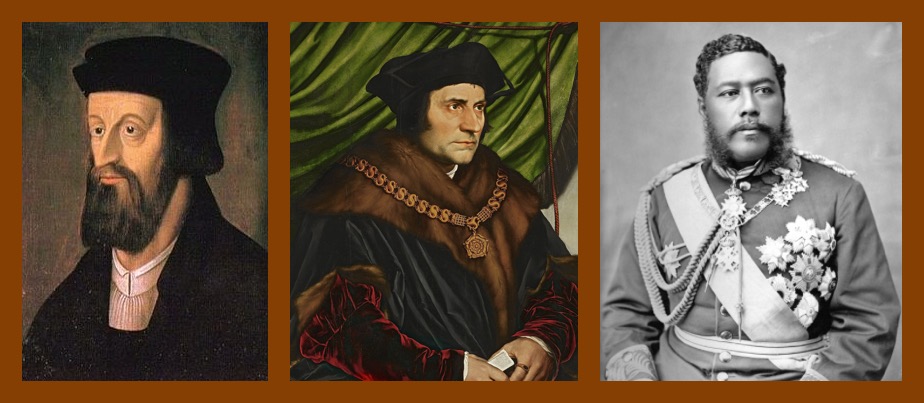
1415 – Jan Hus was burned at the stake.
1535 – Sir Thomas More was executed for treason against King Henry VIII of England.
1887 – David Kalakaua, monarch of the Kingdom of Hawaii, was forced at gunpoint by Americans to sign the Bayonet Constitution giving Americans more power in Hawaii while stripping Hawaiian citizens of their rights.
1939 – The Nazi “Third Reich” closed the last remaining Jewish enterprises in Germany.
In all our associations; in all our agreements let us never lose sight of this fundamental maxim — that all power was originally lodged in, and consequently is derived from, the people.
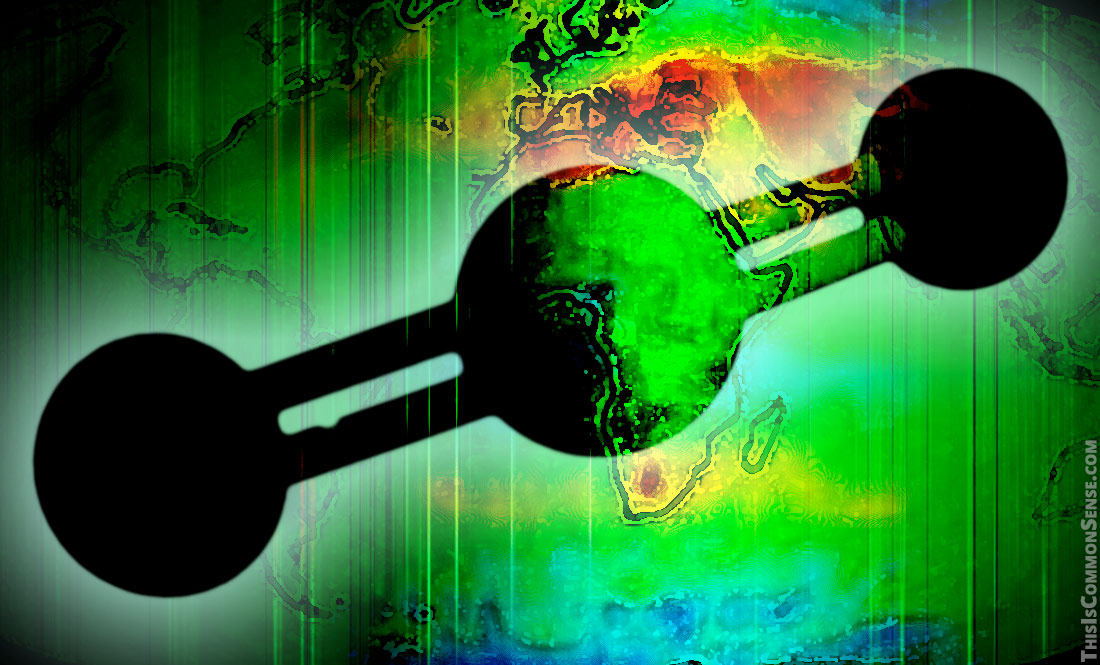
There is climate change going on. And some of it is attributable to increasing levels of Carbon dioxide (CO2).
It is uncontroversial and quite politically convenient to say that — despite Al Gore’s infamous propaganda positing climate change dogma as An Inconvenient Truth. The worldwide “green” movement to “fight climate change” has been supported by trillions of tax dollars and the eager, lip-smacking glee of major media mavens as they trot out story after improbable story, linking every storm, warm spell, cold spell, and summer ice melt to “man-made global warming.”
But there is no real “settled science” as non-scientists like to term the case for anthropogenic global warming, because there are
problems identifying CO2 level variations as the cause of climate change rather than as a result,
a certain amount of dunderheadedness using a statistical construct of “average global temperature” to track actual trends, and
so much more. But we do know about one extremely positive effect of increasing atmospheric carbon: it makes the deserts bloom.
Or, at least, greener.
Six years ago a study of satellite data concluded that arid regions have gone greener. Increased atmospheric CO2 levels makes photosynthesis more efficient, allowing plants to use less water, thereby creating more leaves.
Earlier this year, however, Forbesreported that a NASA study had just demonstrated that expanded agriculture and silviculture in India and China were responsible for most of that greening — but if you compare the Forbes article with the original paper, the CO2 contribution persists.
Atmospheric carbon is plant food, so to speak, and without it, life on the planet would die.
The Liberty Bell left Philadelphia by special train on its way to the Panama–Pacific International Exposition, on July 5, 1915 — the last trip outside Philadelphia that the custodians of the bell intend to permit.
In 1937 on this date, Spam, the luncheon meat, was introduced into the market by the Hormel Foods Corporation.
The Twenty-sixth Amendment to the United States Constitution, lowering the voting age from 21 to 18 years, was formally certified by President Richard Nixon on July 5, 1971.
On July 5, 1995, Armenia (flag, above) adopted its constitution, four years after the country’s independence from the Soviet Union.
“America does not want to witness a food fight,” Senator Kamala Harris said at last week’s debate, reprimanding her squabbling fellow Democratic Party presidential contenders. “They want to know how we’re going to put food on their table.”
The no doubt well-rehearsed line drew raucous applause. She’s right; we’re not interested in a food fight.
But her second statement struck me as . . . odd . . . and not true.
Harris spoke of how “we” — meaning they, the assembled politicians on the stage — are “going to put food” on “their” — meaning our — tables.
Does she imagine that presidents produce our food, not farmers? Is she trying to say, “You didn’t grow that”?
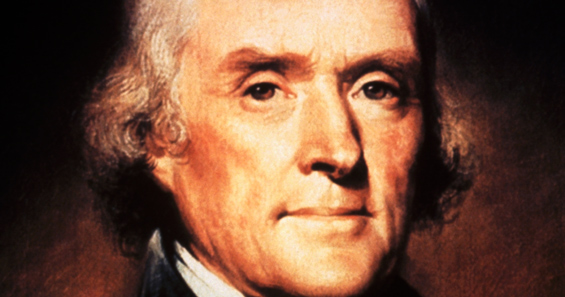
“Were we directed from Washington when to sow and when to reap,” the author of the Declaration of Independence wrote, “we should soon want bread.”
Perhaps this presidential aspirant remains unaware of how America became a land of abundance? It wasn’t the exertion of career politicians. Or regulators. Or bureaucrats. It was the amazingly productive engine that is a free people.
“Yet this government never of itself furthered any enterprise, but by the alacrity with which it got out of its way,” Henry David Thoreau explained in his famous 1849 essay, entitled Resistance to Civil Government. “The character inherent in the American people has done all that has been accomplished.”
The difference between a society where people honor independence and one where, conversely, they idolize dependence on the government is the difference between bright day and darkest night.
Today’s date is July 4th, but the holiday is Independence Day. It is not a celebration of dependence on cradle-to-grave big brother government. We celebrate freedom for the individual.
A Republic . . . if We, the People can keep it.
But how? How do we restore freedoms lost while retaining extant freedoms?
Well, with ideas. Arguments. Promotion of others’ efforts.
And for two decades, this daily commentary has defendedfreedom and thosefighting for it. And I hope to keep the Common Sense coming far into the future.
Yet, this effort is totally dependent on you — and your generosity. In this 20th year, won’t you make a special pledge of $20? Or $200? Or $2,000 if you have the financial freedom to do so.
“Those who expect to reap the blessings of freedom, must,” wrote Tom Paine in 1777, “undergo the fatigues of supporting it.”
Don’t worry, it won’t be so fatiguing. We stand up for freedom and against dependence on big government — with a rhetorical flourish now and again . . . and a sense of humor.
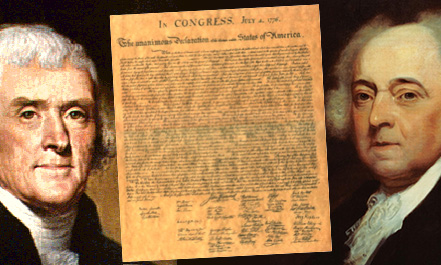
When in the course of human events it becomes necessary for a people to advance from that subordination in which they have hitherto remained, & to assume among the powers of the earth the equal & independant station to which the laws of nature & of nature’s god entitle them, a decent respect to the opinions of mankind requires that they should declare the causes which impel them to the change.
We hold these truths to be sacred & undeniable; that all men are created equal & independant, that from that equal creation they derive rights inherent & inalienable, among which are the preservation of life, & liberty, & the pursuit of happiness; that to secure these ends, governments are instituted among men, deriving their just powers from the consent of the governed; that whenever any form of government shall become destructive of these ends, it is the right of the people to alter or to abolish it, & to institute new government, laying it’s foundation on such principles & organising it’s powers in such form, as to them shall seem most likely to effect their safety & happiness. prudence indeed will dictate that governments long established should not be changed for light & transient causes: and accordingly all experience hath shewn that mankind are more disposed to suffer while evils are sufferable, than to right themselves by abolishing the forms to which they are accustomed. but when a long train of abuses & usurpations, begun at a distinguished period, & pursuing invariably the same object, evinces a design to subject them to arbitrary power, it is their right, it is their duty, to throw off such government & to provide new guards for their future security. such has been the patient sufferance of these colonies; & such is now the necessity which constrains them to expunge their former systems of government. the history of his present majesty, is a history of unremitting injuries and usurpations, among which no one fact stands single or solitary to contradict the uniform tenor of the rest, all of which have in direct object the establishment of an absolute tyranny over these states. to prove this, let facts be submitted to a candid world, for the truth of which we pledge a faith yet unsullied by falsehood.
1054 – A supernova was spotted by Chinese, Arab, and possibly Amerindian observers near the star Zeta Tauri, remaining, for several months, bright enough to be seen during the day. Its remnants form the Crab Nebula.
1776 — The Second Continental Congress approved the Declaration of Independence, thus formalizing its policy of secession from the rule of the Kingdom of Great Britain.
1803 — The Louisiana Purchase was announced to the American people.
1804 – Nathaniel Hawthorne, American author of The Scarlet Letter, House of Seven Gables, The Blithesdale Romance, and other classics, was born.
1826 – Thomas Jefferson, third president of the United States, died a few hours before John Adams, second president of the United States, on the fiftieth anniversary of the adoption of the United States’ Declaration of Independence.
1826 – Stephen Foster, composer of “Old Black Joe,“ ’“Beautiful Dreamer,” and many other classic American songs, was born.
1827 – Slavery was abolished in New York State.
1831 – Samuel Francis Smith wrote “My Country, ’Tis of Thee” for Boston’s July 4th festivities, set to the tune of Great Britain’s national anthem, “God Save the King/Queen.”
2009 – The Statue of Liberty’s crown re-opened to the public after eight years of closure that resulted from security concerns following the September 11, 2001, attacks.