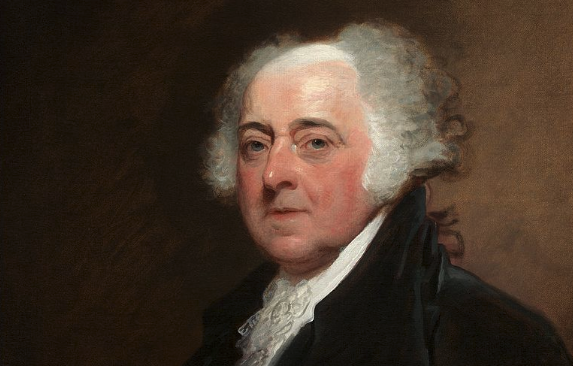
When people talk of the Freedom of Writing, Speaking, or thinking, I cannot choose but laugh. No such thing ever existed. No such thing now exists; but I hope it will exist. But it must be hundreds of years after you and I shall write and speak no more.
John Adams, Letter to Thomas Jefferson (July 15, 1817).
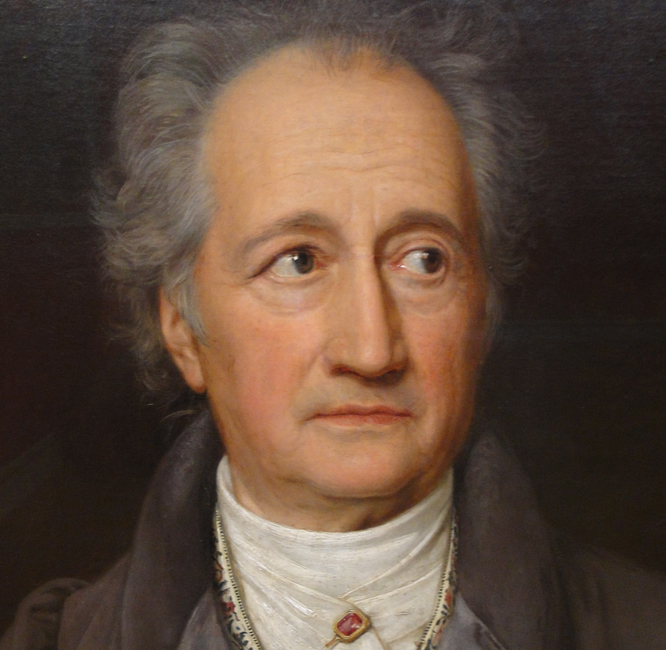
“Niemand ist mehr Sklave, als der sich für frei hält, ohne es zu sein.”
None are more hopelessly enslaved than those who falsely believe they are free.
Johann Wolfgang von Goethe, Bk. II, Ch. 5; source: Die Wahlverwandtschaften, Hamburger Ausgabe, Bd. 6 (Romane und Novellen I), dtv Verlag, München, 1982, p. 397 (II.5)
On December 28, 1797, Thomas Paine was arrested in France for treason, after being tried in absentia on December 26 and convicted. Before moving to France, Paine had been an instrumental figure in the American Revolution as the author of Common Sense. Paine then moved to Paris to become involved with the French Revolution, but the chaotic political climate turned against him. Paine had not earned friends in the Revolution with his vocal opposition to capital punishment.
“During the whole of my imprisonment,” Paine later wrote, “prior to the fall of Robespierre, there was no time when I could think my life worth twenty-four hours, and my mind was made up to meet its fate. The Americans in Paris went in a body to the convention to reclaim me, but without success.”
Paine’s imprisonment in France caused a general uproar in America. Future President James Monroe used all of his diplomatic connections to get Paine released in November 1794.
With the publication of Paine’s The Age of Reason — a great part of which he wrote in French prison — the American population turned against him, and he died penniless in New York in 1809.
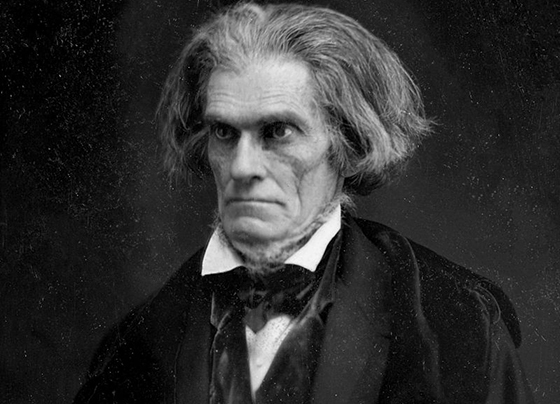
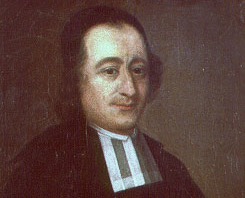
On this date in 1832, John C. Calhoun (pictured above, in his most famous but hardly most becoming portrait) resigned as Vice President of the United States, the first to do so.
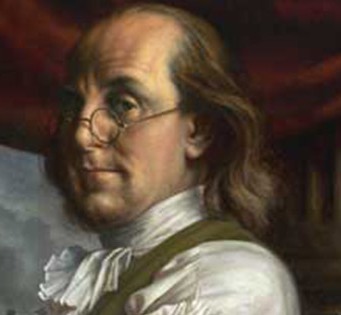
Freedom of speech is a principal pillar of a free government; when this support is taken away, the constitution of a free society is dissolved, and tyranny is erected on its ruins. Republics and limited monarchies derive their strength and vigor from a popular examination into the action of the magistrates.
Benjamin Franklin in ‘On Freedom of Speech and the Press,’ Pennsylvania Gazette (November 17, 1737).
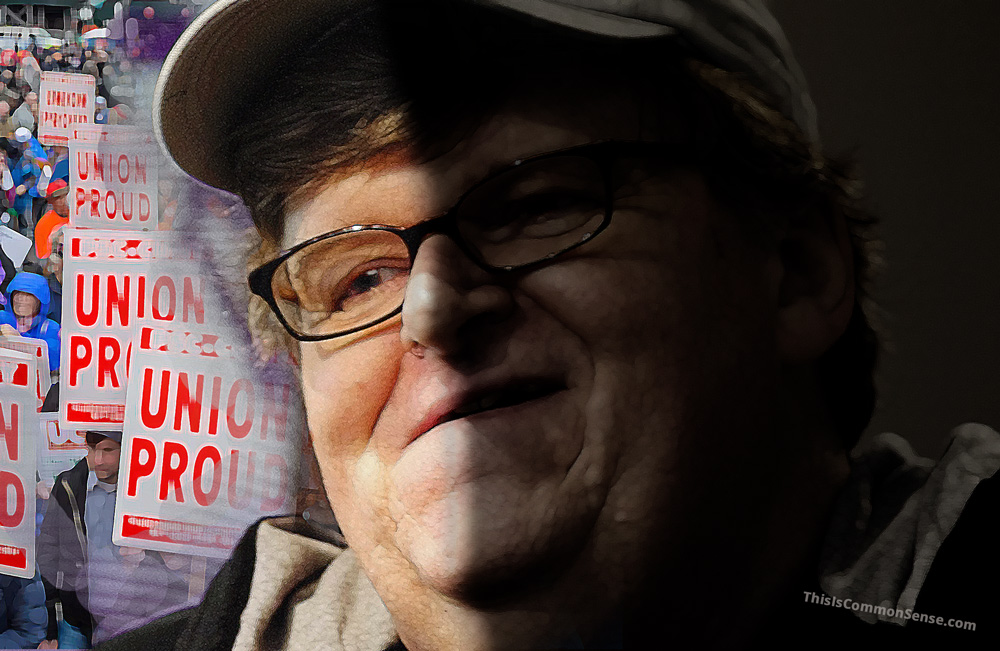
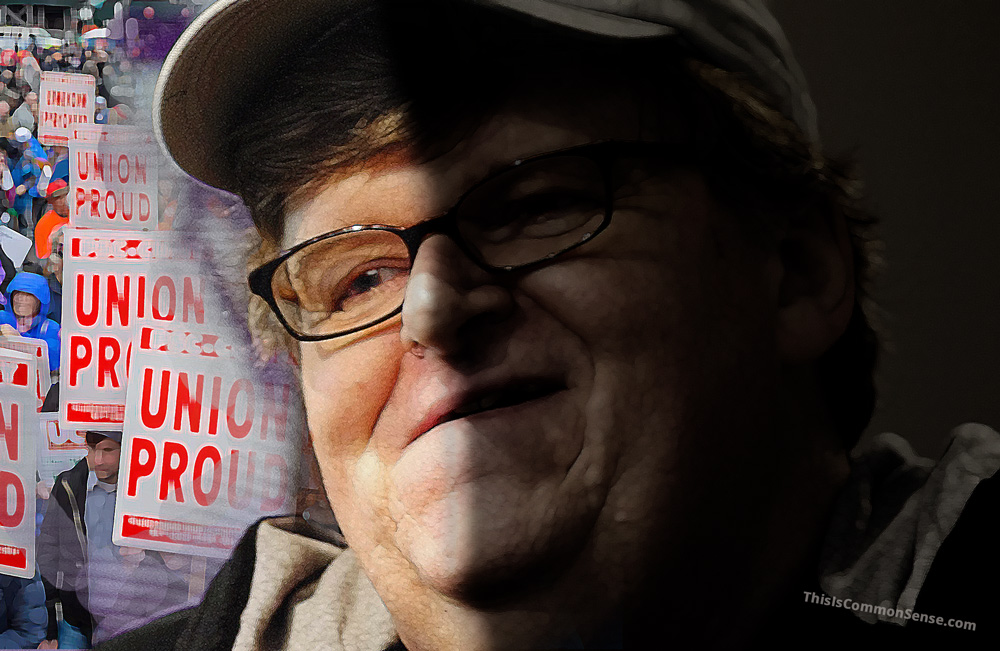
Just in time for Christmas, Rolling Stonereleased a recorded interview of Michael Moore showing the Roger & Me filmmaker in pure Scrooge mode.
Shortly before Election Day, 2016, Moore had famously characterized a likely Trump win as middle America’s rebuke of the establishment. “They’re not racist or rednecks,” he sympathetically said of the Trump voters he had talked to, “they’re actually pretty decent people.”
But white men, he now proclaims, are “not good people.”
What’s the ‘deplorable’ ratio?
“Two-thirds of all white guys voted for Trump,” offers Moore. “That means anytime you see three white guys walking . . . down the street towards you, two of them voted for Trump. You need to move over to the other sidewalk because these are not good people that are walking toward you. You should be afraid of them.”
Before Trump’s election, sympathy; after, antipathy.
Why the change of heart?
He provides one clue. “I refuse to participate in post-racial America,” he fumes. “I refuse to say because we elected Obama that suddenly that means everything is ok, white people have changed. White people have not changed.”
Has it always really been about racism?
Another theory, though, would look at part of Moore’s 2016 prophecy: white working class men would be worse off with Trump.
Yet employment is way up; even Ford is moving back to Michigan, as Tim Poole notes. Could Moore be bitter because his enemy seems to be succeeding where his side has failed?
A movie now in the theaters may get to the real issue. Moore, by engaging in hatred and fear-mongering, has gone over to the Dark Side of the Force.
Power corrupts; partisan powerlust corrupts partisanly.
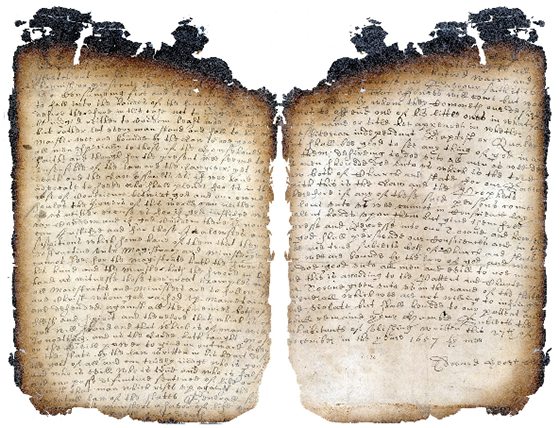
On December 27, 1657, a group of English citizens in Flushing, New York, who were not themselves Quakers, signed a petition protesting the persecution of Quakers, a document that has become known as the Flushing Remonstrance. An eloquent statement of the principle of religious liberty, it is widely regarded as a forerunner to the U.S. Constitution’s First Amendment.
The petition was delivered to Director-General of New Netherlands, Peter Stuyvesant.