Dr. Martin Luther King, Jr., penned his Letter from Birmingham Jail while incarcerated in Birmingham, Alabama, for protesting segregation, on April 16, 1963.
Categories
Letter from Birmingham Jail

Dr. Martin Luther King, Jr., penned his Letter from Birmingham Jail while incarcerated in Birmingham, Alabama, for protesting segregation, on April 16, 1963.

“The only responsible choice for Justice Breyer is to immediately announce his retirement,” contends Brian Fallon, executive director of Demand Justice, “so President Biden can quickly nominate the first-ever Black woman Supreme Court justice.”
Not merely pushing identity politics, Fallon is warning of the risk of “Democrats losing control of the Senate before a Biden nominee can be confirmed.”
No retirement announcement yet from 82-year-old Stephen Breyer, who recently advised Democrats against court-packing. Having served on the High Court for the last 27 years, he is the oldest justice and second-longest serving.*
“Democrats’ fears about Breyer come after [Justice Ruth Bader] Ginsburg refused to heed calls from liberals and former President Barack Obama to step down,” notes Forbes, “which ultimately resulted in Trump appointing conservative-leaning Justice Amy Coney Barrett to succeed her when Ginsburg died in September.”
It is painfully obvious: life terms at the highest court have produced gamesmanship — not on the Court, mind you, but in Congress, that cesspool of even longer tenure where our supposed representatives do anything but.
And why allow personal circumstances or the vagaries of death to decide such potentially critical matters in our republic?
To prevent politicians from politicizing the Supreme Court of the United States, put the number of justices (9) into the Constitution and term-limit those justices to a single 18-year term. No renomination. With nine justices, cycle one out and a new one in every two years.
There are other matters to consider and settle. Do so in constitutional form, so the whole country is engaged and the Court is hereafter more secure and independent of that branch most in need of term limits.
This is Common Sense. I’m Paul Jacob.
* On the all-time Supreme Court longevity list, Breyer thus lags ten places behind Justice Clarence Thomas, who has served 10,767 days on the court and currently ranks 16th.
See all recent commentary
(simplified and organized)
See recent popular posts

On April 15, 1945, the Bergen-Belsen concentration camp was liberated.
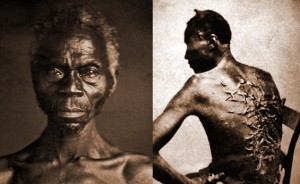
On April 14, 1775, the Society for the Relief of Free Negroes Unlawfully Held in Bondage, the first American organization committed to the abolition of slavery, was formed in Philadelphia.
On April 14, 1818, Noah Webster published his American Dictionary of the English Language, one of the first lexicons to include distinctly American words. The dictionary, which took him more than two decades to compile, introduced more than 10,000 “Americanisms.”
On April 14, 1988, representatives of the Soviet Union, Afghanistan, the United States, and Pakistan signed an agreement calling for the withdrawal of Soviet forces from Afghanistan. In exchange for an end to the disputed Soviet occupation, the United States agreed to end its arms support for the Afghan anti-Soviet factions, and Afghanistan and Pakistan agreed not to interfere in each other’s affairs.

The fundamental sense of freedom is freedom from chains, from imprisonment, from enslavement by others. The rest is extension of this sense, or else metaphor.

On April 13, 1743, Thomas Jefferson was born. Author of Notes on the State of Virginia and the first draft of the United States’ Declaration of Independence, Jefferson was also a scientist, philosopher, inventor, diplomat, and American politician. He also composed music, designed buildings, and translated works from his favorite French writers, whom he had met in his diplomatic missions to Paris: Volney and de Tracy.
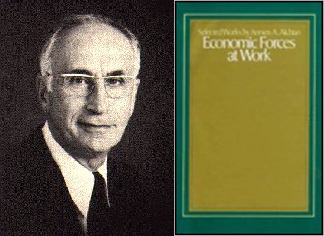
On April 12, 1914, American economist Armen Alchian was born. His contributions to economic theory and teaching were many and varied — his textbook, co-authored with William R. Allen, University Economics (also titled Exchange and Production), was widely considered one of the finest intermediate texts in microeconomics — but he remains perhaps best known for his work on property rights.
Alchian died in 2014, in late February, at the age of 99.

The video version of Paul’s weekend podcast is up on YouTube:
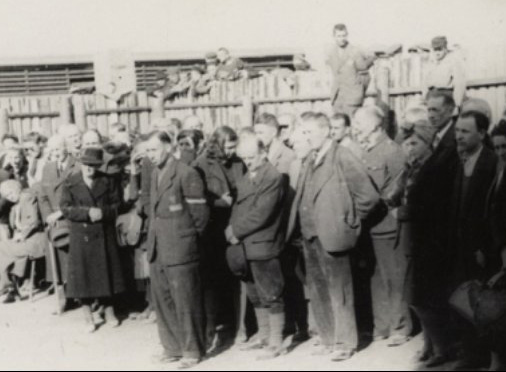
On April 11, 1945, the American Third Army liberated the Buchenwald concentration camp, near Weimar, Germany, a camp that would later be judged second only to Auschwitz in the horrors it imposed on its prisoners.
Among those in the camp saved by the American soldiers was Elie Wiesel, who would go on to win the Nobel Peace Prize in 1986.
Shown in photograph: German citizens ushered to the camp by American soldiers, post-conquest.

The podcast for the first full week of April 2021 is uploaded for your download: