Categories
Thought

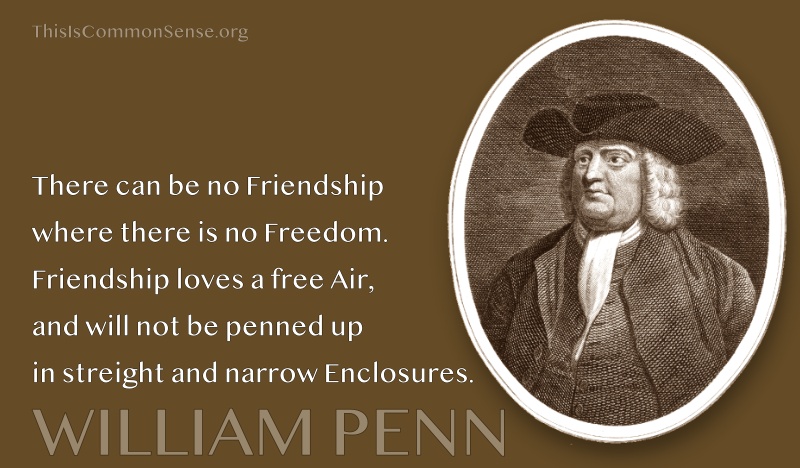
William Penn

There can be no Friendship where there is no Freedom. Friendship loves a free Air, and will not be penned up in streight and narrow Enclosures. It will speak freely, and act so too; and take nothing ill where no ill is meant; nay, where it is, ’twill easily forgive, and forget too, upon small Acknowledgments.

William Penn, Some Fruits of Solitude In Reflections And Maxims (1682).
Categories
Today

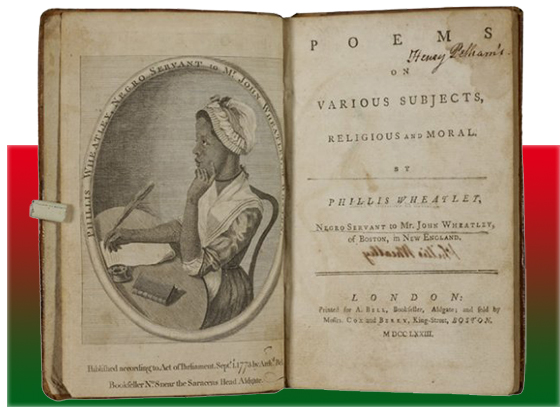
An African-American First

On October 18, 1775, African-American poet Phillis Wheatley was freed from slavery, upon the death of her master. Widely appreciated in her day, she was the first African-American to publish a book.

Categories
Fifth Amendment rights Fourth Amendment rights international affairs

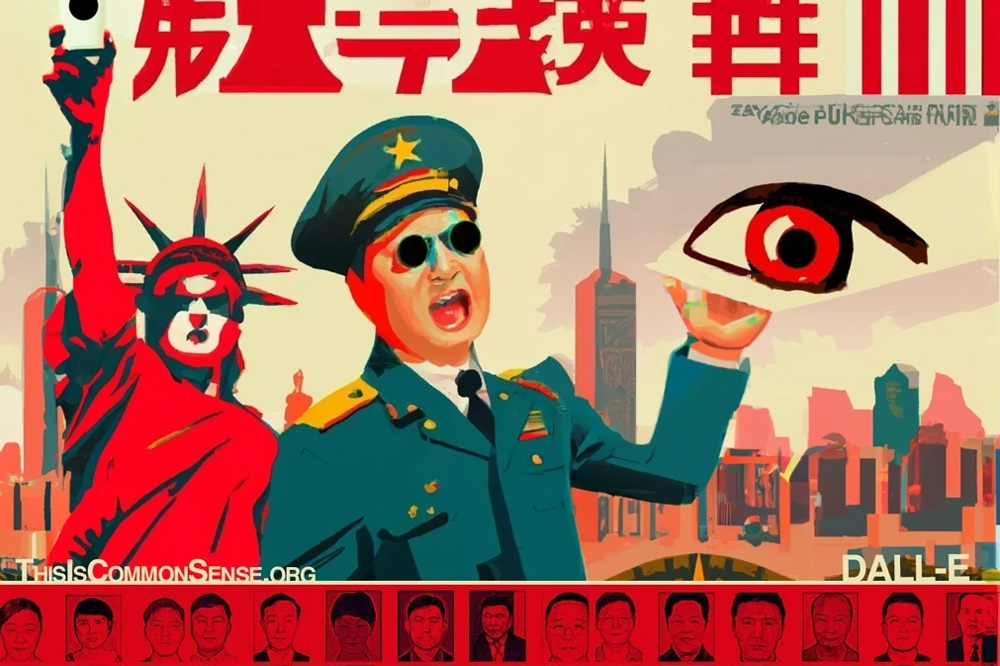
The Chinazis Next Door

The Russians Are Coming! The Russians Are Coming!

This 1966 comedy about the accidental grounding of a Soviet submarine off the coast of New England was nominated for four Academy Awards and captured the Golden Globe Award for best motion picture.

But a remake exclaiming “The Chinese Are Coming!” would be old hat: They’re already here

“The People’s Republic of China has opened at least three police stations on Canadian soil as part of an alleged attempt by the country’s security state to keep an eye on the Chinese-Canadian diaspora,” The National Post informed last month.

“Canada-based dissidents of the Beijing government have long warned Canadian authorities that they face organized harassment from Chinese authorities,” The Post added.

A new report by Safeguard Defenders, a Spain-based foundation working for human rights in Asia, reveals there are now 54 of these Chinese “service stations” in 30 countries . . . including one in New York City.

The organization warns of “China’s growing global transnational repression,” explaining that in the last year 230,000 expats were “persuaded to return” to China but “these returns are often obtained by visiting extreme sanctions on the families of those targeted, such as asset seizures and prohibition from seeking government health care or education.”

In another recent report noted by The Globe and Mail, “the United Nations human-rights office said it found ‘patterns of intimidations, threats and reprisals’ against Uyghurs and other Chinese nationals living overseas who had spoken out against Beijing.”

Just last week, “El Correo published direct corroboration from Chinese authorities” of “illegal policing operations” with an anonymous Chinese official telling the Spanish paper, “The bilateral treaties are very cumbersome, and Europe is reluctant to extradite to China. I don’t see what is wrong with pressuring criminals to face justice. . . .”

The message to Chinese dissidents is clear: “You’re not safe anywhere.”

Are we?

This is Common Sense. I’m Paul Jacob.


PDF for printing

Illustration created with DALL-E

See all recent commentary
(simplified and organized)
See recent popular posts
Categories
Thought

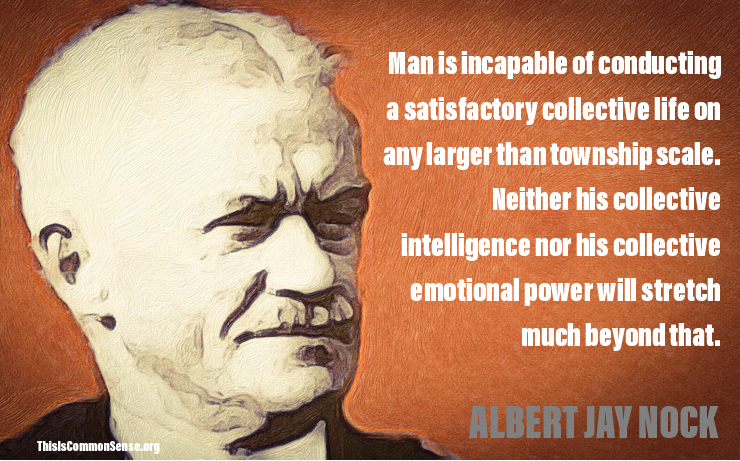
Albert Jay Nock

[M]an is incapable of conducting a satisfactory collective life on any larger than township scale. Neither his collective intelligence nor his collective emotional power will stretch much beyond that.

Categories
Today

The Backers of John Brown

“The date was October 17, 1909 — the fiftieth anniversary of John Brown’ famous (some say infamous) raid of the federal armory and arsenal at Harpers Ferry, Virginia, which ended with the deaths of most of Brown’s small band of men and led to the execution of Brown, making him the most celebrated martyr to the cause of abolition.” So begins The Secret Six: The True Tale of the Men Who Conspired with John Brown (1995), by Edward J. Renehan, Jr.

As the author goes on to explain, it was a big occasion, with many ceremonies, including an inconspicuous one “not far from the site of the engine house where John Brown’s enterprise ended in defeat, a small group of aging abolitionists held a quiet prayer meeting — anxious not to be taken much notice of.” But in Concord, Massachusetts, the “most poignant exercise in memory” took place: “the surviving remnants of the Secret Six, that small, enigmatic cabal of northern aristocrats who financed John Brown’s strange adventure.”

Those attending this meeting were two conspirators, Thomas Wentworth Higginson (December 22, 1823 – May 9, 1911) and Franklin Sanborn (December 15, 1831 – February 24, 1917), as well as Julia Ward Howe (May 27, 1819 – October 17, 1910), widow of a third conspirator, Dr. Samuel Gridley Howe (November 10, 1801 – January 9, 1876). Not present, because long dead, were Reverend Theodore Parker (August 24, 1810 – May 10, 1860), Gerrit Smith (March 6, 1797 – December 28, 1874), and George Luther Stearns (January 8, 1809 – April 9, 1867).


Print out a commemorative poster:

Categories
by Paul Jacob video

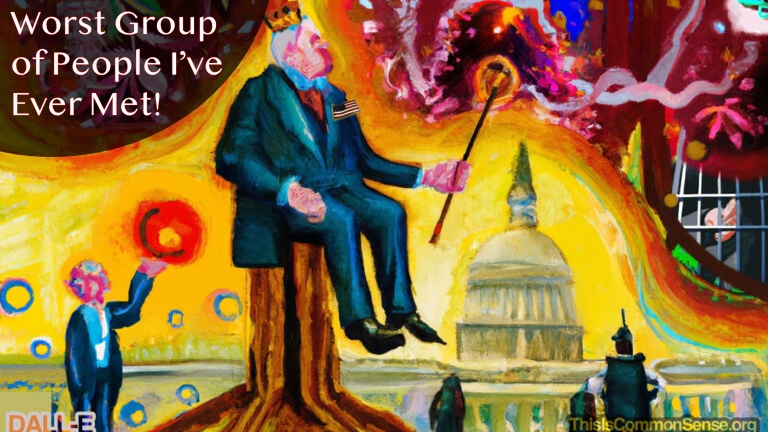
Watch: The Worst Group of People I’ve Ever Met!

We often talk about politicians on This Week in Common Sense. And Paul explains how they are, on the whole, quite a bad lot. But there is a lot more. We start out talking whiskey, though.

Categories
Today

At Harpers Ferry

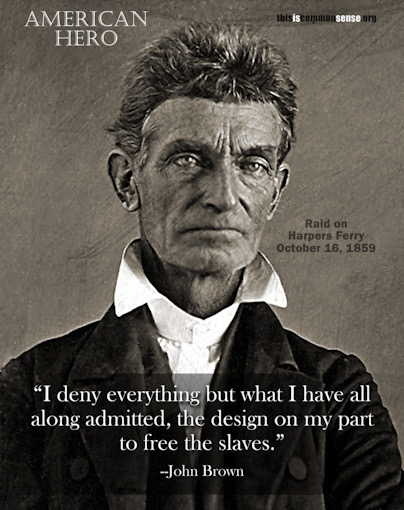
On this day in 1859, abolitionist John Brown led a group of 21 men — 14 white, seven black — on a raid of the federal armory at Harpers Ferry, Virginia (then; since 1863, West Virginia), to capture weapons and initiate a slave revolt in southern states.

Brown’s forces initially captured the armory, which had only one guard on duty that night, but the expected uprising did not occur. Soon the raiders were blocked from any escape by townspeople and local militiamen and then overwhelmed by federal troops sent into the town (commanded by Colonel Robert E. Lee, who would later lead the Confederate armies).

Ten of Brown’s men were killed during the incident; seven were captured, tried, convicted and executed, including John Brown; and five escaped. Two enslaved African-Americans joined Brown’s cause and also died in the fighting. Battling against Brown’s raiders, a Marine and four townspeople lost their lives, including the town’s mayor and a free African-American. 

Though the raid on Harpers Ferry was a failure, it set the states on the road to disunion, war, and the eventual end of slavery. 

“John Brown began the war that ended American slavery and made this a free Republic,” Frederick Douglass would write in remembrance of this event. “Until this blow was struck, the prospect for freedom was dim, shadowy and uncertain. The irrepressible conflict was one of words, votes and compromises. When John Brown stretched forth his arm the sky was cleared. The time for compromises was gone — the armed hosts of freedom stood face to face over the chasm of a broken Union — and the clash of arms was at hand.”


Print out a commemorative poster:

Categories
Thought

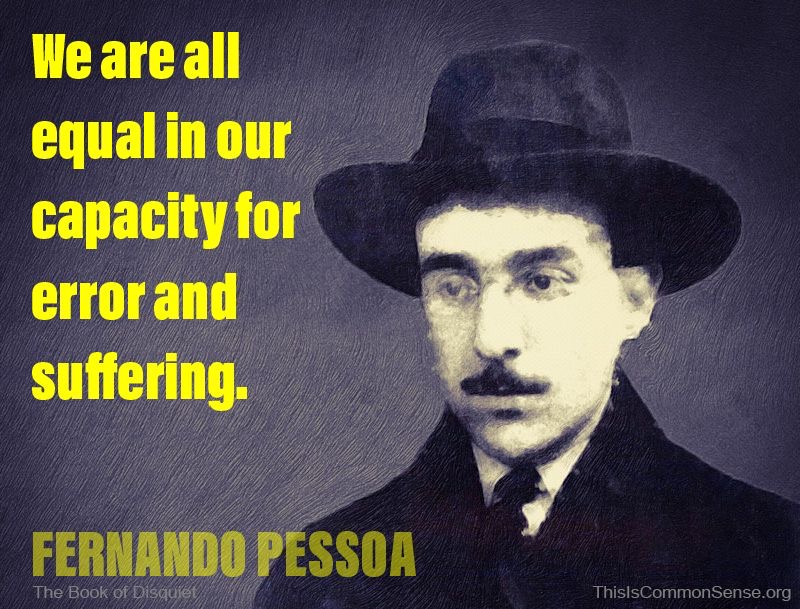
Fernando Pessoa

We are all equal in our capacity for error and suffering.

Fernando Pessoa, The Book of Disquiet (Richard Zenith, translator, 2001), p. 211.
Categories
audio podcast

Listen: Worst People I’ve Ever Met

It is not just a prejudice. People distrust (and even hate) politicians for a reason. Several. Here they are.

Categories
Thought

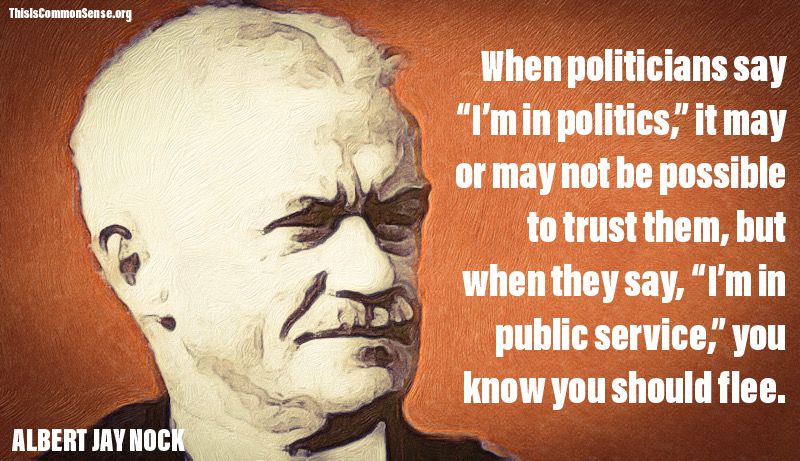
Albert Jay Nock

When politicians say “I’m in politics,” it may or may not be possible to trust them, but when they say, “I’m in public service,” you know you should flee.