cynic, n.
A blackguard whose faulty vision sees things as they are, not as they ought to be. Hence the custom among the Scythians of plucking out a cynic’s eyes to improve his vision.
Ambrose Bierce, The Devil’s Dictionary (1911).
Ambrose Bierce
cynic, n.
A blackguard whose faulty vision sees things as they are, not as they ought to be. Hence the custom among the Scythians of plucking out a cynic’s eyes to improve his vision.
Ambrose Bierce, The Devil’s Dictionary (1911).
On November 20, 1789, New Jersey became the first U.S. state to ratify the Bill of Rights.
In 1805 on this date, Ludwig van Beethoven’s only opera, Leonore, oder Der Triumph der ehelichen Liebe (in English, Leonore, or The Triumph of Marital Love, later renamed Fidelio), premiered in Vienna. Beethoven wrote four overtures for the opera, all part of the orchestra’s concert repertoire. The opera tells the tale of the rescue from unjust imprisonment of Florestan by his wife Leonore, who disguises herself as a boy, Fidelio.
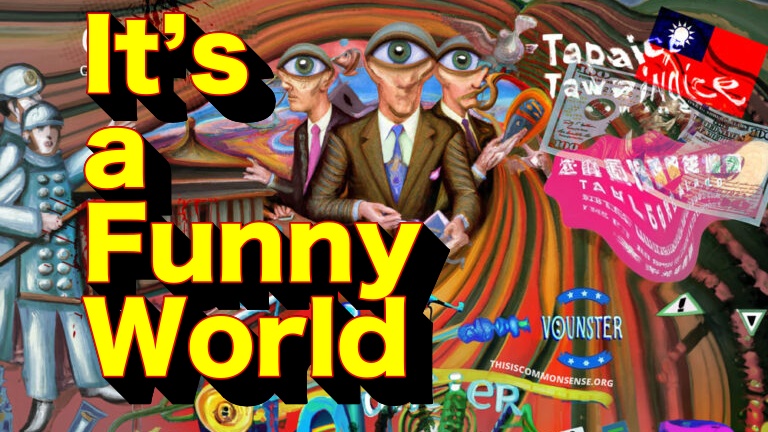
Everybody says that but only a few of us laugh.
Paul and Timo talk up never-ending election counts, FTX, and UFOs, and the strangest thing of all: presidential politics, complete with Trump and Biden, hardest to explain of all.
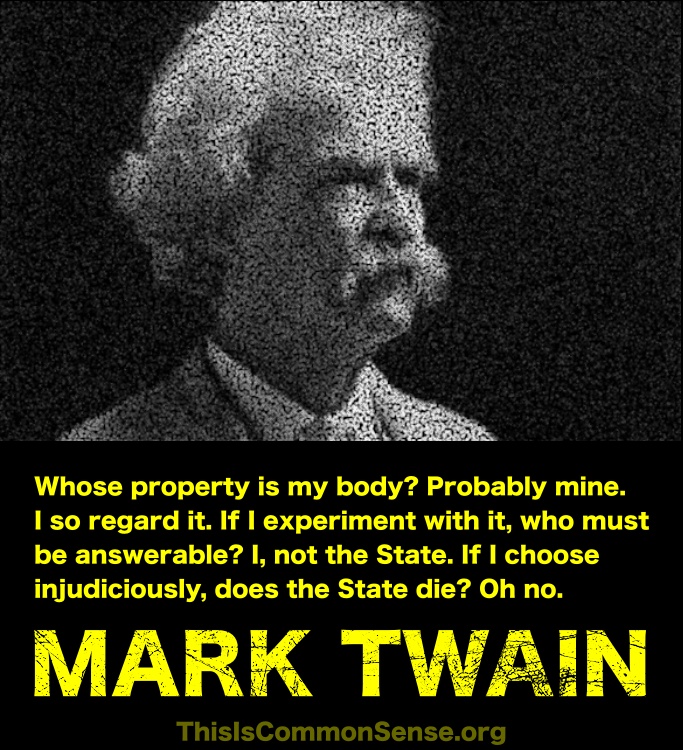
Whose property is my body? Probably mine. I so regard it. If I experiment with it, who must be answerable? I, not the State. If I choose injudiciously, does the State die? Oh no.
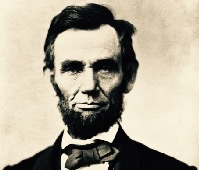
On November 19, 1863, President Abraham Lincoln delivered the Gettysburg Address at the ceremonial dedication of the military cemetery in Gettysburg, Pennsylvania, appropriating an old phraseology for republican government — “of the people, by the people, for the people” — and giving it its most memorable usage.
On the same date in 1955, National Review published its first issue.
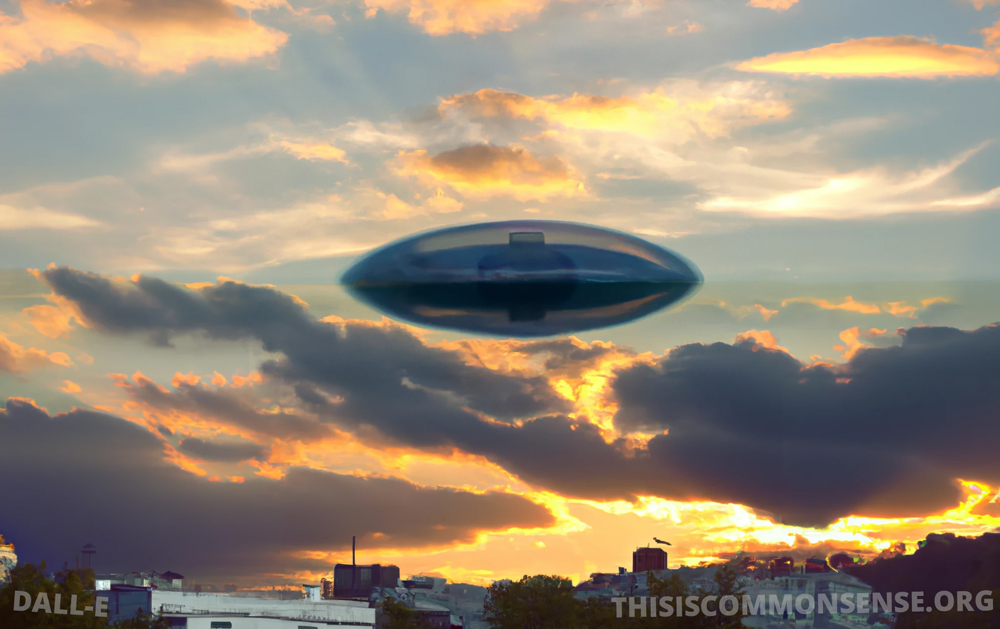
I’m talking about UFOs. Or “UAP” — as it is now trendy to say. I’m going to stick with the old term, just to rub the long history of the subject into smug, refined noses.
The story is this: in an upcoming-any-day-now report to Congress on UFOs, the Office of the Director of National Intelligence claims that there were 366 military-reported Unidentified Aerial … er … Flying Objects, last year, and 150 of them remain unexplained and not likely to be explained, since they behaved extremely oddly. That is, they acted in classic “flying saucer” manner.
“The unexplained ones they just have no clue,” says Daily Mail reporter Josh Boswell, “because these things are moving in ways that we just don’t understand. At hypersonic speeds, and then they just turn on a dime. I mean, it’s incredible.”
The bad news is that it appears these things “exist.” The good news, one can hope, is that now the military has protocols in place to handle such reports rather than turn each UFO/pilot interaction into a case fraught with secrecy and suppression, fear and consternation. The UFO reports now go to the All Domain Anomaly Resolution Office.
It is worth mentioning that many of the stories in this upcoming report toe the old government line, insisting that these sightings are in theory explainable as enemy drones, etc. If true, drone tech has made serious advances!
And the world is even more dangerous than previously thought.
Or weirder.
This is Common Sense. I’m Paul Jacob.
Illustration created with DALL-E
See all recent commentary
(simplified and organized)
See recent popular posts
Learning is not attained by chance, it must be sought for with ardor and attended to with diligence.
Abigail Adams, Letter to John Quincy Adams (May 8, 1780).
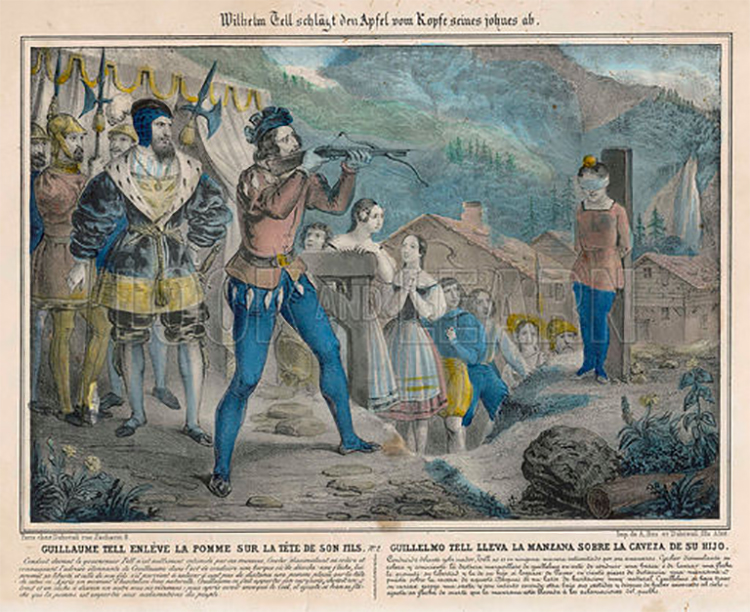
On November 18, 1307, legend has it, William Tell shot a crossbow bolt to pierce an apple, toppling it off his son’s head. He was forced to do this by the local Austrian authority, whose hat hung on a pole in the Altdorf town square Tell had refused to bow to when entering the village. Tell endures as a Swiss folk hero, and provides the subject of a famous opera by Rossini — the music of which is associated with, in many ears, Bugs Bunny and the Lone Ranger.
In 1926, on this date, George Bernard Shaw formally refused to accept the money for his Nobel Prize for Literature, saying, “I can forgive Alfred Nobel for inventing dynamite, but only a fiend in human form could have invented the Nobel Prize.”
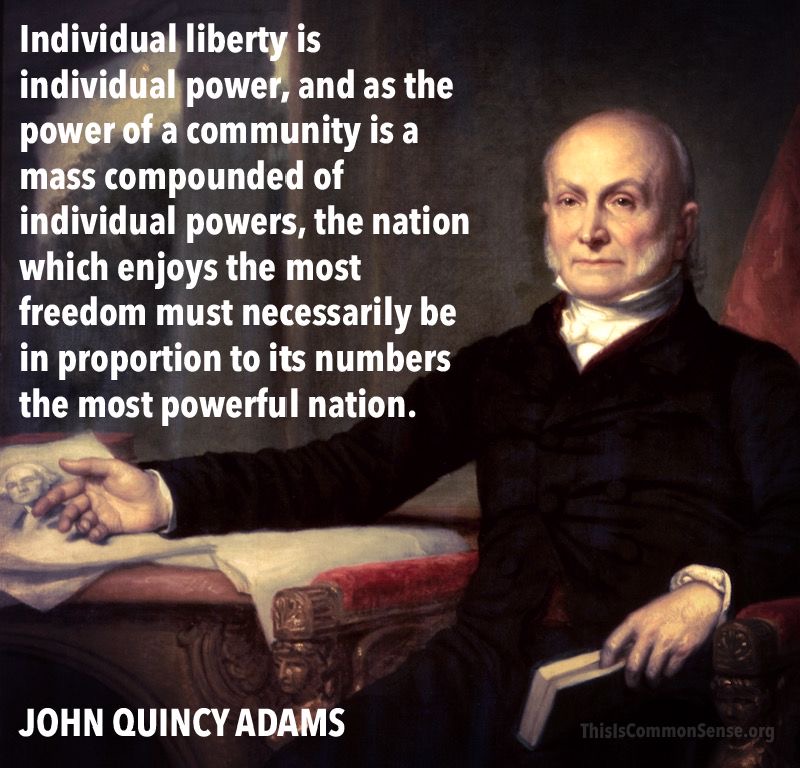
Individual liberty is individual power, and as the power of a community is a mass compounded of individual powers, the nation which enjoys the most freedom must necessarily be in proportion to its numbers the most powerful nation.
John Quincy Adams, Letter to James Lloyd (October 1, 1822).
On November 17, 1777, the Articles of Confederation were submitted to the states for ratification.
On that date in 1800, the United States Congress held its first session in Washington, D.C.