Categories
Today

Bricked Windows

On December 31, 1695, Englanders received a new tax, a window tax. One of the main responses to this was the bricking up of many British windows.

This last day of the year in 1991 marked the complete cessation of all institutions of the Soviet Union.

New Year’s Eve 1992 saw the peaceful dissolution of Czechoslovakia into the Czech Republic and Slovakia. This has been dubbed the “Velvet Divorce.”

Categories
general freedom ideological culture

It’s a Heroic Life

“An icon with such well-established status is an irresistible target,” The Bulwark’s Claire Coffey writes about the holiday season favorite, It’s a Wonderful Life, “and the competition to come up with the definitive contrarian takedown of the film is now a Christmas sub-tradition in its own right.”

Last year, I had to correct Washington Post columnist Monica Hesse, who belittled protagonist George Bailey as “the tortured Boy Scout-type,” arguing that Mary, his wife, was “the real hero.”

One of the nicest things about the movie is that mythical Bedford Falls has a lot of ordinary heroes . . . just like in real life. And Mary is right at the top of the list. But with her husband George, whom she dearly loves, not instead of or as his chief competition. 

“George Bailey Isn’t the Hero of ‘It’s a Wonderful Life,’” insists the headline to Mickey Randle’s recent column at Collider, where we learn that “many of [George’s] responses to hardship” are “less than admirable.” I don’t know about “many,” but George does throw something of a tantrum upon discovering that his business will go bankrupt and he likely end up in prison. 

Hate me if you must, but I might throw a momentary fit, too, at that set of circumstances.

“Mary bears almost identical burdens,” notes Randle, “and always responds productively.” Of course, even Mary gets angry in one scene and smashes one of her favorite records. Apparently, this wonderful woman is not perfect. Who knew?

Randle concludes by calling the movie “significant because of its observations on gender,” suggesting: “We just have to remember to see things from Mary’s perspective.” 

But can anyone who knows Mary claim that George is not a hero from her perspective?

One major point of attack on the film has been the idea that, if George “had never been born,” the sweet and beautiful Mary would certainly not be “an old maid,” as depicted. Granted, her being single would not be for lack of trying by every able-bodied, cisgendered male person in Pennsylvania. But in her piece at The Bulwark, Coffey gets this right by noticing, “Mary could marry any man in town. She doesn’t want to. She wants George.”

Seems to me the criticism is intended to obscure the powerful moral of this movie: that good guys and good gals are winners, not losers. And that two people in love and committed to doing what they think is right are as unconquerable as anything this world has ever known. 

When push comes to shove, I put my faith in that tantrum-throwing George Bailey and the record-smashing Mary Bailey . . . working together. 

This is Common Sense. I’m Paul Jacob.


PDF for printing

Illustration created with DALL-E2

See all recent commentary
(simplified and organized)
See recent popular posts

Categories
Thought

Immanuel Kant

Only the descent into the hell of self-knowledge can pave the way to godliness.

Immanuel Kant, Metaphysics of Morals (1797).
Categories
Today

Student of Law

On December 30, 1919, Lincoln’s Inn in London, England, admitted its first female bar student.

Categories
education and schooling general freedom

In the Name of Equity

Last year, I noted complaints by Virginia officials about the high proportion of Asian students attending Thomas Jefferson High School for Science and Technology. These students studied too hard, supposedly.

Now we learn that TJ High administrators have been conniving to prevent students who won National Merit awards, issued for excelling on the PSAT, from being informed of this. Principal Ann Bonitatibus and another official, Brandon Kosatka, have been memory-holing the notifications for years.

You can’t report having won a National Merit award on a college application if you just don’t know.

The policy is consistent with the Fairfax County school district’s ugly new Harrison-Bergeronesque ideal of “equal outcomes for every student, without exception.”

Kosatka told a parent that the idea was to “recognize students for who they are as individuals, not focus on their achievements,” a nonsensical proposition. Individuals don’t just sit around being themselves; they do stuff. Kosatka also said that the principal didn’t want to hurt the feelings of non-winners of the Merit awards by acknowledging winners.

Bonitatibus and Kosatka should be fired — at least. Their job is to help students achieve, not to undercut them.

We’ll never rid the world entirely of resentment against achievement — or, for that matter, the benefits that flow from achievement. But we can teach kids that the proper response to disappointment at doing less than their best is to resolve to do better at the next opportunity. 

And to be inspired — not, heaven forfend, demoralized — by the heights that others do achieve.

This is Common Sense. I’m Paul Jacob.


PDF for printing

Created with DALL-E2

See all recent commentary
(simplified and organized)
See recent popular posts

Categories
Thought

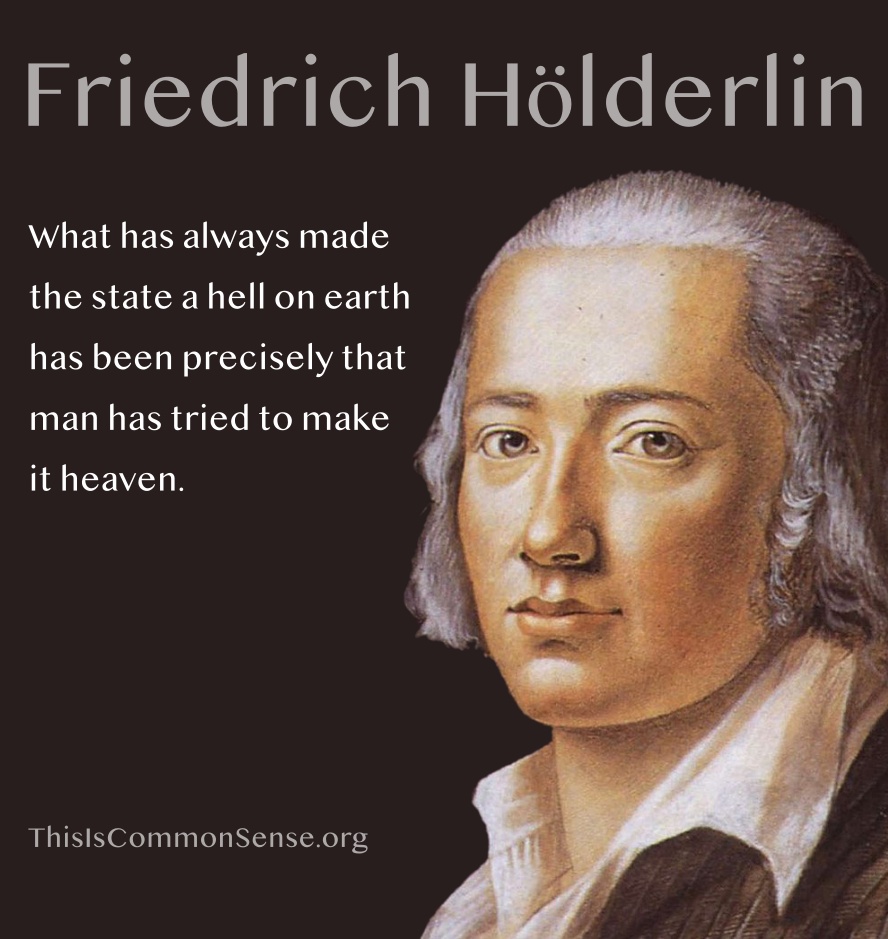
Friedrich Hölderlin

What has always made the state a hell on earth has been precisely that man has tried to make it heaven.

Johann Christian Friedrich Hölderlin, Hyperion (1797), Michael Hamburger, translator.
Categories
Today

Mongolia

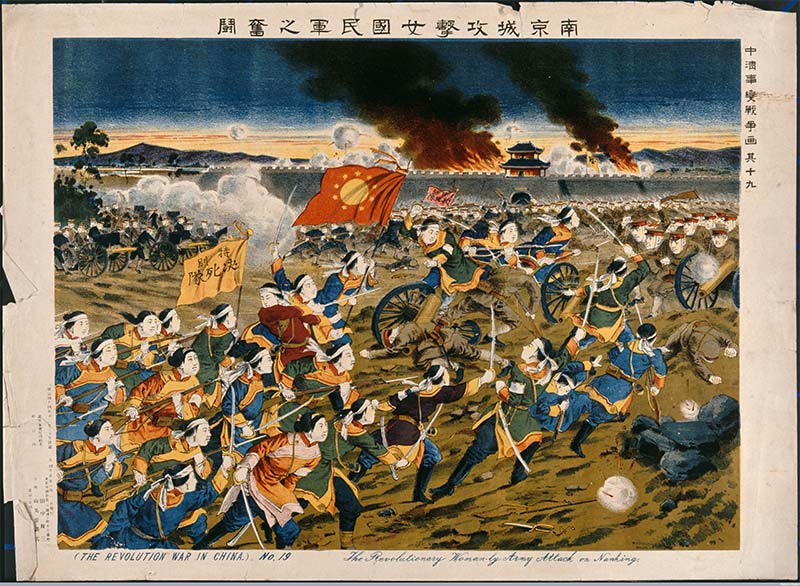
On December 29, 1911, Mongolia gained independence from the Qing Dynasty.

Categories
First Amendment rights free trade & free markets too much government

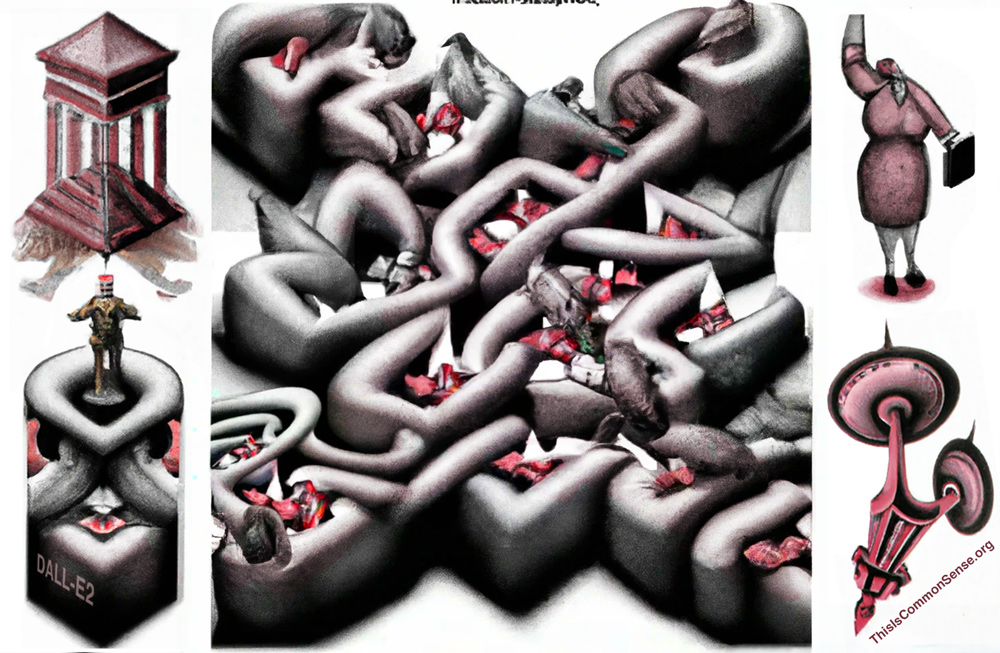
X Information (alternate illustration)

For well over a century, politicians have pushed Big Government/Big Business partnerships. The policy, indeed, is as old as politics. While we who like free markets often like [some of] the products of today’s biggest businesses, we must recognize that much of what these corporations sell us comes with strings attached — as we’ve found out to our dismay in the corruption of major social media outfits; as proven by the attacks on our speech and to the undermining of free elections.

Before the #TwitterFiles revelations, Michael Rectenwald, author of The Google Archipelago and other books, wrote a commentary that appeared in the pre-Christmas edition of The Epoch Times: “Who Really Owns Digital Tech?” In less than a thousand words, Rectenwald makes clear how deep governments have been involved in the tech space — particularly the Internet Space.

“Given the evidence of government start-up funding,” Rectenwald reasons, “we may have to concede the argument that the internet might have developed differently, more slowly, or not at all if the Defense Department hadn’t been involved at the outset. Likely, what we know as the internet would have become a system of private networks” — and in this dispersed-power system, free speech would not become a major issue, because not as easy a target.

As it is, however, “Twitter has operated as an instrument of the uniparty-run state, squelching whatever the regime deems ‘misinformation’ and ‘disinformation,’” Rectenwald writes, giving us an ominous list of the topics of xinformation:

  • warfare
  • economics
  • pandemics
  • elections
  • climate change catastrophism
  • the Great Reset

There are big gains for . . . some. Big Biz/Big Gov partnerships imply gains for both partners: business people gain access to governmental power and favors, and politicians and functionaries gain leverage to mold the citizenry. 

And that is where we have seen the partnership’s worst.

So far.

This is Common Sense. I’m Paul Jacob.


PDF for printing

Illustration created with DALL-E2

See all recent commentary
(simplified and organized)
See recent popular posts

Categories
Thought

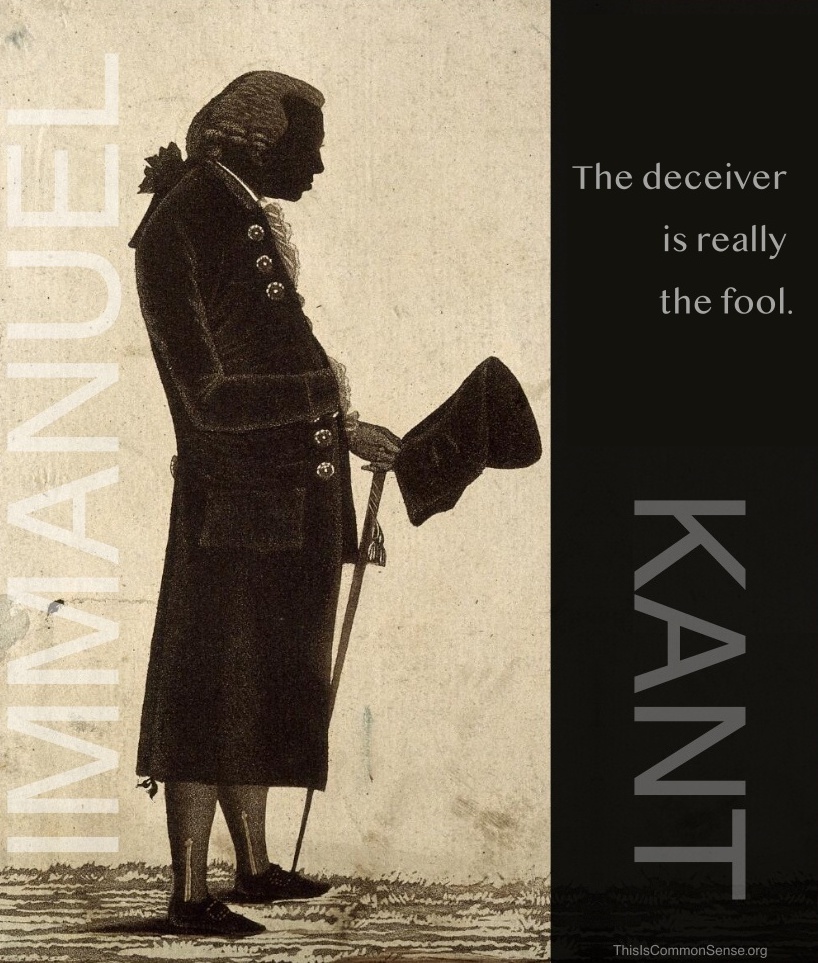
Immanuel Kant

The deceiver is really the fool.

Immanuel Kant, Anthropology from a Pragmatic Point of View (1798).
Categories
Today

Arrest; Resignation

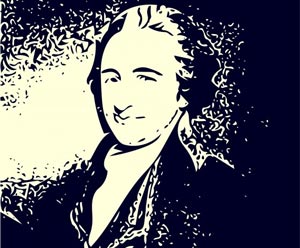
On December 28, 1797, Thomas Paine was arrested in France for treason, after being tried (and convicted) in absentia on December 26. Prior to moving to France, Paine had been an instrumental figure in the American Revolution as the author of Common Sense. Paine then moved to Paris to help along the French Revolution, but the chaotic political climate turned against him. Paine had not earned friends in the Revolution with his vocal opposition to capital punishment.

“During the whole of my imprisonment,” Paine later wrote, “prior to the fall of Robespierre, there was no time when I could think my life worth twenty-four hours, and my mind was made up to meet its fate. The Americans in Paris went in a body to the convention to reclaim me, but without success.”

Paine’s imprisonment in France caused a general uproar in America. Future President James Monroe used all of his diplomatic connections to get Paine released in November 1794.

With the publication of Paine’s secular tract, The Age of Reason — a great part of which he wrote in French prison — the American population turned against him, and he died penniless in New York in 1809.


On this date in 1832, John C. Calhoun resigned as Vice President of the United States, the first to do so.