What is a weed? A plant whose virtues have yet to be discovered.
Ralph Waldo Emerson, Fortune of the Republic (1878).
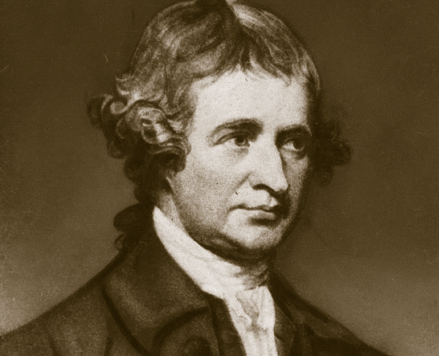
Ralph Waldo Emerson
What is a weed? A plant whose virtues have yet to be discovered.
Ralph Waldo Emerson, Fortune of the Republic (1878).
Early in the pandemic, “Dr. Littell, a longtime family physician in Ocala and a medical school professor, began posting videos sharing his thoughts about COVID-19 testing, treatments, and vaccines early in the pandemic,” Natasha Holt’s Epoch Times article narrates. “He was frustrated to find his content often was pulled down from his YouTube channel.”
But the establishment’s efforts didn’t stop there. “[I]n January 2022 and again five months later, he received warning letters from the American Board of Family Medicine (ABFM), the organization that issued his certification for his medical specialty.”
His videos on YouTube and then the safe, free-speech haven Rumble, spread “medical misinformation,” the board charged, warning that he could lose certification. But these were warnings. The board got a bit more serious and physical when they removed Littell from a public meeting, giving him the bum’s rush.
And then the board de-certified him.
It’s a long story, but appears to have a happy ending, with Littell re-certified and organizing a support group for medical professionals’ free speech rights, and the basic need to practice independent, patient-centered medicine, and to disagree with the gimcrack “consensus” policies that establishment organizations impose.
While there are multiple medical certification boards in America, these are not free-market concerns competing for customers. The government is heavily involved at every level. And the policies and “science” that Dr. Littell and others ran up against were not only political, but wrong — medically and morally.
As we are increasingly discovering.
Which makes medical freedom more important than ever.
This is Common Sense. I’m Paul Jacob.
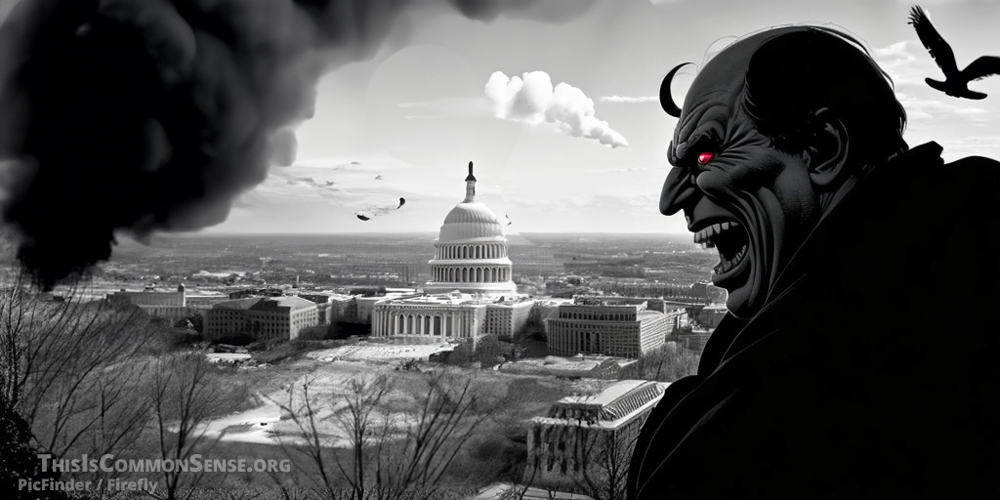
Illustration created with PicFinder.ai
See all recent commentary
(simplified and organized)
See recent popular posts
Ingratitude’s a weed in every clime,
Sir Samuel Garth, Epistle to the Earl of Godolphin, L.27.
It thrives too fast at first, but fades in time.
On September 8, 1264, Boleslaus the Pious, Duke of Greater Poland, promulgated the Statute of Kalisz, guaranteeing Jews safety and personal liberties and giving battei din jurisdiction over Jewish matters.
On the same date in 1883, former U.S. President Ulysses S. Grant drove in the final “golden spike” completing the Northern Pacific Railway in a ceremony at Gold Creek, Montana.
In February, the Federal Bureau of Investigation pretended an inability to fulfill America First Legal Foundation’s freedom-of-information request for documents about the FBI’s pre-election efforts to censor Twitter users. The agency declared the request to be “overly broad.”
What’s been “overly broad” is the policy of censorship, disinformation, and more by the Deep State using private partners. Meaning their real problem is doubtless that the requested documents are “overly incriminating,” too unmistakably what AFL wanted.
So the FBI stonewalled.
And AFL has sued, in its complaint concluding that the agency’s “blanket denial of AFL’s FOIA request is contrary to law and should not stand.”
Thanks to evidence brought to light by other litigation and by Matt Taibbi’s reporting on Twitter’s internal records, none of us is just guessing that the FBI has acted to censor constitutionally protected discourse. We know that the FBI’s National Election Command Post flagged at least 25 Twitter accounts for “misinformation.”
But the only party to the censorship revealing relevant information voluntarily is Twitter itself, thanks to decisions by Twitter’s new management under Elon Musk.
With respect to everybody else colluding to censor social media — the FBI, the DOJ, the White House, Google, Facebook, etc. — looks like it’ll have to be lawsuits every step of the way.
The First Amendment’s stricture upon Congress to “make no law” abridging our “freedom of speech, or of the press,” does not allow the FBI, the CIA, the NSA, and other agencies to simply subcontract. Nor are they free to mold public opinion.
A government-controlled “press” is not a free press.
This is Common Sense. I’m Paul Jacob.
Illustration created with PicFinder.ai and DALL-E2
See all recent commentary
(simplified and organized)
See recent popular posts
“A cucumber is bitter.” Throw it away. “There are briars in the road.” Turn aside from them. This is enough. Do not add, “And why were such things made in the world?”
Marcus Aurelius, Meditations (c. 180 A.D.).
On September 7, 2008, the U.S. Government “took control” of the two largest mortgage financing companies in the United States, Fannie Mae and Freddie Mac.
Both of these had been created, decades before, by Congress as part of a concerted plan to make home ownership easier, and both had gotten completely out of hand during the many years of their existence, especially under new rules established by politicians in the 1990s. The after-market that they helped create — the packaged mortgage market — was what imploded in 2007–2008, leading to the economic slump that Nicholas Nassim Taleb referred to as setting the U.S. government on President Obama’s economic policy course of “eight years of Novocain.”
We’ve got to breathe; we are social creatures — so locking everyone down, as started in the Spring of 2020, didn’t appear to “slow the spread” (the original aim) and it certainly did not decrease the overall infected or death counts (something the policy did not originally pretend to do). Yet that policy, enacted as an emergency protocol in many states by many governors and mayors extended lockdowns far beyond Trump’s original call for “fifteen days.”
The extensions were never squared with the initial rationale.
Never.
Quarantining the sick, or those who “test positive” for the virus, makes more sense. But only in context of options and human behavior.
“Students who test positive for COVID-19 at the University of Michigan this fall will be forced in many cases to leave campus,” explains Robby Soave at Reason, “an extreme measure that may well encourage sick people to avoid seeking medical attention at all.” Dr. Jay Bhattacharya dubs it a “cruel policy” seemingly “designed to spread covid from the university into the wild.”
That is, this quarantine effort “won’t stop [COVID] from spreading,” the doctor summarizes.
“Instead of creating a police state to punish students for contracting COVID-19 — something that is, let’s face it, wholly unavoidable,” Mr. Soave speculates, “perhaps university health officials could work harder to provide accommodations for students who get sick and voluntarily agree to quarantine.”
But administrators rule that out: they don’t have the accommodations.
So the policy will inevitably cause hardship while not promoting public health, much less the health of individual students.
Doesn’t make sense.
I’m Paul Jacob.
Illustration created with PicFinder.ai
See all recent commentary
(simplified and organized)
See recent popular posts
And what is reason? Be she thus defined:
Edward Young, The Complaint: or, Night-Thoughts on Life, Death, & Immortality (1742–45), VII. L. 1,526.
Reason is upright stature in the soul.
On September 6, 1843, Yves Guyot was born.
A journalist, economist, and political activist, he once endured a six-month prison term for his campaign against the prefecture of police. He served as minister of public works under the premiership of P.E. Tirard in 1889, retaining his portfolio in the cabinet of Charles de Freycinet until 1892. A free-trade liberal, he lost his seat in the election of 1893 owing to his militant attitude against socialism. His many books included The Principles of Social Economy (1892), The Tyranny of Socialism (1894), The Comedy of Protection (1906), Socialistic Fallacies (1910), and Where and Why Public Ownership Has Failed (1914). He served as editor of Journal des Économistes, following the Belgian economist Gustave de Molinari.
Illustration is a detail from a caricature by artist André Gill (1840-1885).