Everything not forbidden is compulsory.
The slogan over the entrance to an ant colony in T. H. White’s The Sword in the Stone (1938), chapter 13.
Categories
[Dystopian Slogan]

Everything not forbidden is compulsory.
The slogan over the entrance to an ant colony in T. H. White’s The Sword in the Stone (1938), chapter 13.
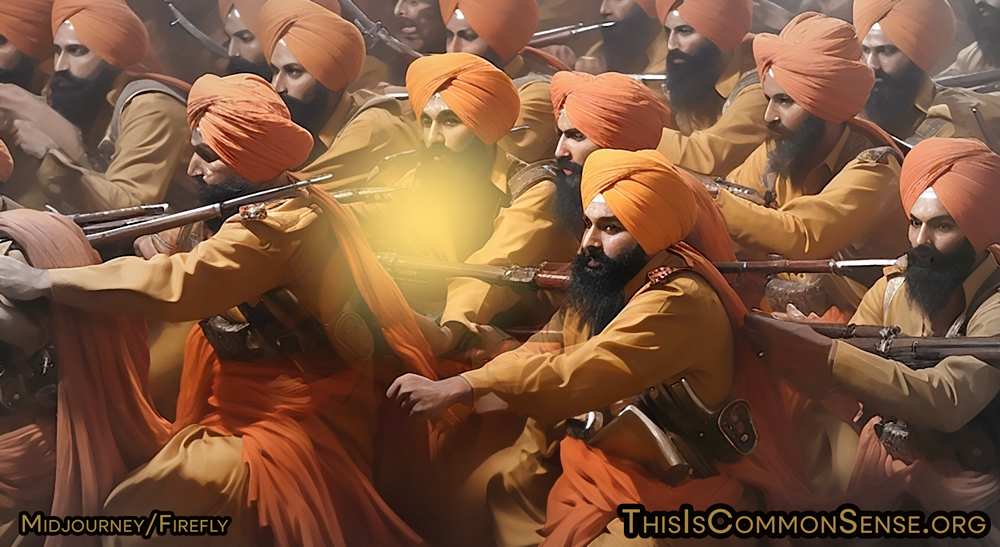
The genocidal Chinese Communist Party, furious at my new website, StoptheChinazis.org?
Perhaps. But what about the regime of Prime Minister Narendra Modi in India?
I’m a member of the Punjab Referendum Commission, an international group advising and monitoring the non-governmental referendums being organized among the worldwide Sikh diaspora by U.S.-based Sikhs for Justice. Recently, I stood at the entrance of a Sikh temple in Surrey, British Columbia, outside Vancouver, where Canadian intelligence agencies say agents of Modi’s government assassinated Sikh leader and Canadian citizen Hardeep Singh Nijjar, back in June, spraying him with 30 bullets.
Then, last week, U.S. prosecutors indicted an Indian national for, according to The Wall Street Journal, “working with an Indian government officer to pay a purported hitman $100,000 . . . to murder a prominent advocate” on U.S. soil.
“The court filing did not name the victim,” The Washington Post reported, “but senior Biden administration officials say the target was Gurpatwant Singh Pannun, general counsel for the New York-based Sikhs for Justice. . . .”
My mouth’s suddenly a bit dry; I’ve been on the same stage as Mr. Pannun several times.
There’s a long history of political unrest and violence between Sikhs in the Punjab region and the central Indian government . . . leading today to roughly one-fourth of Sikhs living outside of India.
What can we do? Well, though I take no position on whether — YES or NO — the Punjab region should secede from India, I very much like that Sikhs for Justice is resorting to the opposite of violence — democracy — by asking Sikhs around the world to cast their vote.
If they dare.
This is Common Sense. I’m Paul Jacob.
Illustration created with Midjourney and Firefly
See all recent commentary
(simplified and organized)
See recent popular posts

Every one belongs to every one else.
Government slogan in Aldous Huxley’s dystopian novel Brave New World (1932).
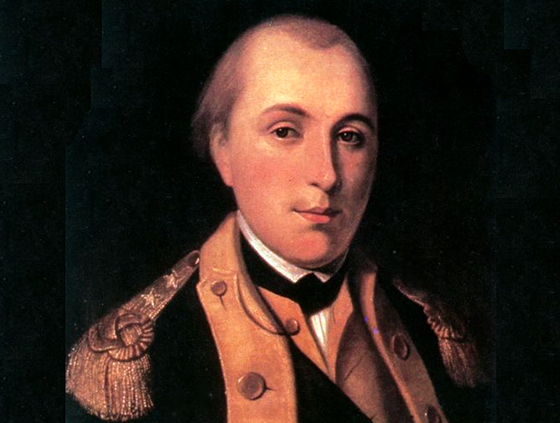
On December 7, 1776, the Marquis de Lafayette arranged to enter the American military as a major general. On the same date in 1787, Delaware became the first state to ratify the United States Constitution.
The 1941 date marks, of course, “the day that will live in infamy,” when Japan bombed Pearl Harbor.
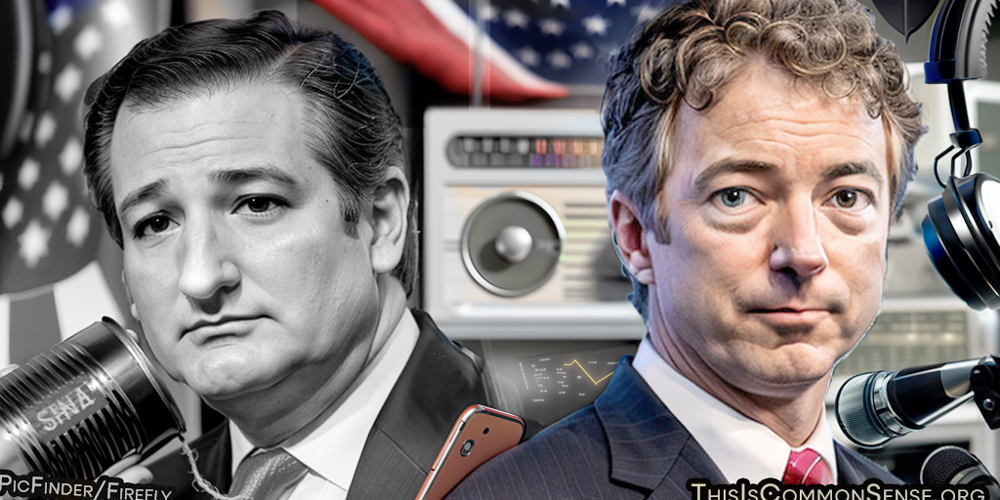
At issue is a bill pushed by Senator Ted Cruz (R-Tx.), the AM For Every Vehicle Act. Automobile manufacturers are phasing out amplitude modulation (AM) on radio receivers, and Cruz objects primarily on two rationales:
“AM radio is where a lot of talk radio is found,” argues Cruz, “and talk radio is overwhelmingly conservative. And let’s be clear: Big business doesn’t like things that are overwhelmingly conservative.”
Technology and media change all the time, and as ostensible advocates for free markets, it’s no business of Republicans so much as to nudge the market in one direction or the other. Perhaps AM’s days are numbered.
Shed a tear and move on.
Cruz characterizes the issue as one of free speech. Paul expresses incredulity: “The debate over free speech, as listed in the First Amendment, is that government shall pass no law. It has nothing to do with forcing your manufacturer to have AM radio.”
It gets messier: electric car manufacturers say that the AM band interferes with their batteries, and the technology to shield the batteries is expensive. So Cruz’s law would forbid companies from charging more for this tech.
If you ask me, the batteries being harmed by AM radio indicates a glaring defect not in a radio platform but in the platform of electric cars.
So it’s great that Rand Paul’s amendment to undermine Cruz’s mandate would also nix the electric car tax credit.
This is Common Sense. I’m Paul Jacob.
Illustration created with PicFinder and Firefly
See all recent commentary
(simplified and organized)
See recent popular posts
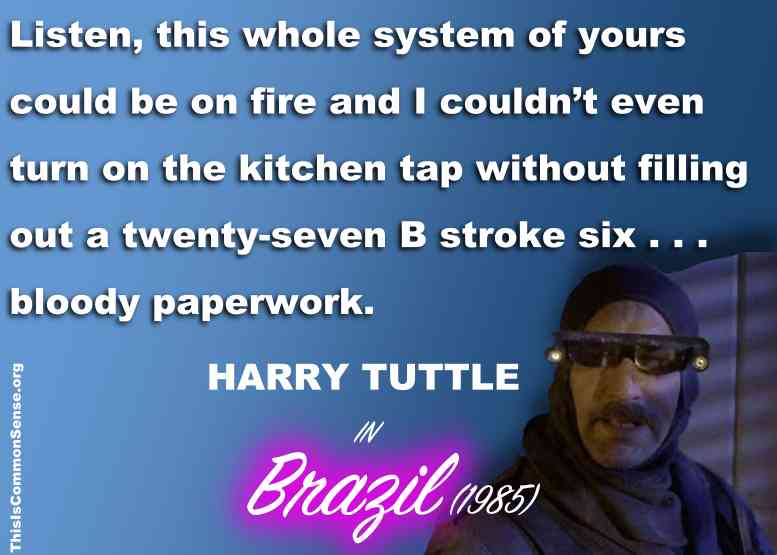
Listen, this whole system of yours could be on fire and I couldn’t even turn on the kitchen tap without filling out a twenty-seven B stroke six . . . bloody paperwork.
Harry Tuttle, a character in Brazil (1985) played by Robert De Niro. Film directed by Terry Gilliam and written by Terry Gilliam, Tom Stoppard, and Charles McKeown.
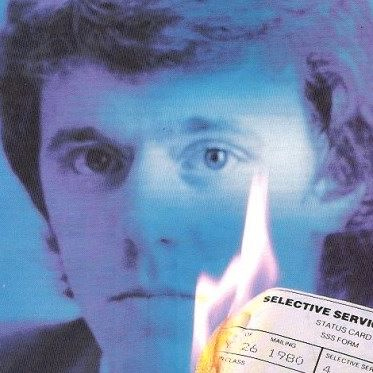
On December 6, 1865, the Thirteenth Amendment to the United States Constitution was ratified, banning slavery in all states and territories.
One-hundred-and-nineteen years later, to the day, in 1984, Paul Jacob (of ThisIsCommonSense.org, LibertyiFund.org, and the Citizens in Charge Foundation) was arrested by the FBI for his refusal to register with Selective Service System (the draft people). The Government was probably not attempting to make a commemorative point about involuntary servitude.

He even managed to get their license plate number; to do so, he had to peel off an aluminum-foil cover on the plate as the thieves began driving away.
Burrola helped police quickly capture one of the suspects. But Kroger, the parent company, fired him anyway. See, Burrola had violated the sacred kick-me-again Kroger policy that employees must never interfere with thefts in progress.
The policy is like waving a flashing neon red ROB US MORE sign and, unfortunately, is common.
Fortunately, though, it’s not a policy that Michael Sullivan, operations manager of Roger’s Gardens in Orange County, California, had to worry about as he tried to figure out how to stop a months-long series of thefts of expensive shrubbery and other items from the Gardens.
Security cameras weren’t helping. They recorded the thief but were unable to capture his license plate, which could be used to track him down. He kept coming back to steal more.
Finally, Sullivan hit on the idea of hiding AirTags on things that the thief might grab. The stratagem paid off. Sullivan discovered the location of the evildoer and relayed the info to police.
They found a yard clogged with $8,000 in goods stolen from Roger’s Gardens.
The stolen goods have been returned to the Gardens; the thief has been arrested.
Hard? No. Wrong? No.
Thwarting thievery fends off barbarism. Doing it at low personal risk is good business.
This is Common Sense. I’m Paul Jacob.
Illustration created with PicFinder and Firefly
See all recent commentary
(simplified and organized)
See recent popular posts
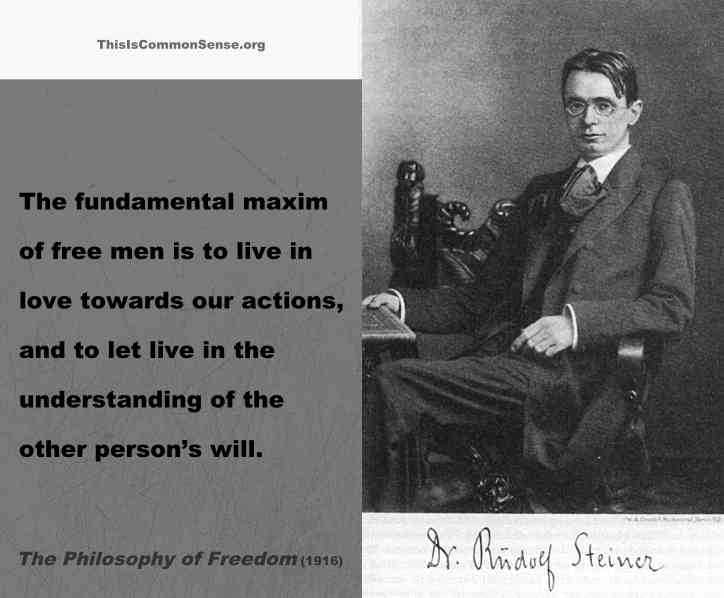
The fundamental maxim of free men is to live in love towards our actions, and to let live in the understanding of the other person’s will.
Rudolf Steiner, The Philosophy of Freedom: A Modern Philosophy of Life Developed by Scientific Methods (1916), Chapter Nine.
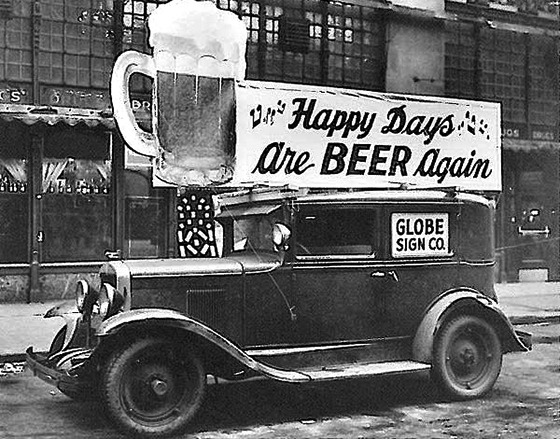
On December 5, 1933, nationwide alcohol Prohibition in the United States ended after Utah became the 36th U.S. state to ratify the 21st Amendment to the United States Constitution, thus establishing the required 75 percent of states needed to enact the amendment that overturned the 18th.