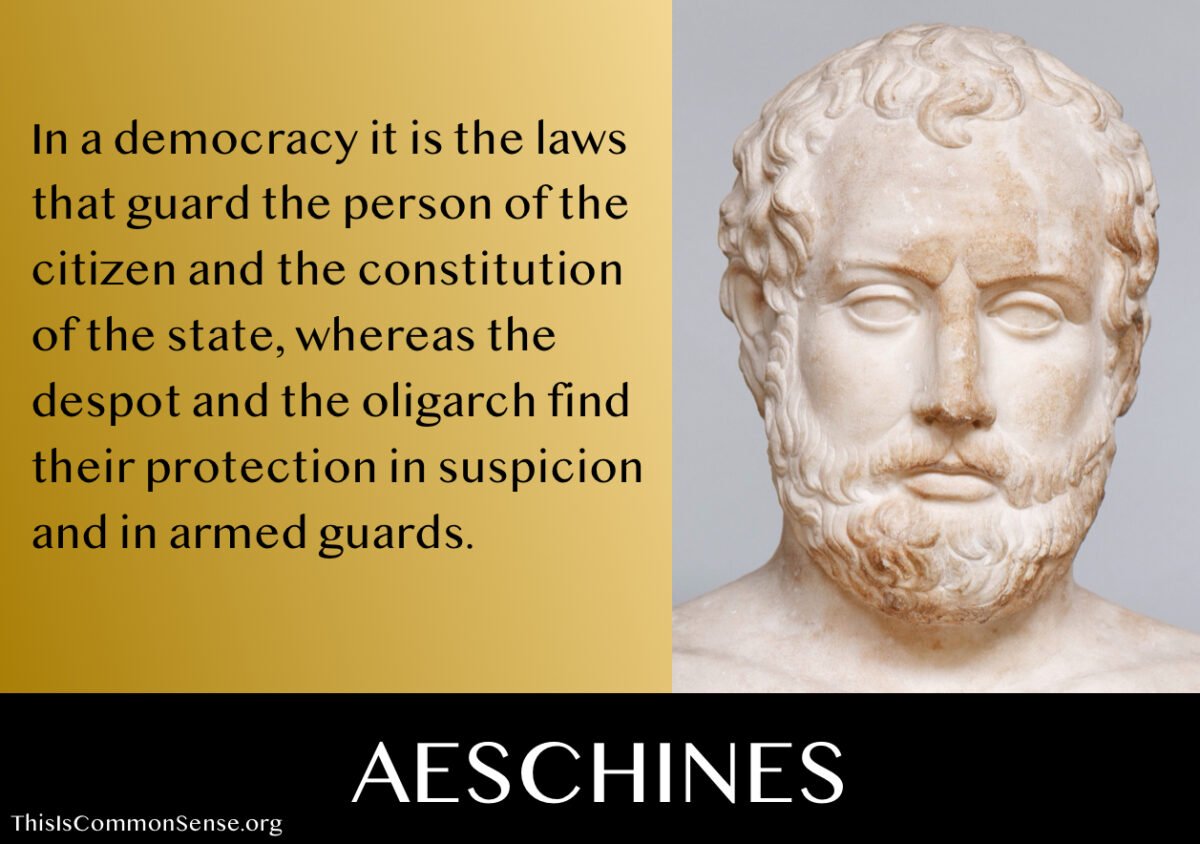
On June 3, 1959, Singapore adopted a constitution.
Singapore’s Constitution
On June 3, 1959, Singapore adopted a constitution.
Spencer Pratt, a former reality TV star, has run a study-worthy campaign and could finish close to the top. He’s a former Palisades homeowner. He now lives in a trailer on his property, upon which he cannot yet re-build after the fires that swept through the area in January 2025. And he’s built his campaign around the government’s absolute failure on every level to assist — or just get out of the way — of a recovery.
His video ads — and satirical contributions by fans — have been magnificent.
Erstwhile Castro-loving incumbent Mayor Karen Bass — who was celebrating in Ghana during the conflagration, basking in the glory of the continent’s first woman president — is in no small part responsible for the city’s worse-than-inept response to the fires. And candidate Pratt isn’t letting anyone forget it.
A month ago, Mayor Bass blasted Pratt for “exploiting the grief of people in the Palisades,” calling it “reprehensible.” A weird twist of the reality of Pratt’s righteously indignant stance. What she did and didn’t do during and after the Palisade Fires are better described as “reprehensible.”
The other major candidate is Councilwoman Nithya Raman, an outspoken homeless advocate who didn’t like it at all that homeless started camping outside her home.
Yesterday, the race was described as “neck-and-neck” by KTLA-5, with Hollywood actors Jane Fonda and Samuel L. Jackson cited as “supporting Mayor Bass, while Chelsea Handler and Mindy Kaling are backing Councilwoman Raman.”
In most other cities these endorsements would likely fizzle.
But in L.A. . . . ?
This is Common Sense. I’m Paul Jacob.
* The latest UC Berkeley/LA Times poll shows Mayor Bass with 26%, Councilwomen Raman with 25% and Pratt with 22% support. Los Angeles does not use the same Top Two system that California uses statewide, whereby the top two vote getters move on to the General Election. In L.A., if a candidate garners a majority, the race is over.
Illustration created with Grok Imagine
See all recent commentary
(simplified and organized)
See recent popular posts
The shaft of the arrow had been feathered with one of the eagle’s own plumes. We often give our enemies the means of our own destruction.
From “The Eagle Wounded by an Arrow, Aesop’s Fables (c. 600 BC).
On June 2, 1924, President Calvin Coolidge signed the Indian Citizenship Act into law, granting citizenship to all Native Americans born within the territorial limits of the United States.
The protesters’ complaints against the treatment of U.S. Immigration and Customs Enforcement detainees at the Delaney Hall location run along familiar lines. New Jersey’s governor, Mikie Sherrill, says that many of those held in this private facility are in the country legally, not illegally, and all lack adequate council, allowed visitation, and medical access.
Those who are indeed here legally should not be held, of course — they should be released — and the Democratic governor is right to seek remedies for any deplorable conditions that actually exist.
But burning tires and bonfires on the streets outside don’t expedite careful review of detainees’ cases.
Some of the most noticeable protesters, you will not be shocked to learn, wear masks and have become increasingly violent towards the police who are trying to keep the peace, as well as towards the facility and ICE personnel accessing the site.
“We know that people from outside of the state have been interfering in the protests and escalating them,” the governor said at a Saturday press conference. “Five of the six people arrested last night by state police were from outside New Jersey.”
Governor Sherrill urges the protesters to “bring the temperature down.”
And she asks out-of-state activists to leave the issue to New Jersey citizens.
Meanwhile, the governor tries to place much of the blame on an increased ICE presence — rather than just the masked pseudo-revolutionaries — for the decreasing ability to ensure justice is being done in Delaney Hall.
This is Common Sense. I’m Paul Jacob.
Illustration created with Nano Banana
See all recent commentary
(simplified and organized)
See recent popular posts
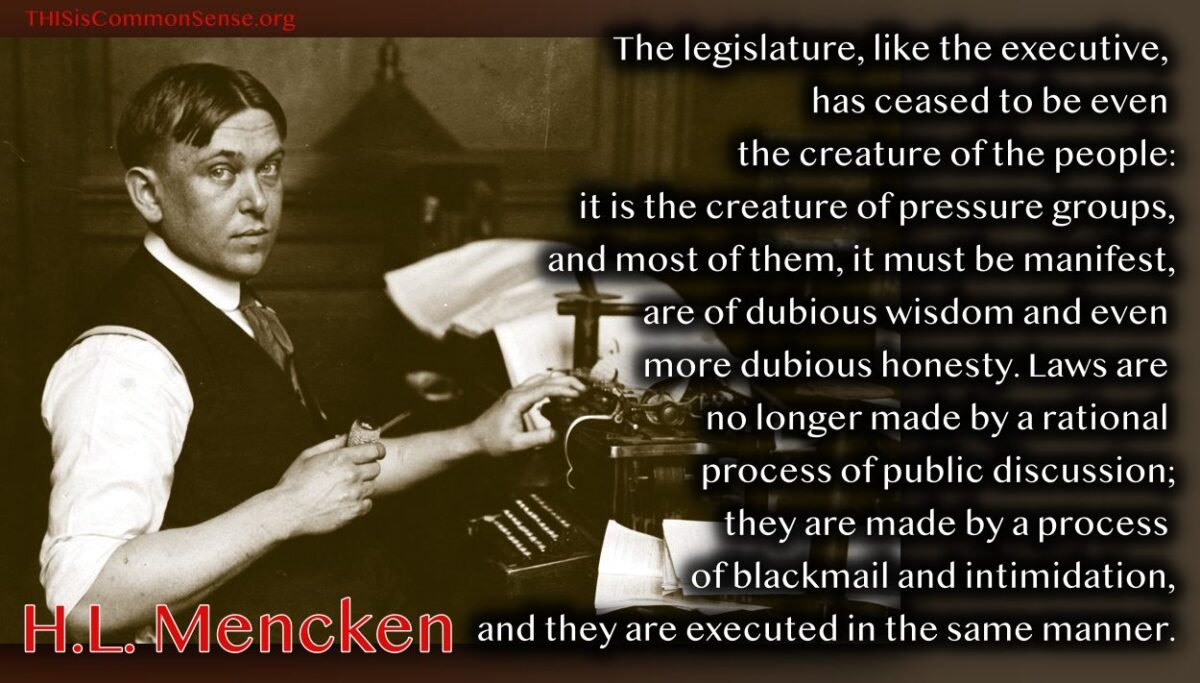
No man must encroach upon my province nor I upon his. He may advise me, moderately and without perniciousness, but he must not expect to dictate to me. He may censure me freely and without reserve but he should remember that I am to act by my deliberation and not his. He may exercise a republican boldness in judging, but he must not be peremptory and imperious in prescribing. Force may never be resorted to but, in the most extraordinary and imperious emergency.
William Godwin, Enquiry Concerning Political Justice (1793), Book II, Of Rights.
On Thursday, Paul Jacob discussed a report claiming that there has bern an increase in “food insecurity” in the United States. He identified a few ways in which government could help by “helping”less.
He also mentioned that a sizable minority of states are putting a number of restrictions in place on those who can receive benefits and on what foods can be paid for on the SNAP system.
Here are a few sources of information on these new restrictions:
“Louisiana SNAP recipients face new geographic restrictions as of Tuesday, May 26th,” by Nathan Rizutti — “Starting May 26, 2026, EBT cardholders will be limited to in-state purchases. This change helps prevent and protect against EBT theft while keeping SNAP, FITAP, and KCSP benefits in-state.”
“Missouri plans food benefit restrictions, but grocers say details remain unclear,” by Steph Quinn — “The changes, planned for Oct. 1, would prohibit purchases of candy, prepared desserts and sugary drinks through the Supplemental Nutrition Assistance Program, or SNAP. Next summer, the same restrictions will also apply to SuN Bucks, the summer food program serving hundreds of thousands of Missouri children.”
“SNAP Benefits 2026: When EBT Cards Reload in Every State,” by Caitlyn Moorehead — “If you collect these benefits in 2026, you may have started to feel the changes to the SNAP program and varying new restrictions. However, payment scheduling should remain relatively the same regarding the process for the cash benefits to be deposited on the same day each month, based on factors such as your Social Security number, last name, case number or EBT account number.”
“SNAP benefits 2026: New maximum payments and monthly increase details,” by Stefan Brand — “The USDA adjusts SNAP maximum allotments, deductions, and income eligibility standards at the beginning of each federal fiscal year, which begins on October 1st, with changes based on shifts in the cost of living. The Thrifty Food Plan, commonly known as the TFP, calculates the cost of a market basket for a family of four and serves as the USDA’s estimate of how much it costs to provide nutritious, low-cost meals for a household.”
“SNAP FOOD RESTRICTION WAIVERS WILL REACH 7.5M HOUSEHOLDS BY END OF 2026, NUMERATOR REPORTS” — “Food Restriction Waivers (FRWs) will structurally change the program. By the end of 2026, 19 states will have waivers in place, affecting roughly one-third of SNAP participants. These policies directly restrict the use of SNAP benefits for categories such as soda, candy, and energy drinks —categories that were already more likely to be embedded in SNAP baskets.”
It should be remembered that restricting the food covered by “food stamps”
This last point is worth considering at length. It has been charged that restrictions on the scope of no-priced food distribution is “paternalistic.” Sure, but prodigal spending on the poor is already paternalistic — one might say “maternalistic,” but that implies that mothers are indiscriminate distributors of benefits to their charges, and only men see the point of restricted, responsibility-free subsidies. But that is not true.
The proper method for hastening the decay of error is not by brute force, or by regulation which is one of the classes of force, to endeavour to reduce men to intellectual uniformity; but on the contrary by teaching every man to think for himself.
William Godwin, Enquiry Concerning Political Justice (1793), Vol. 2, bk. 8, ch. 6.
On May 31, A.D. 455, Emperor Petronius Maximus was stoned to death by an angry mob while fleeing Rome from a Vandal invasion that was, in fact, blowback from his own power politics. Thus ended his two-and-a-half month reign, which he had obtained by murder and bribery.
Petronius Maximus made at least one strategic mistake, attempting to strengthen his position by forcing Licinia Eudoxia, the previous emperor’s widow, to marry him — and forcing her daughter Eudocia to marry his son. This latter arrangement canceled Eudocia’s betrothal to the son of the Vandal king Genseric, infuriating both Eudocia and Genseric, who sent a fleet to Rome. Maximus failed to obtain troops from the Visigoths and he fled as the Vandals arrived. In the hubbub, he became detached from his retinue and bodyguard and was killed by fellow Romans.