Categories
Today

Declarations

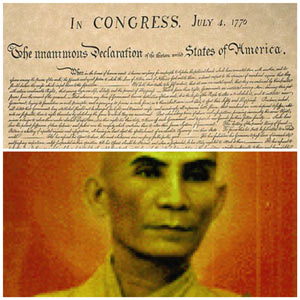
On June 11, 1776, the Continental Congress appointed John Adams, Benjamin Franklin, Thomas Jefferson, Robert R. Livingston, and Roger Sherman to draft a declaration of independence from Great Britain.

On the same date in 1963, Thich Quang Duc, a Buddhist monk, doused himself with gasoline and set himself aflame in a busy Saigon intersection as a protest against South Vietnam’s lack of religious freedom.

Categories
crime and punishment First Amendment rights general freedom

Doxxing Dissent

California lawmaker Steve Padilla is apparently indifferent to the speech-enabling virtues of anonymity. The state senator (18th District) has no problem violating the First Amendment rights of persons who conceal their identity the better to speak out.

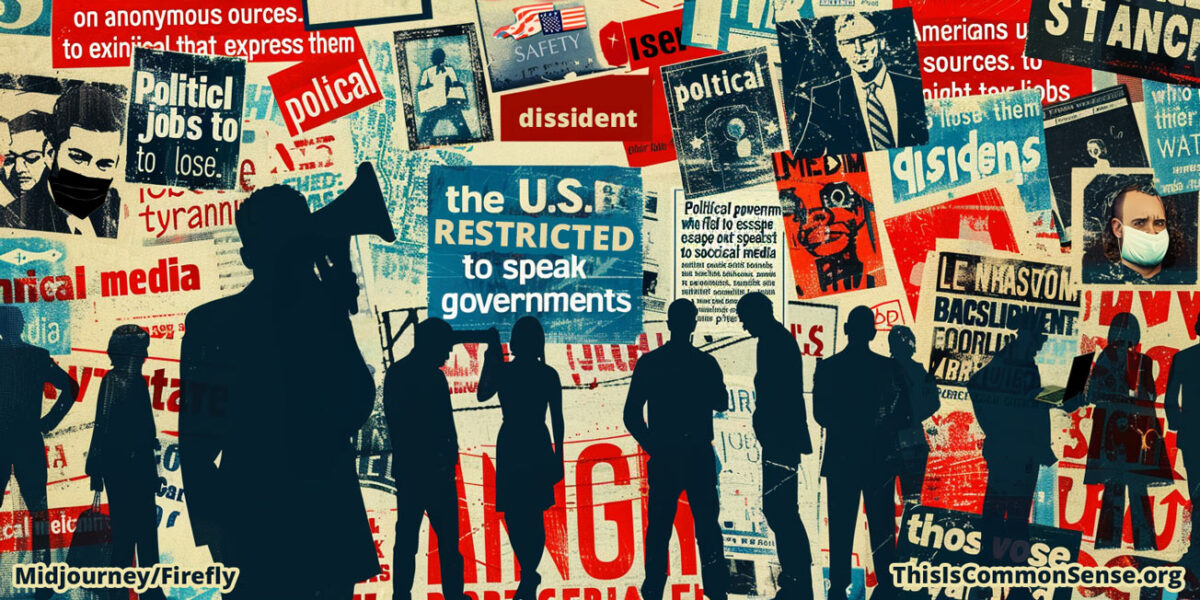
Padilla is proposing legislation, SB1228, to compel social media companies to compel social media “influencers” who’d rather remain anonymous to identify themselves. A company that fails to comply would risk being penalized.

And I hear it often: why anonymity? Folks should own up to their speech!

But many people have good reasons for remaining anonymous when they publish their views. One is to protect themselves from harassment by private parties. Another is to protect themselves from harassment, or worse, by governments.

Tiffany Donnelly of the Institute for Free Speech observes that the United States has a long history of anonymous political speech.

Investigative journalism “often relies on anonymous sources. Americans use social media to express political opinions that might cause them to lose their jobs. Political dissidents who fled to the U.S. to escape tyrannical governments use social media to speak out against those repressive regimes.”

Once social media companies collect the ID data, then what?

Perhaps the information is supposed to just sit in the companies’ computers. But once it becomes known that certain anonymous but controversial writers are being forced to supply personal information, this information becomes a target — for hackers, state governments hiring hackers, disgruntled moderators who may decide to “out” the commentators they dislike.

The bill won’t stop “misinformation,” but it will discourage discourse. 

Specifically, dissent.

It’s this bill that should be stopped.

This is Common Sense. I’m Paul Jacob.


PDF for printing

Illustration created with Midjourney and Firefly

See all recent commentary
(simplified and organized)
See recent popular posts

Categories
Thought

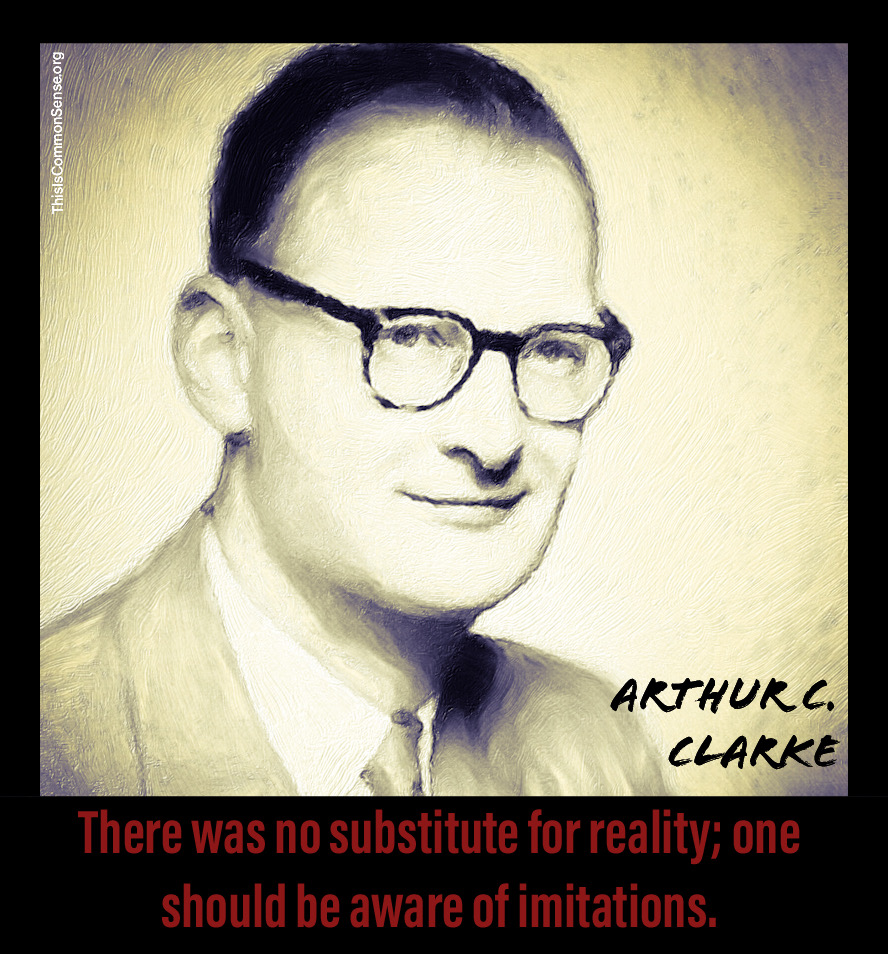
Arthur C. Clarke

There was no substitute for reality; one should be aware of imitations.

Arthur C. Clarke, The Fountains of Paradise (1979).
Categories
obituary

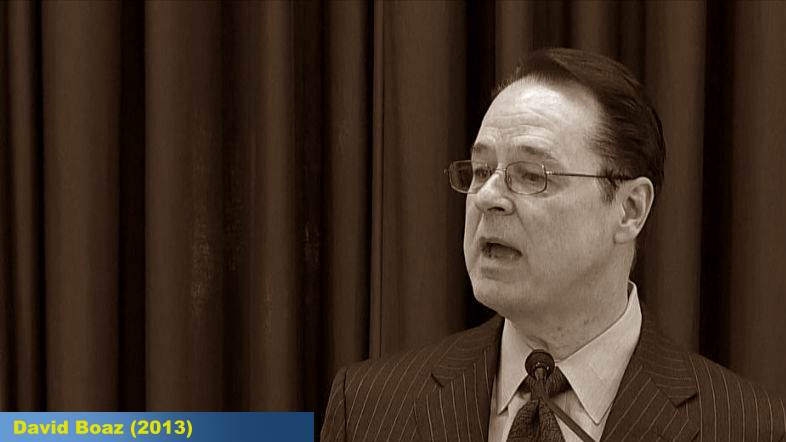
David Boaz, 1953–2024

David Boaz was a friend and mentor to many. We now learn, to our sadness, of his death on Friday.

Who was David Boaz? Here is the bare bones of his public identity, from Wikipedia, first paragraph:

To discriminating readers, Mr. Boaz was the author and editor of a number of books on individual liberty, including:

  • Libertarianism: A Primer, Free Press 1997.
  • The Libertarian Reader, Editor, Free Press 1997.
  • The Politics of Freedom: Taking on The Left, The Right and Threats to Our Liberties, 2008.
  • The Libertarian Mind: A Manifesto for Freedom, Simon & Schuster, 2015.

Brian Doherty, author of Radicals for Capitalism: A Freewheeling History of the Modern American Libertarian Movement (2007), published, at Reason, probably the most comprehensive obituary yesterday. After several paragraphs telling of Mr. Boaz’s early history with Young Americans for Freedom, the 1980 Clark for President campaign, his work at the Competitive Enterprise Institute, Doherty focuses on the key position from which David Boaz affected American political culture:

David Boaz was, above and apart from his work at Cato, a respected individual: friend, mentor, citizen . . . and unwavering enemy of tyranny.

Categories
Thought

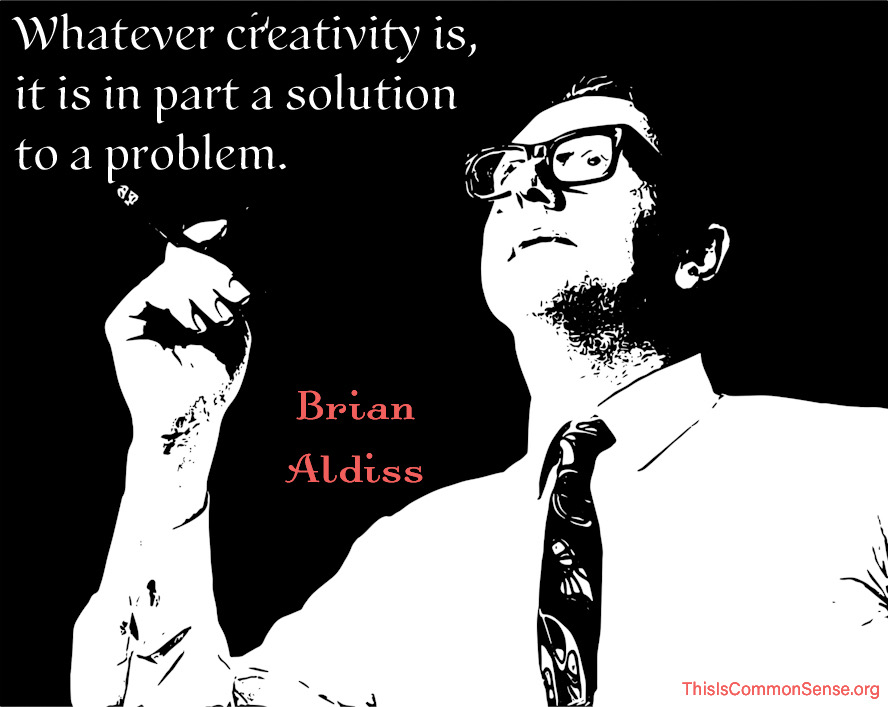
Brian Aldiss

Whatever creativity is, it is in part a solution to a problem.

Brian Aldiss, “Apéritif” in Bury My Heart at W.H. Smith’s (1990).
Categories
Today

John & José

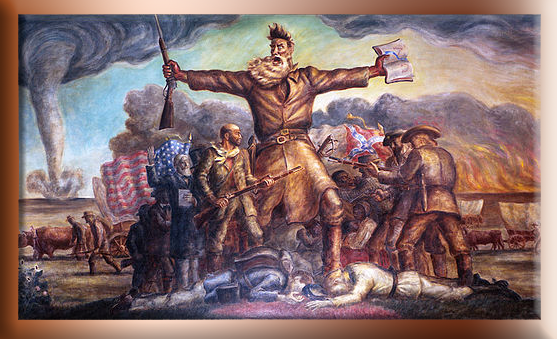
On May 9, 1800, abolitionist hero and revolutionary (and, depending upon your point of view and certain definitions, insurrectionist, perhaps even terrorist) John Brown was born.

In 1883 on this date, Spanish philosopher José Ortega y Gasset was born. He is most famous for his book The Revolt of the Masses.

Categories
FYI Update

The Curtilage? What’s That?

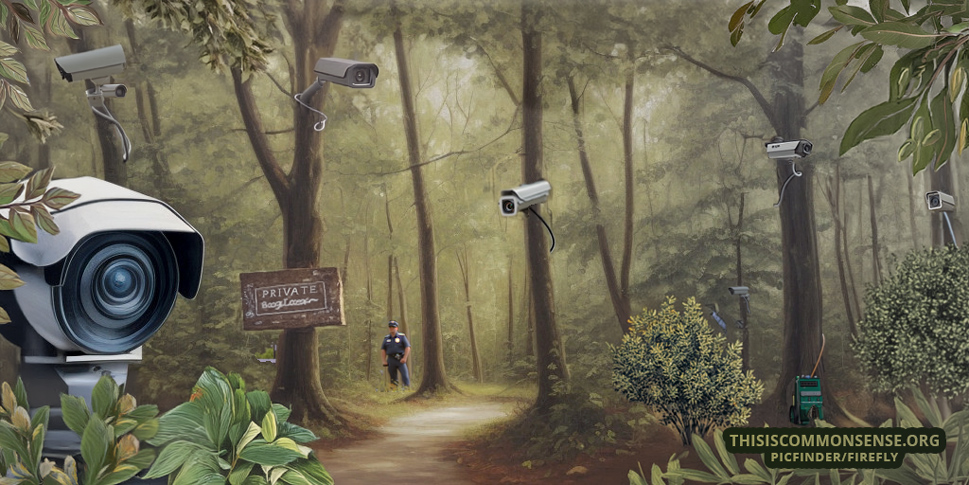
On Thursday, Paul Jacob discussed a Tennessee case where the prospects look good: “Unconstitutional searches of private property by a renegade Tennessee government agency may be coming to an end.” Specifically, “Tennessee Wildlife Resources Agency employees have no right to ignore No Trespassing signs on private land — not even to enter it, let alone install cameras there in search of a crime.”

Government agents had trampled on private land thinking they needed no permission at all. They thought it was somehow American and hunky dory to even sneak onto private land and set up surveillance systems, the better to catch the land owner doing something “wrong.”

But the reader may have been asking the burning question: what the heck is going on here? How could governments just blithely ignore one of the core American principles of law, the limitation on government not to spy on us and trespass on our property?

Well, something called “the Open Fields Doctrine” is at play here.

In “Good Fences? Good Luck,” Joshua Windham and David Warren (Regulation, Spring 2024) explain how a 1924 Supreme Court case upheld a warrantless search of private property on the grounds that “the special protection accorded by the Fourth Amendment to the people in their ‘persons, houses, papers and effects’ is not extended to the open fields.”

But it gets worse, for “the term ‘open fields’ is a misnomer. The doctrine isn’t limited to fields or other open areas. Instead, it applies to all private land except for the small but ill‐​defined ring immediately surrounding the home, called the ‘curtilage.’”

Even under a generous definition of curtilage, only about 4 percent of all private land qualifies for Fourth Amendment protection under current law. In other words, nearly 96 percent of all private land in the country — about 1.2 billion acres — is exposed to warrantless searches.

The whole paper is worth reading, for it provides big clues about how government employees — including judges — concoct ways to get around our basic rights. Is there anything they won’t push to expand their power?

Categories
Thought

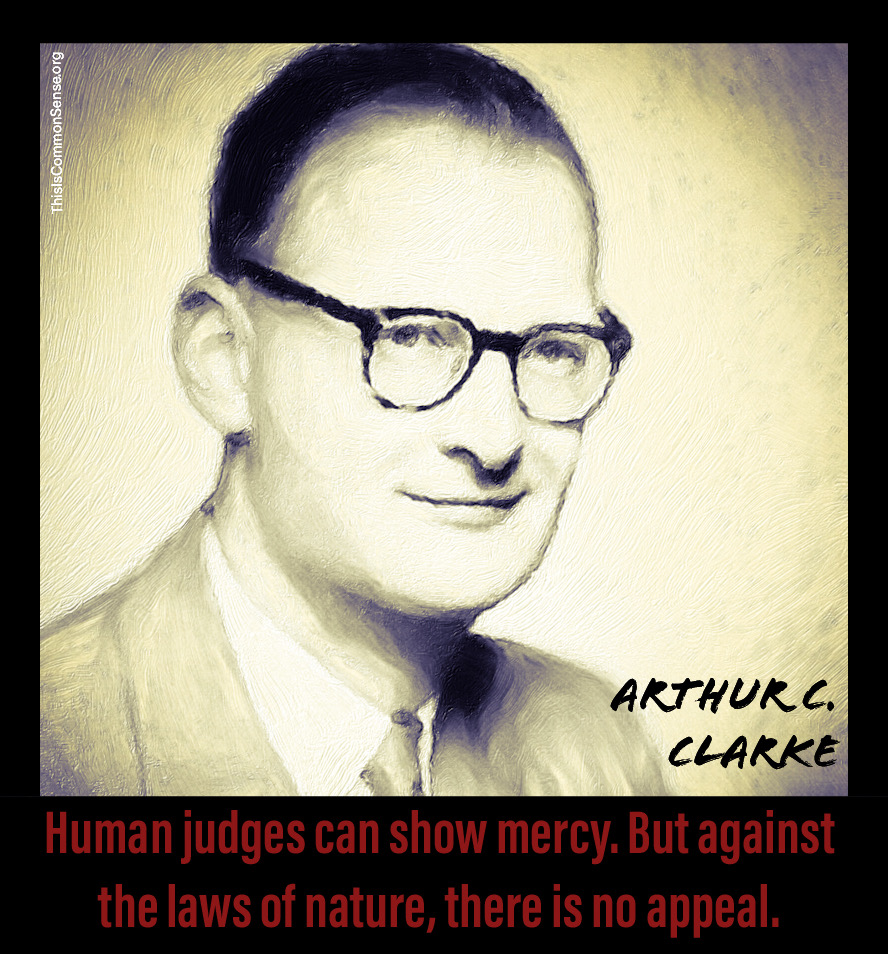
Arthur C. Clarke

Human judges can show mercy. But against the laws of nature, there is no appeal.

Arthur C. Clarke, “Maelstrom II” (1965).
Categories
Today

Nineteen Eighty-Four

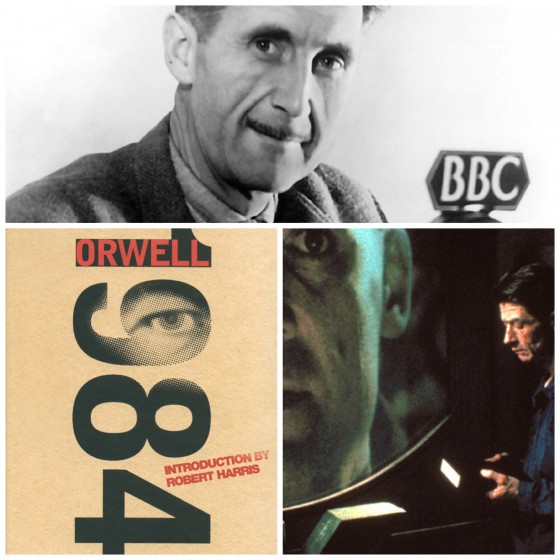
On June 8, 1949, George Orwell’s dystopian novel Nineteen Eighty-Four was published.

Categories
education and schooling general freedom ideological culture

Lilly Loves Me

Lilly loves me. That’s the good news. 

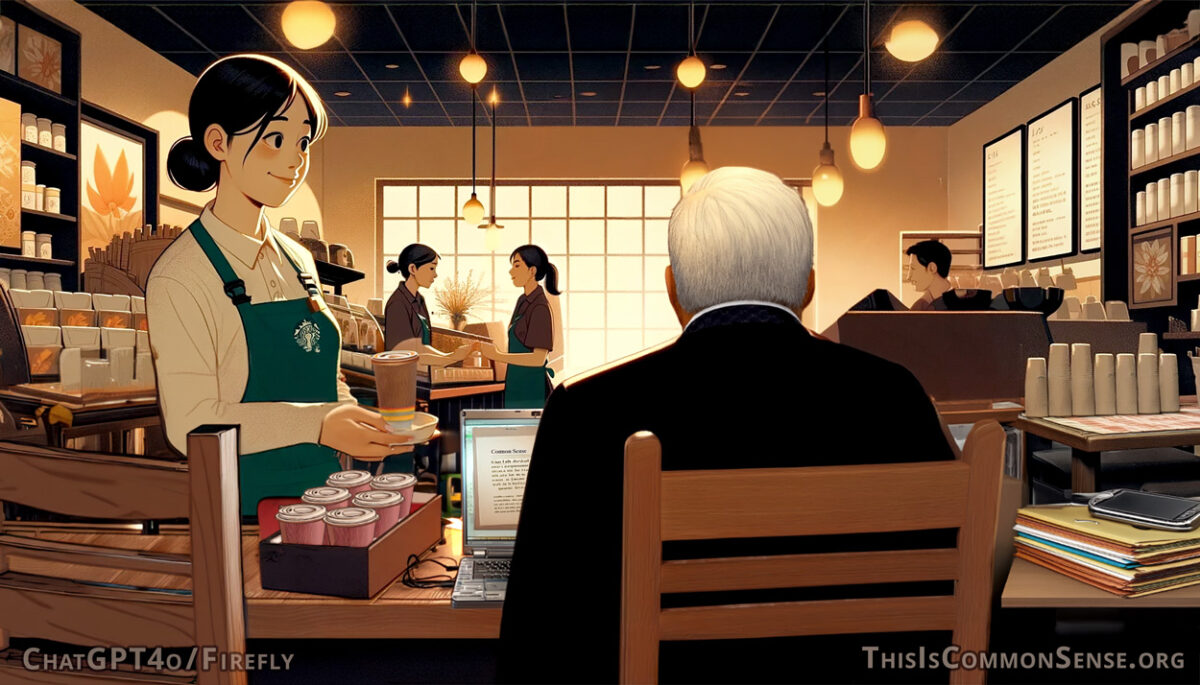
I love her, too. Funny thing, though, I don’t even know Lilly’s last name. You see, she works at my local Starbucks. She makes a mean flat white

I do know how to say “thank you” in Vietnamese — sounds like “gahm un.” Her folks hail from Vietnam. One day a man spoke Vietnamese with her and she lit up. So I learned those two words in Vietnamese. 

The bad news — or the other good news — is that she recently hurt my feelings. 

You see, after my heart attack of a couple months ago, I scaled back my flat white drinking. When I first ordered a tall (that is, a small) instead of my usual venti (large), well, my Starbucks peeps thought there might be a tear in the universe. 

I explained that I wanted to cut down on my caffeine and milk intake post heart attack.* Which immediately got them onboard with my change.

But soon I backslid to a grande (medium). Then, with the price difference to move up to a venti size so enticingly small . . . well, I was back to venti. 

The other day when Lilly was delivering my drink, she saw its size and questioned, “You’re already back to a venti?”

Ouch! It felt like when I’ve disappointed my kids or wife or other loved ones. 

Because . . . Lilly is a loved one. I care about her — like so many of her workmates whom I’ve gotten to know. And she cares about me, a venti-size concern! She wants me to live. More than the extra 20-30 cents her employer might make from the larger drink. 

When I mention Starbucks, many think about it being a liberal corporation.** I, however, think about the mostly young people I’ve met, working their butts off to advance themselves while being so kind and decent with customers; thoughtful in conversation. 

Young people these days . . . I love ’em. 

This is Common Sense. I’m Paul Jacob. 


PDF for printing

Illustration created with ChatGPT4o and Firefly

* For the record, this change wasn’t something my cardiologist specifically advised; just me trying to improve my diet to live a long time.

** Consider that back in 2020 Starbuck’s pioneering CEO Howard Schultz wasn’t “progressive” enough to be comfortable running for president in the Democratic Party.