Categories
Today

What Would Voltaire Say?

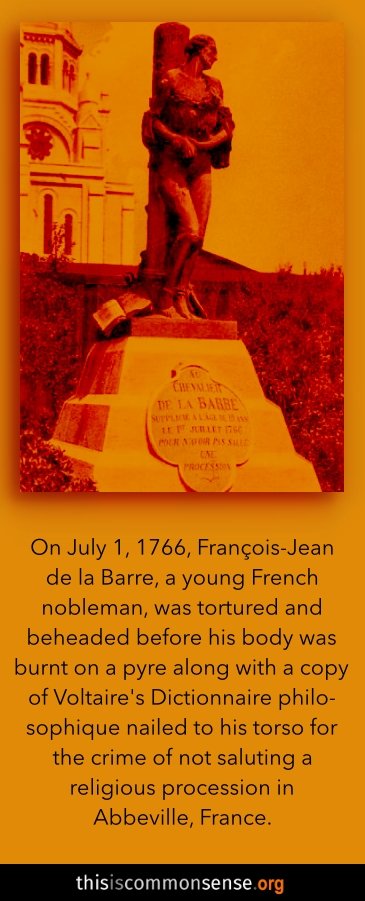
On July 1, 1766, François-Jean de la Barre, a young French nobleman, was tortured and beheaded before his body was burnt on a pyre along with a copy of Voltaire’s Dictionnaire philosophique nailed to his torso for the crime of not saluting a Roman Catholic religious procession in Abbeville, France.

In June 1770, Johan Lexell discovered a comet that, on July 1, came closer to the Earth than any other comet in recorded history. It is now registered as a “lost comet,” not having returned since that first year.

Emancipation Day (Keti Koti) in Suriname is celebrated on July 1, marking the abolition of slavery by the Netherlands in 1863.

Categories
Update

They Were Lying

After last week’s presidential debate on CNN, the panel of “experts” expressed their shock at how senile the current president seemed. Shock, they tells us. And sadness. How could they have known?

Glenn Greenwald, in his last System Update of the week, carefully lays out the case that these people were lying in the weeks prior to the debate, in their numerous assertions of Joe Biden’s competence. He runs the clips. They are breath-taking.

For every media consumer not under the spell of corporate “news” knew what everyone came to see — unmediated by claims of “cheap fakes” — at the debate: that Joe Biden’s mind is fading, and fading fast.

He was suffering even in 2019, on the campaign trail. He said goofy things, like “You know the thing!” when he was straining to remember, or not correctly repeat, the theological bits of the Declaration of Independence:

It seems now’s the time to declare our independence from the corporate media entirely. We can start by watching Greenwald on Rumble:

Of course, readers of Common Sense with Paul Jacob have been following the decline of Joe Biden’s mind (such as it ever was) all along.

Categories
Thought

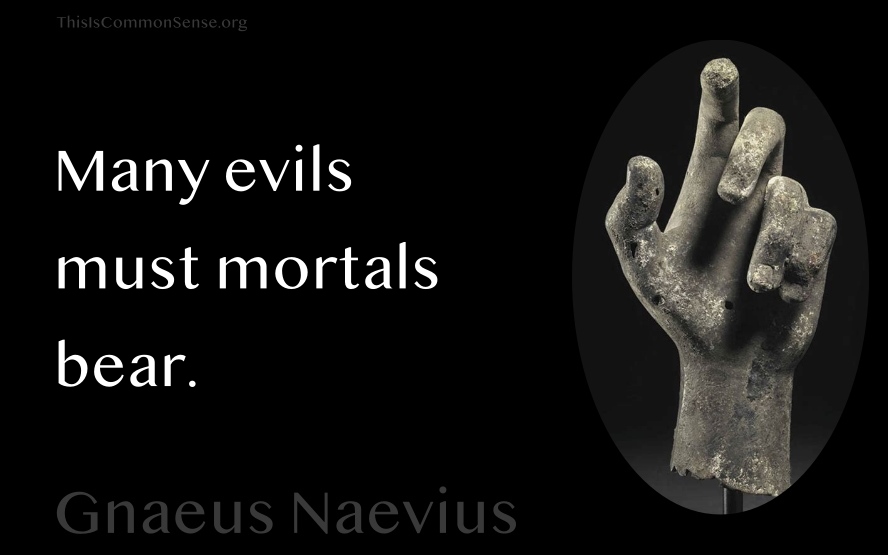
Gnaeus Naevius

Many evils must mortals bear.

Gnaeus Naevius (c. 270 – c. 201 BC), quoted by Jerome, ad Heliodorus, 3.
Categories
Today

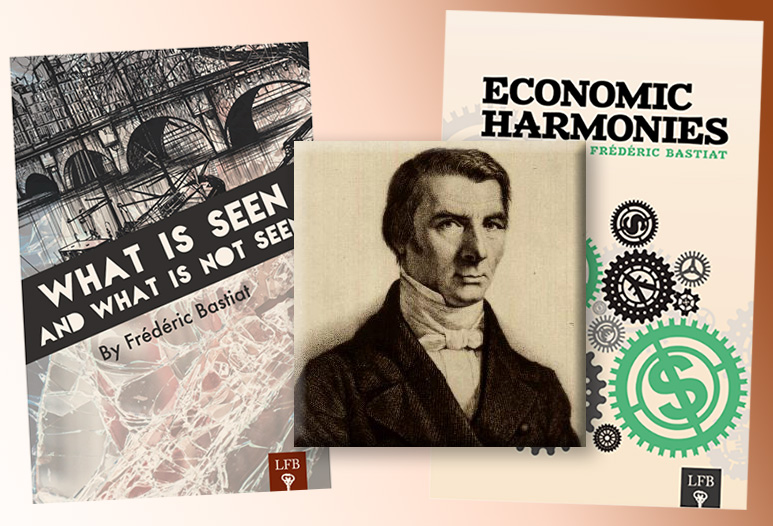
Dial Bastiat

On June 30, 1801, Frédéric Bastiat was born. Bastiat became one of the most important French Liberal School economists, following Condilliac and Jean-Baptiste Say, best known for his books Economic Harmonies and Economic Sophisms and two monographs, “The Seen and the Unseen,” and “The Law.” He was a brilliant stylist and perceptive critic of state-managed trade. His influence on conservative, libertarian and “limited-government thought” has been vast. He died on Christmas Eve, 1850.


The emergency number of “999” was introduced in London, June 30, 1937, the first of its kind — arguably the best innovation in government service in modern times.

Categories
Update

Citizen-Only Voting

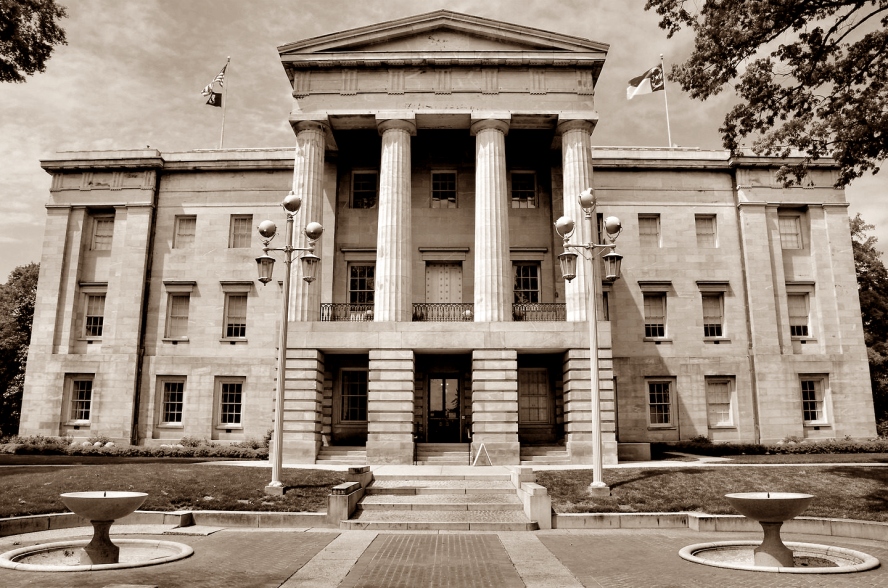
“The North Carolina General Assembly wrapped up this year’s chief work session Thursday,” explains Gary D. Robertson for the Associated Press, “after overriding Democratic Gov. Roy Cooper’s vetoes, putting a constitutional amendment about citizens and voting on the November ballot and sending to Cooper’s desk many additional bills.”

Kyle Ingram, writing in the Raleigh News & Observer, describes the override vote as having “passed the House and Senate with bipartisan support.”

Bipartisan support?

“Yes,” Paul Jacob clarifies (via email), “I’d say so: The votes were 104-12 in the House and 40-4 in the Senate.”

The Lake Gaston Gazette-Observer quotes North Carolina’s leaders for the measure, who insisted that “‘President Joe Biden has been asleep at the wheel the past four years, letting millions of people illegally cross the border into our country. Now, as voters are fleeing the Democratic party in droves, Democrats are seeking to fill the gap by extending voting rights to noncitizens,’ Sens. Brad Overcash (R-Gaston), Buck Newton (R-Wilson), and Warren Daniel (R-Burke) said. ‘To combat this movement, we are empowering North Carolinians to approve a constitutional amendment to make it crystal clear that our elections are for U.S. citizens only.’”

“The constitutional amendment heading to the ballot seeks to change language in the state constitution to clarify that only U.S. citizens at least 18 years of age and meeting other qualifications shall be entitled to vote in elections,” explains the AP. “Voting by noncitizens is already illegal, but some supporters of the amendment say the current language in the constitution could be challenged so that other people beside citizens could vote.”

Categories
Thought

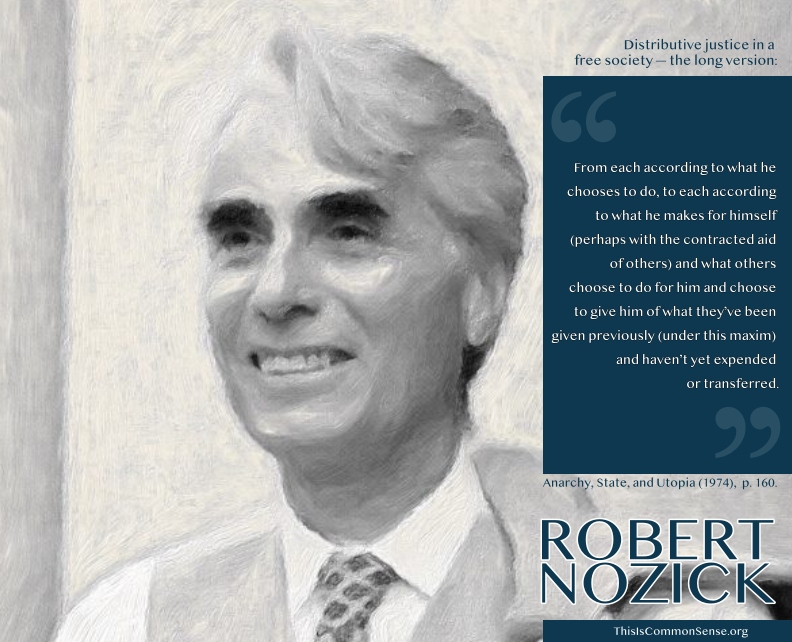
Robert Nozick


The full, non-slogan version of Nozick’s “entitlement theory” of justice, expressed roughly in an extended version of the classic form:

From each according to what he chooses to do, to each according to what he makes for himself (perhaps with the contracted aid of others) and what others choose to do for him and choose to give him of what they’ve been given previously (under this maxim) and haven’t yet expended or transferred.

Robert Nozick, Anarchy, State And Utopia (1974), Ch. 7: Distributive Justice, Section I, Patterning.
Categories
Today

WWI

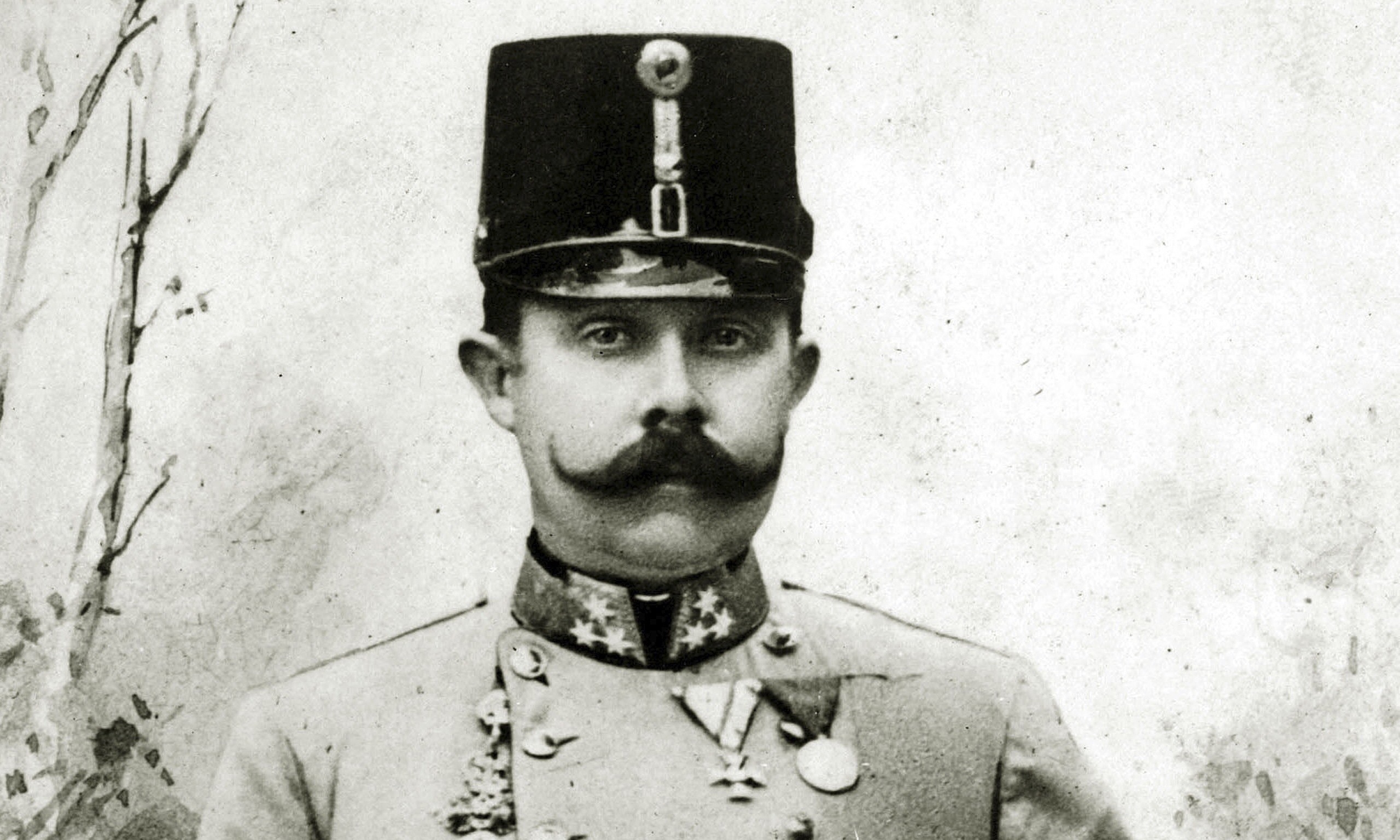
On June 29, 1914, the day after the shooting of the Archduke Ferdinand and his wife, Austrian interrogations confirmed that the Serbian government was behind the assassination. Serbia denied involvement.

Thus continued the series of events that led to “The Great War,” now known as “World War I.”

Categories
crime and punishment folly ideological culture

Cold Truth

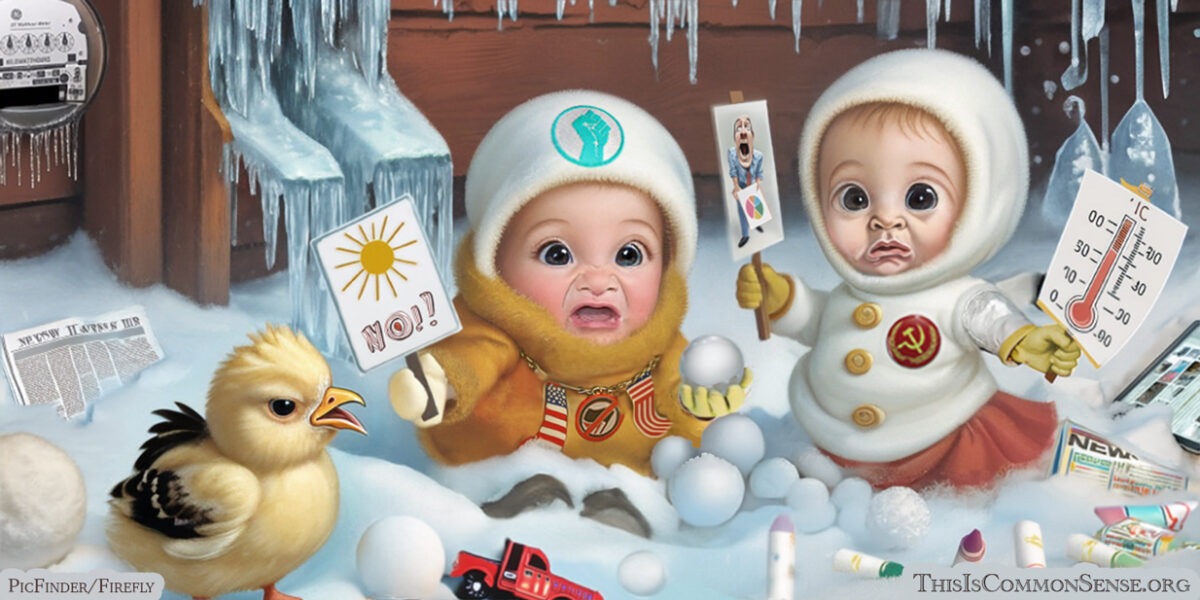
One of the climatic shifts supposed to be happening to our traumatized planet is the melting of polar ice into huge puddles of slush, with maybe a few polar bears helplessly drifting on the dwindling ice floes of a rising sea.

The alleged calamities of various alleged major climatic changes are allegedly due solely to human civilization. We can render the latter doctrine more plausible if we ignore all the major variations of climate that transpired for millions of years before mankind and industrial civilization showed up.

Anyway, if polar ice were indeed melting away over the long term, we could argue about the causes and effects.

But it doesn’t seem to be happening.

According to research at the University of Copenhagen using photographs and satellite data, the glaciers of Antarctica have been pretty stable over the last 85 years or so. (The SciTechDaily article about the findings calls this stability an “Antarctic Anomaly.”)

With the help of modern computer technology and aerial photographs going back to 1937, the researchers managed to track how the glaciers of East Antarctica have changed over the decades.

They found that “the ice has not only remained stable but also grown slightly over the last 85 years, partly due to increased snowfall. . . . While some glaciers have thinned over shorter intermediate periods of 10-20 years, they have remained stable or grown slightly in the long term, indicating a system in balance.”

Uh oh.

Chicken Little never had it so tough.

This is Common Sense. I’m Paul Jacob.


PDF for printing

Illustration created with PicFinder and Firefly

See all recent commentary
(simplified and organized)
See recent popular posts
Categories
Thought

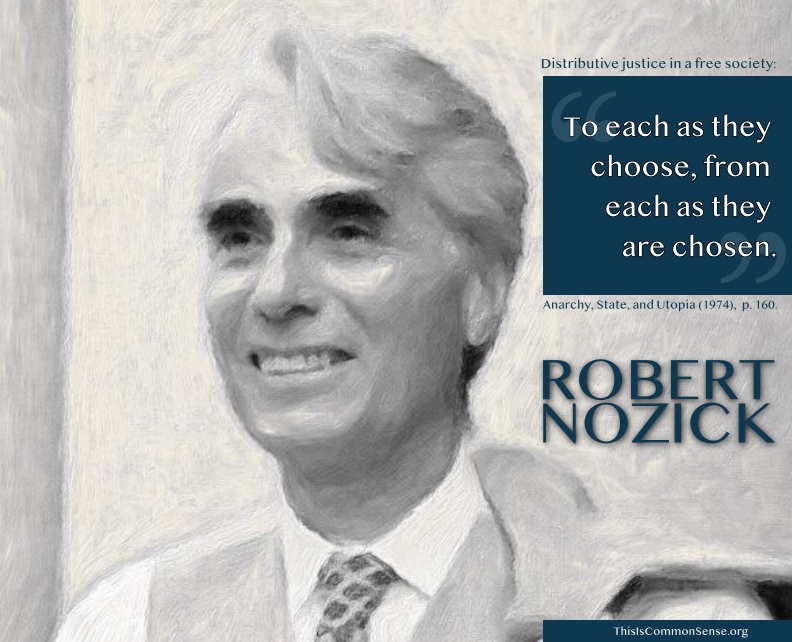
Robert Nozick

To each as they choose, from each as they are chosen.

Anarchy, State, and Utopia (1974), Ch. 7: Distributive Justice, Section I, Patterning, p. 160.

A slogan to counter the socialist principle of distributive justice, “From each according to his ability, to each according to his need.” The full, non-slogan version of Nozick’s “entitlement theory” of justice, expressed roughly in this form, appeared a few sentences before:

From each according to what he chooses to do, to each according to what he makes for himself (perhaps with the contracted aid of others) and what others choose to do for him and choose to give him of what they’ve been given previously (under this maxim) and haven’t yet expended or transferred.

“This,” Nozick admitted, “has its defects as a slogan.” Which is why he provided the shorter version.

Categories
Today

June 28

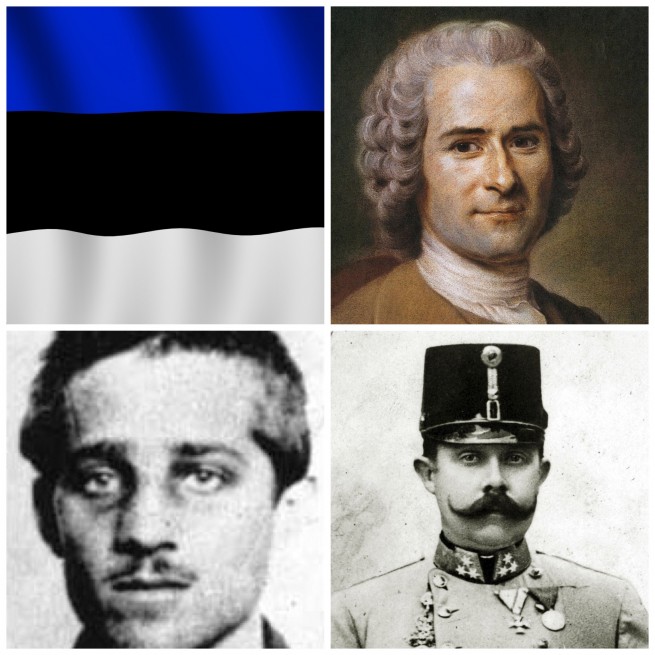
June 28 birthdays include that of Jean-Jacques Rousseau, philosopher, in 1712.

On this date in 1914, 19-year-old Gavril Princip assassinated Archduke Franz Ferdinand, heir to the Austrian throne, and the Archduke’s wife Sophie. The Archduke had earlier missed a bomb thrown at his car, which necessitated a change in the motorcade route, which the driver forgot, which is why the car paused at the precise intersection in which Princip fired his fatal shots.

The shooting began a series of events that led to “The Great War,” now known as “World War I.”

On June 28, 1992, the Constitution of Estonia was signed into law.