The cost of liberty is less than the price of repression.
W. E. B. Du Bois, John Brown: A Biography (1909): “The Legacy of John Brown.”
Categories
W. E. B. Du Bois
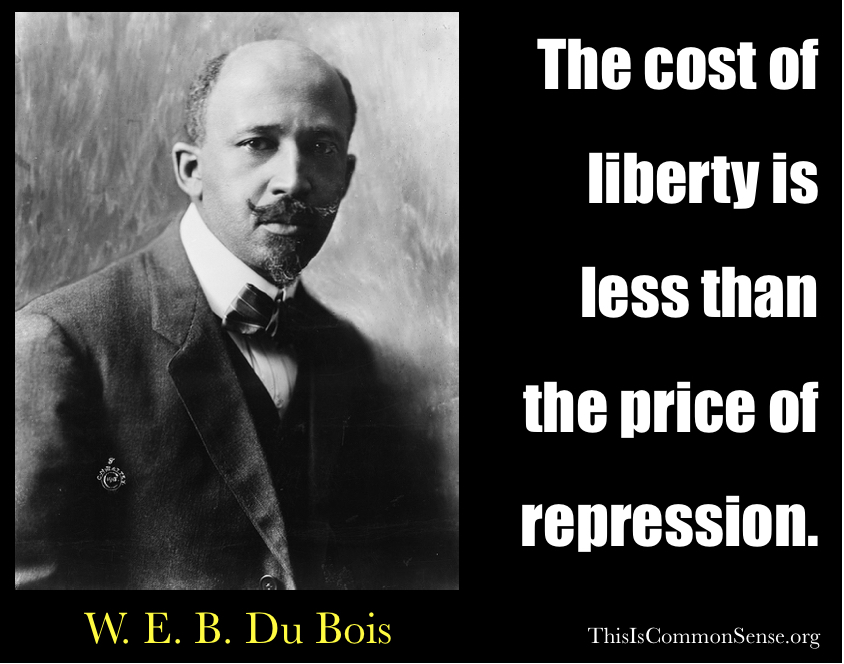
The cost of liberty is less than the price of repression.
W. E. B. Du Bois, John Brown: A Biography (1909): “The Legacy of John Brown.”
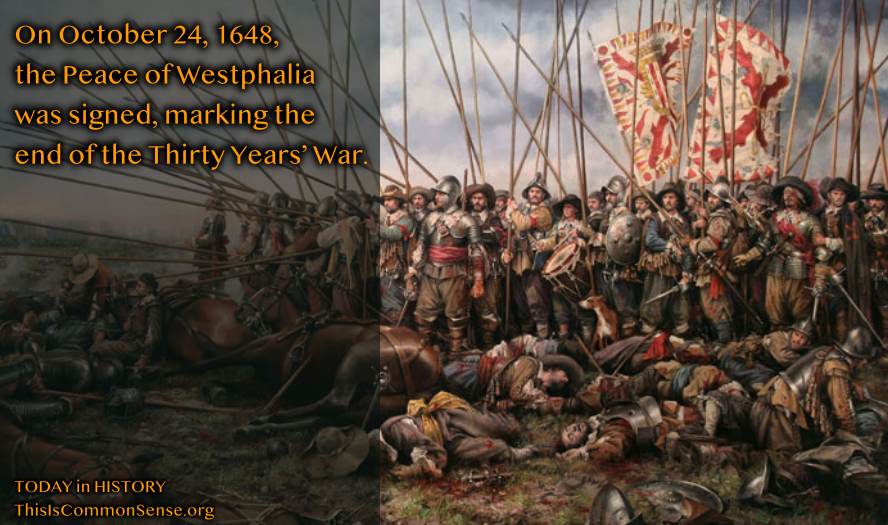
On October 24, 1648, the Peace of Westphalia was signed, marking the end of the Thirty Years’ War.
What else do you need to know?
Well, speaking just for myself, I prefer political ads that tell me at least something about an issue or a candidate prior to their exhortation to vote for or against him, her, or it.
Messaging ought to at least suggest why to vote a certain way.
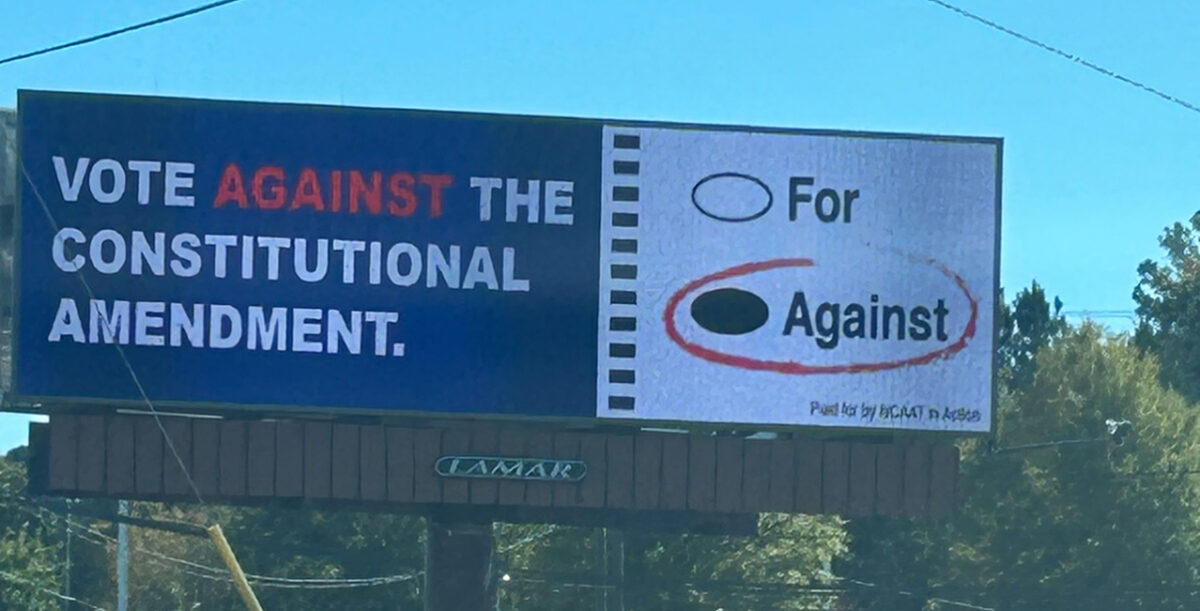
And that’s what stuck out about an electronic billboard in North Carolina, which does absolutely nothing to persuade — zip, zilch, zero to answer the question why.
It simply states, “VOTE AGAINST THE CONSTITUTIONAL AMENDMENT.” Next to those words is a picture of a ballot with the “Against” oval filled in — and circled, too, for good measure.
The instruction is quite clear, but, well, why?
And what the heck is this even about?!
This billboard is paid for by NCAAT in Action — the AAT stands for Asian Americans Together. If one goes to the group’s website, one finds . . . nada. No information whatsoever about North Carolina’s Citizen Only Voting constitutional amendment, the only amendment on the ballot.*
I harken back to Georgia and the 2021 joint statement by Asian Americans Advancing Justice-Atlanta and the Asian American Advocacy Fund, which seemed to subscribe to the notion that only citizens should vote but still “collectively condemn[ed] the statements made by Georgia’s Secretary of State . . . emphasizing that ‘only American citizens should vote in our elections in Georgia.’”
Confused? These Democrat front groups don’t make any case at all against the idea of reserving suffrage to citizens. Why? They have no credible argument.
But they still want voters to defeat these measures.
The good news is that they don’t represent the vast majority of Asian Americans, who strongly favor only citizens voting.
This is Common Sense. I’m Paul Jacob.
* In full disclosure, I serve as chairman of Americans for Citizen Voting.
See all recent commentary
(simplified and organized)
See recent popular posts
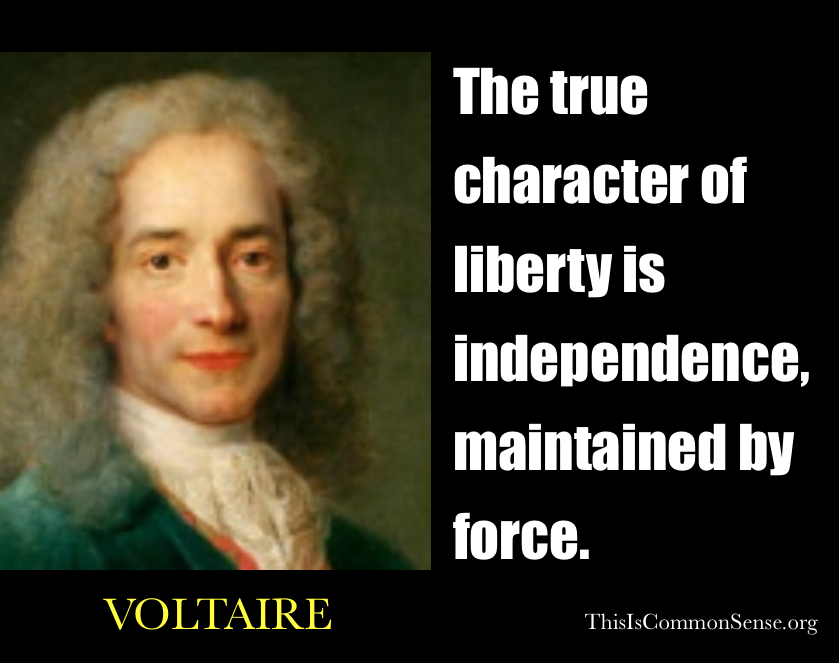
The true character of liberty is independence, maintained by force.
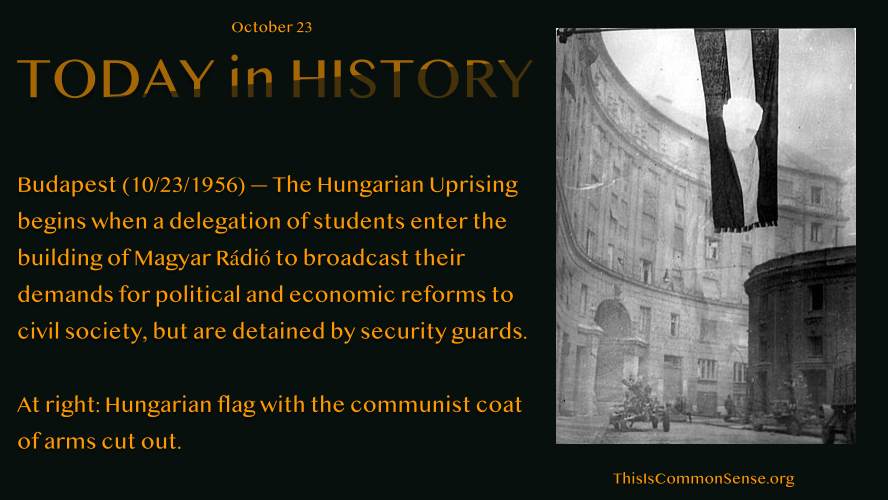
Budapest (10/23/1956) — The Hungarian Uprising begins when a delegation of students enter the building of Magyar Rádió to broadcast their demands for political and economic reforms to civil society, but are detained by security guards.
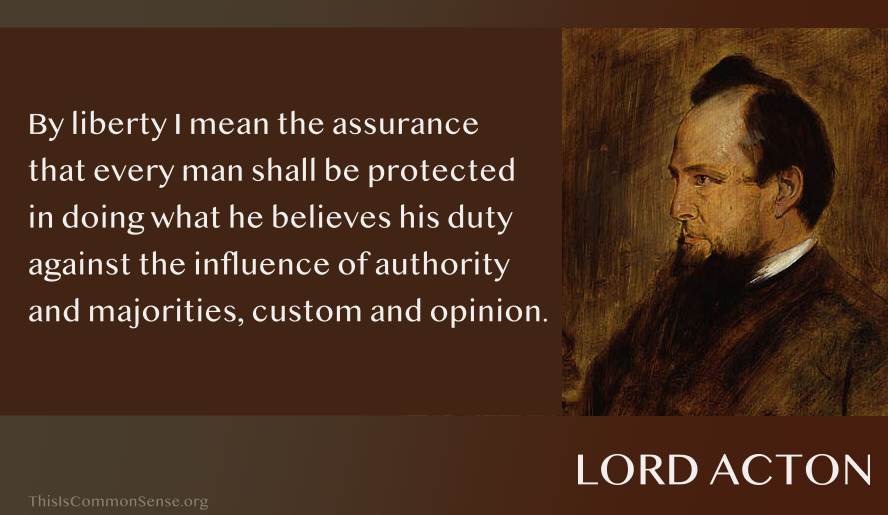
By liberty I mean the assurance that every man shall be protected in doing what he believes his duty against the influence of authority and majorities, custom and opinion.
Lord Acton, The History of Freedom in Antiquity (1877).
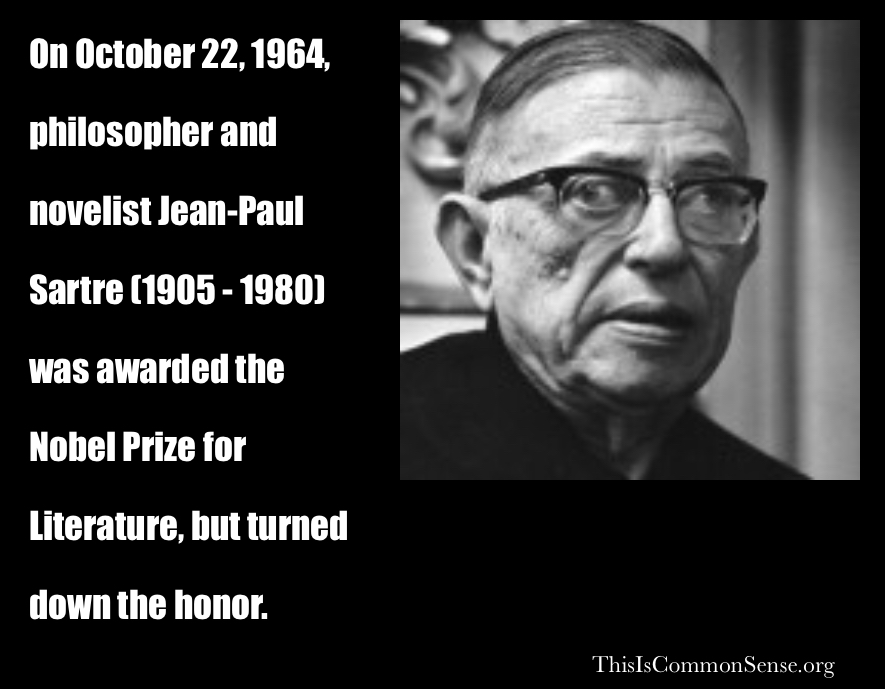
On October 22, 1964, philosopher and novelist Jean-Paul Sartre (1905 – 1980) was awarded the Nobel Prize for Literature, but turned down the honor — establishing a precedent that should have been followed by numerous Peace Prize winners, including Barack Obama and the European Union.
Sartre rejected the award on account of having rejected previous honors. In this he was not dissimilar from philosopher Herbert Spencer (1820-1903) who refused many doctorates late in life, on the grounds that such awards did an old man no good, and perhaps because he was a cantankerous old coot — a judgment that surely applied also to the later French philosopher.
Sartre is best known for his novel Nausea (1938), his play No Exit (1944) and his treatise, Being and Nothingness (1943). One of his main themes was freedom, a concept better explored at the fundamental level of the individual human being than politically, since he become a “Marxist” of sorts . . . the precise nature of which he elaborated in the Critique of Dialectical Reason (1960). He failed to complete his tetralogy of novels, Roads to Freedom, never finishing the final volume.
Let’s unpack.
Ballotpedia summarizes Amendment 1 as prohibiting “state and local governments from allowing noncitizens to vote and allow 17-year-olds who will be 18 by the general election to vote in primary elections.”
Nothing suspicious there. But there is an exclusion, of course. The measure would exclude noncitizens from voting in state and local elections.
“The context,” or what the TDS-afflicted newspaper has apoplectically convinced themselves is the context, “is repeated assertions by President Donald Trump” and other Republicans “that immigrants without citizenship frequently register to vote and vote (more often for Democrats).”
The actual context is simply whether the state constitution should proclaim that only U.S. citizens are eligible to vote. A policy that Donald Trump and Kamala Harris are unsuspiciously excluded from voting on, but which would have prevented the 19 U.S. cities now allowing noncitizens to vote, including in most cases those here illegally, from doing so.
The Register nonetheless declares that “a higher standard is called for when the enduring language of the state Constitution is involved. That document should emphasize what unites Iowans.”
Yet nothing has united legislators more than this Citizen Only Voting Amendment, which passed each chamber of the Legislature twice without a single dissenting vote.
Bemoaning that “seven states have already, in the past six years, made identical or similar changes in their state constitutions,” The Register further complains that “this fall, Idaho, Kentucky, Missouri, North Carolina, Oklahoma, South Carolina and Wisconsin join Iowa in voting on similar amendments.”
The objection? “That’s a lot of ink spilt to enshrine imaginary protections against imaginary problems.”
These imaginative editors acknowledged, in the same piece, that “[e]xperts say it ties lawmakers’ hands from ever passing laws to permit residents without citizenship to vote in certain local or state elections, such as for school boards.”
Passing Amendment 1 means politicians at the capitol in Des Moines will have to go back to Iowa voters if they want to allow noncitizen voting.
No crying here over spilt ink.
This is Common Sense. I’m Paul Jacob.
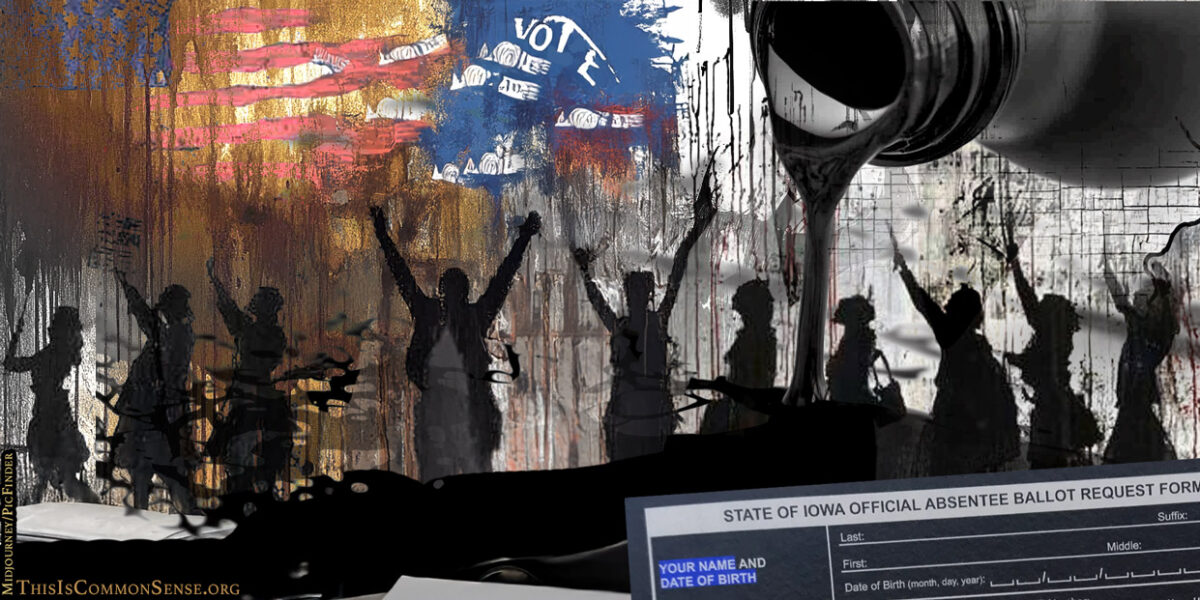
Illustration created with Midjourney and Firefly
See all recent commentary
(simplified and organized)
See recent popular posts
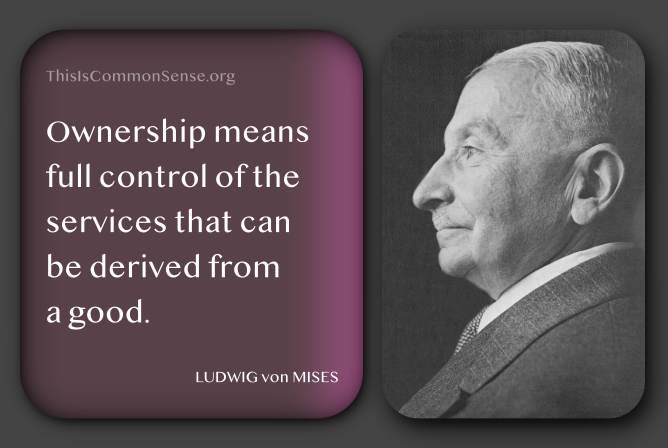
Ownership means full control of the services that can be derived from a good. This catallactic notion of ownership and property rights is not to be confused with the legal definition of ownership and property rights as stated in the laws of various countries. It was the idea of legislators and courts to define the legal concept of property in such a way as to give to the proprietor full protection by the governmental apparatus of coercion and compulsion, and to prevent anybody from encroaching upon his rights. As far as this purpose was adequately realized, the legal concept of property rights corresponded to the catallactic concept.
Ludwig von Mises (1881–1973), Human Action: A Treatise on Economics, Scholar’s Edition (1998), first edition published in 1949. “Catallactic” derives from “Catallactics,” a term invented by Richard Whately (1787–1863) as an improvement on “Political Economy”; “catallactic” means “pertaining to exchanges” (trade).
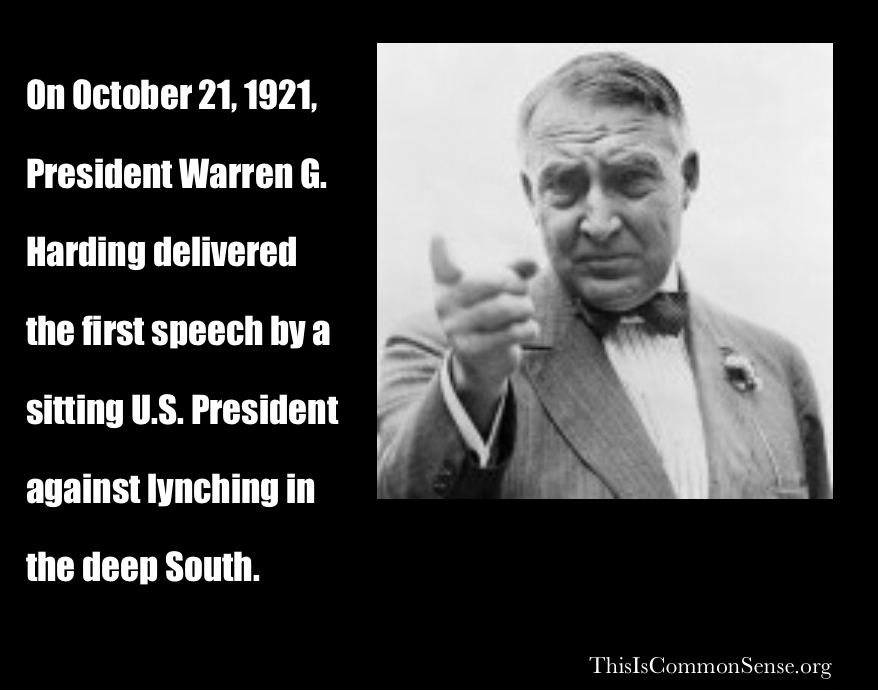
On October 21, 1921, President Warren G. Harding delivered the first speech by a sitting U.S. President against lynching in the deep South.