Categories
ideological culture

The Libertarian Path?

Donald Trump is launching so many initiatives to curtail government power and its abuse that even students of policy find it hard to keep up. I don’t always agree with what he’s doing, but I often do. Sometimes, a hundred percent.

In his second term, President Trump is following what Glenn Reynolds calls a libertarian path. 

Say, what?

There has long been a libertarian streak in the Republican Party — from even before Goldwater’s 1964 presidential run — but once in power, Republican politicians rarely did any streaking.

Trump was different at the start, more immune to many of the left’s vicious tactics. But Trump 2 (2025- ) is still different from Trump 1 (2017-2021).

One difference between 2017 and now is that in the intervening years, Trump’s ideological enemies have slugged him with impeachments, every possible kind of bogus investigation and lawsuit, rigged various parts of the 2020 election, robbed him of many millions of dollars, and threatened him with imprisonment.

“Trump saw firsthand, to a degree greater than probably any American citizen ever, just how far the resources and lack of principles or moral fiber of the federal government go,” writes Reynolds. “It would be very difficult to remain a believer in Big Government . . . after that.” 

Reynolds echoes Trump’s declaration at the Libertarian Party convention last May about the consequence of his persecution: “If I wasn’t a libertarian before, I sure as hell am a libertarian now.”

One Trump foe complains that his second term “is all about curtailing government’s power and reach.”

Yes. We know. Feature, not a bug.

This is Common Sense. I’m Paul Jacob.


PDF for printing

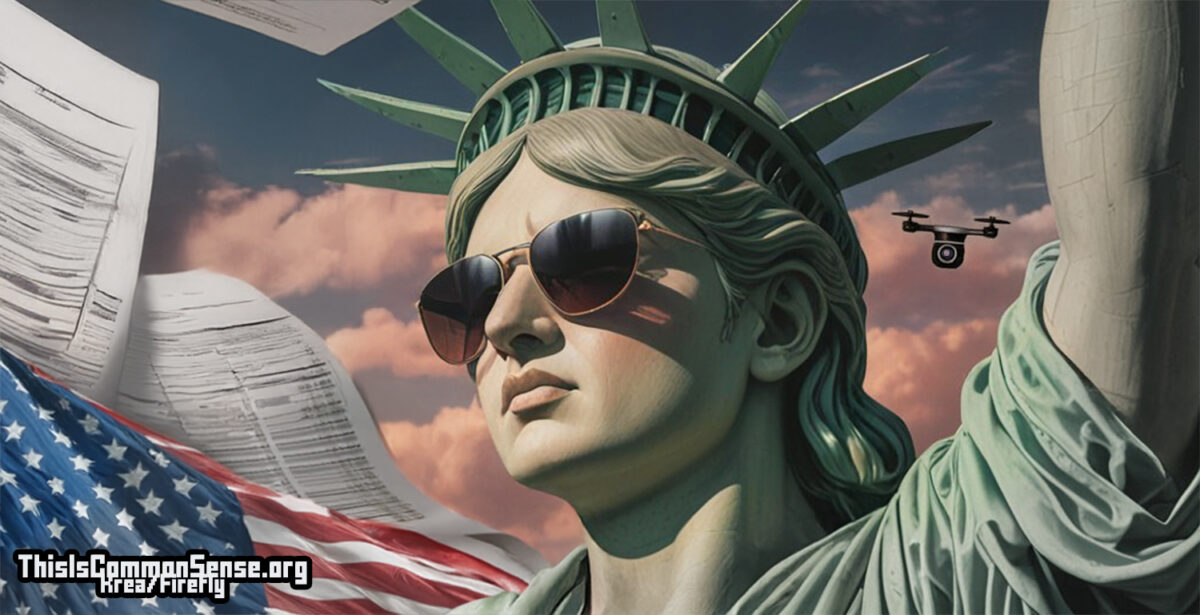
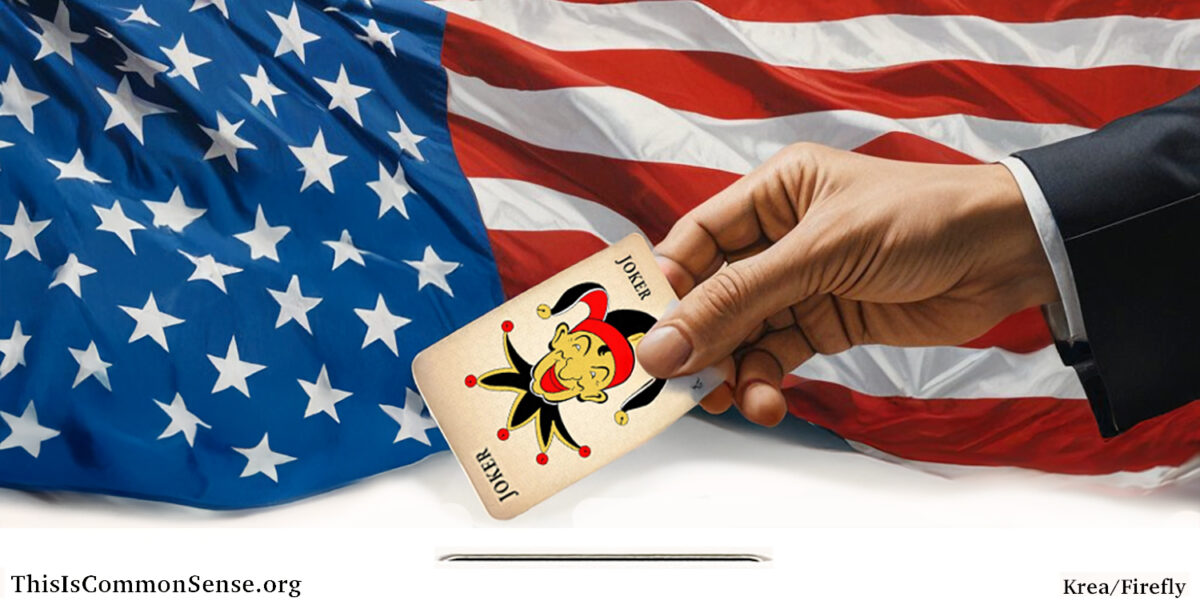
Illustration created with Krea-Realtime and Firefly

See all recent commentary
(simplified and organized)
See recent popular posts

Categories
Thought

Henry Adams

No man, however strong, can serve ten years as schoolmaster, priest, or Senator, and remain fit for anything else. All the dogmatic stations in life have the effect of fixing a certain stiffness of attitude forever, as though they mesmerised the subject.

Henry Adams, The Education of Henry Adams (1907), Vol. VII, “Treason.”

Categories
Today

U. S. Military Zones

February 19, 1942, was a sad day for constitutional rights, with President Franklin D. Roosevelt signing Executive Order 9066, authorizing the Secretary of War to prescribe certain areas of the country as military zones. These zones were used to incarcerate Japanese Americans in internment camps.

Categories
First Amendment rights media and media people too much government

The Chirping Mockingbird

We are told that “there’s nothing to see” in the recent revelations about how USAID was subsidizing Politico

At Reason, Robby Soave pooh-poohed the story: “some critics of USAID have seized on a misleading claim: Namely, that the organization was funneling millions of dollars to Politico. In reality, it appears that government agents were paying for subscriptions to Politico‘s premium product. That may or may not be a worthwhile use of government funds (more on this in a moment), but at any rate, it does not represent some kind of direct subsidy to the news outlet.”

It could be, however, a subsidy with plausible deniability. 

The keyword may be: Mockingbird.

Remember the Church Committee investigations into the intel community, post-Nixon? One of the revelations was of Operation Mockingbird, which was (“allegedly”) the CIA training and subsidizing of — and coordinating stories to — scores (perhaps hundreds) of individual journalists. 

One of the many things we don’t know about Mockingbird is if it ever ended. But one thing we do know is that programs begun by one agency not irregularly get taken up by others.

And speaking of multiple agencies — with more than a dozen dedicated to intelligence, why is government paying the private sector for information?

For all their massive appropriations, the basic job of intel agencies to inform (not lie to) representatives, government executives, and functionaries appears to be one they’ve skimped on.

Meanwhile, USAID’s massive subsidies to New Zealand news outfits has somehow received little interest. “Last week, Wikileaks reported that 25 NZ mainstream media outlets were given funding from USAID,” explains The Daily Blog. “We need an immediate explanation from our Mainstream Media Owners if they changed any editorial stance that aligned us with America while taking this money.”

Inquiring minds should be skeptical of underplaying of these revelations. Don’t we need a wall of separation between press and state?

This is Common Sense. I’m Paul Jacob.


PDF for printing

Illustration created with Flux and Firefly

See all recent commentary
(simplified and organized)
See recent popular posts

Categories
Thought

George Santayana

Without great men and without clear convictions this age is nevertheless very active intellectually: it is studious, empirical, inventive, sympathetic. Its wisdom consists in a certain contrite openness of mind; it flounders, but at least in floundering it has gained a sense of possible depths in all directions.

George Santayana, as quoted in Why We Should Read ——, by S. P. B. Mais (1921).
Categories
Today White Rose

White Rose

On February 18, 1943, Hans and Sophie Scholl, a brother and sister, were arrested at the University of Munich for secretly (or not so secretly) putting out leaflets calling on Germans to revolt against Adolf Hitler and the Nazi regime.

In the previous year Hans had founded a group of students, who called themselves “The White Rose.” The group wrote and distributed six leaflets aimed at educated Germans. The leaflets made their way across Germany and to several other occupied countries. The Allies later dropped them all over the Third Reich.

Categories
general freedom ideological culture

Greatest Man in the World

Today, while we prepare our family’s feast or exchange our fastidiously purchased Presidents’ Day gifts or even find ourselves kissing under the cherry tree, let us take just a moment to consider the history of this momentous day.

When I was a kid, we celebrated Washington’s Birthday on February 22nd, each year. That officially recognized day honored George Washington, first president and the ‘father of our country,’ began in the 1880s (even before I was born). Then in 1968, someone discovered that Abraham Lincoln also had a February birthday and was apparently feeling slighted. 

So, what could we do but get the two big guys together for a mega national holiday? Lincoln was a pretty consequential president, after all.

But the holiday came to be known as Presidents’ Day . . . and as the Encyclopedia Brittanica notes, “is sometimes understood as a celebration of the birthdays and lives of all U.S. presidents.”

Is this some sort of “everyone gets a trophy” thing?

No. “Washington deserves a day to himself,” wrote David Boaz years ago, “because he did something no other person did: He led the war that created the nation and established the precedents that made it a republic.”

Boaz also wrote of King George III, who, when told that Washington would not cling to power but return to his farm after winning the Revolutionary War, mocked the general. “If he does that he will be the greatest man in the world.”

But “no joke” — as a recent president was fond of saying — Washington did exactly that, handing back his commission as commander of the army. 

Just as years later he stepped down after two terms as president, setting the tradition that ultimately led to the Constitution’s 22nd Amendment: presidential term limits.

So, Happy Washington’s Birthday!

This is Common Sense. I’m Paul Jacob. 


PDF for printing

Illustration created with Flux and Firefly

See all recent commentary
(simplified and organized)
See recent popular posts

Categories
Common Sense

Henry Adams

Knowledge of human nature is the beginning and end of political education.

Henry Adams, The Education of Henry Adams (1907), Vol. XII, “Eccentricity.”

Categories
Today

Jefferson vs. Burr

On February 17, 1801, a tie in the Electoral College between Thomas Jefferson and Aaron Burr was resolved when Jefferson was elected President and Burr Vice President by the House of Representatives.

Categories
Update

Doing Something About the Debt?

There used to be comity in Washington, D.C., because there was a system in place that allowed the two vying parties to fleece the public while “justifying” the fleecing. Paul Jacob wrote about this over a decade ago:

[H]ere was the genius of the system: The slight cuts in growth rates allowed left-leaning Democrats to hysterically decry the cruelty of the “cuts” that Reagan was “imposing” — courtesy of the accounting tricks allowed by the post-Nixon Budget Control Act — despite the illusory nature of those cuts.

Republican politicians, meanwhile, could go home to boast of those “cuts.”

Meanwhile, deficits ballooned under Ronald Reagan, and Republican voters came to accept deficit financing (growth in debt) as a natural thing, almost good. With the ascension of George W. Bush to the presidency, and a post-Clintonian reaction giving majorities in both houses to Republicans, this trend solidified.

Paul Jacob, “Dumbline Democracy,” Townhall (July 8, 2012).

The comity ended as increasing numbers of Americans came to disbelieve in the confidence game the two parties engaged in. This led to the selection by one of the parties of a candidate enough outside the con artists’ guild to upset the out-of-control order. Trump, that is.

So now that key bit of legislation, the Congressional Budget and Impoundment Control Act of 1974, is finally under serious targeting:

In a move that could give President Donald Trump more freedom to enact his agenda, Republicans are attempting to repeal a law which ties the hands of presidents who don’t want to spend particular funding appropriated by Congress.

Known as impoundment, the practice of declining to spend funds provided by Congress dates back to President Thomas Jefferson.

Since 1974, however, it has been tempered by the Impoundment Control Act (ICA).

Nathan Worcester, “Republicans Seek to Unleash President’s Power to Not Spend,” The Epoch Times (February 16, 2025).

The constitutionality of impoundment has never reached the Supreme Court. The practice was started by Jefferson, who used it to stop Congress from unconstitutional spending — but because impoundment was not in the Constitution itself, it’s open to obvious challenge, and to the argument that it is an example of executive overreach.

The whole issue comes down to the fact that the Constitution provides inadequate means of the executive to stop Congress from unconstitutional acts, as well as the states to stop the federal government as a whole from the same. The constitutional crises associated with slavery expansion in the mid-century are now endlessly discussed. But current dysfunctional partisan over-spending is at least as serious a problem.

Thankfully, we have an easier marker for a constitutional crisis now:

See also “The Fourteenth Amendment Escape Clause,” July 8, 2011.