The United States Congress held its first session in Washington, D.C., on November 17, 1800.
Categories
A First in Washington
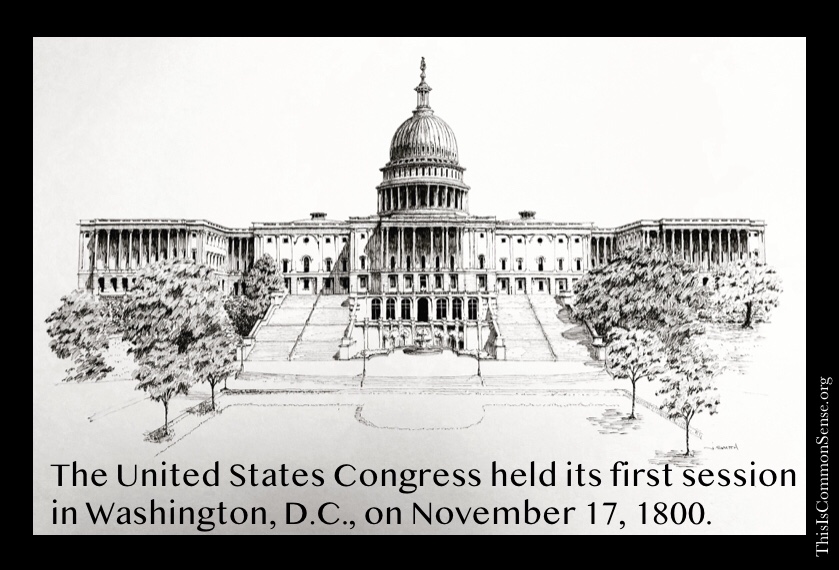
The United States Congress held its first session in Washington, D.C., on November 17, 1800.
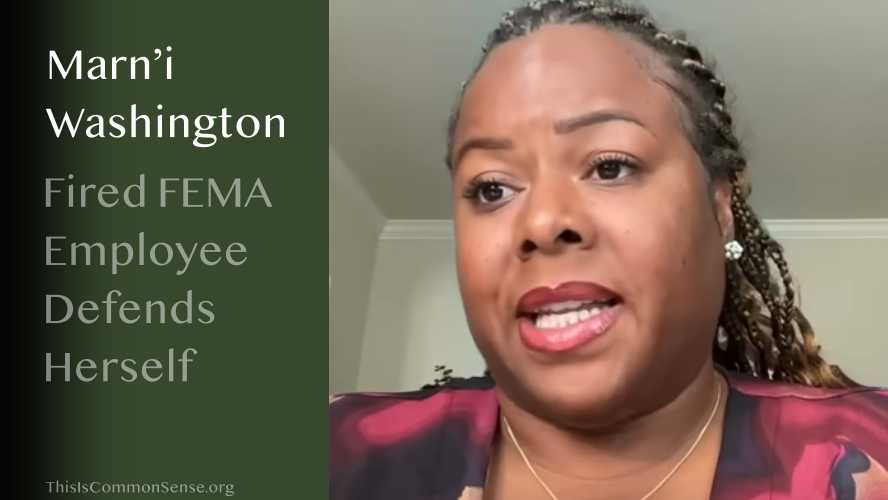
Last Monday, Paul Jacob covered the brewing story of Federal Emergency Management Agency supervisor Marn’i Washington, who told FEMA workers on the ground in Lake Placid, Florida, not to help households with Trump signs in the yard. Since then we’ve learned more. The problem wasn’t just a rogue supervisor.
The next day, the New York Post offered a juicy headline: “FEMA worker accused of telling staff to skip hurricane-ravaged Trump homes claims it was common practice: ‘This is not isolated.’”
The Post article relied heavily on an episode of the Roland S. Martin podcast on YouTube:
Her explanation may not be what you have seen reported, however. The idea at FEMA, Ms. Washington says, is a policy of “avoidance and de-escalation.” The trouble with Trump supporters, FEMA lore has it, is that they tend to be rude or otherwise resistant to FEMA help. So the agency, to avoid conflict, avoids some natural disaster victims as a policy. Washington says she did nothing wrong, or out of the ordinary.
FEMA is a controversial agency within the federal government, with a bad reputation amongst many Americans, not just Trump supporters. That hardly needs verification. Ms. Washington insists that the logs of FEMA workers will justify her claims.
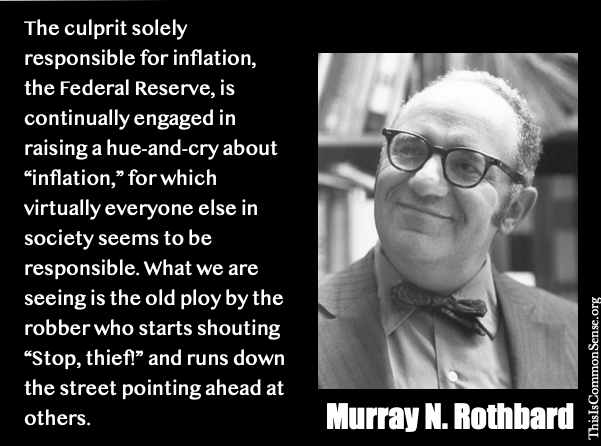
The culprit solely responsible for inflation, the Federal Reserve, is continually engaged in raising a hue-and-cry about “inflation,” for which virtually everyone else in society seems to be responsible. What we are seeing is the old ploy by the robber who starts shouting “Stop, thief!” and runs down the street pointing ahead at others.
Murray N. Rothbard, The Case Against The Fed (1994), as quoted by Douglas French, “The Case Against the Fed: How Do We Eliminate Inflation and the Boom-Bust Cycle” (FEE, November 1, 1995).
On November 16, 1914, the Federal Reserve Bank of the United States officially opened.

The Institute for Justice and its clients, Ben and Hank Brinkmann, suffered a defeat in a recent eminent domain case, Brinkmann v. Southold, New York, when the U.S. Supreme Court declined to take the case.
IJ notes that the three justices in favor, Thomas, Gorsuch, and Kavanaugh, “took the unusual step of recording their votes publicly.” But four votes were needed.
The two brothers own a chain of hardware stores. In 2016, they found an apparently ideal place for a new store in Southold, New York.
Although the property they bought was commercially zoned, the town government imposed one arbitrary and expensive obstacle after another to prevent construction. Finally, it used eminent domain to seize the property.
Though blatant, the town’s arrogant and capricious behavior was accepted by lower courts.
“Government shouldn’t be able to get away with these abuses of power,” the brothers say, “and shining a light on them like we did with the help of IJ will continue to build public support so that one day no one will have to go through what we have.”
Sometimes, when the bad guys go all out to violate the rights of people who are willing to go all out to defend those rights, unfortunately it’s the bad guys who “win,” if you want to call getting away with it a victory.
But the good fight is itself a kind of victory, and it will lead to victories for others.
This is Common Sense. I’m Paul Jacob.
See all recent commentary
(simplified and organized)
See recent popular posts

On November 15, 1777, the Continental Congress approved, and sent to the states for ratification, the “Articles of Confederation — after 16 months of deliberation. The first article gave the official name of the confederacy:
The Stile of this Confederacy shall be
The United States of America.
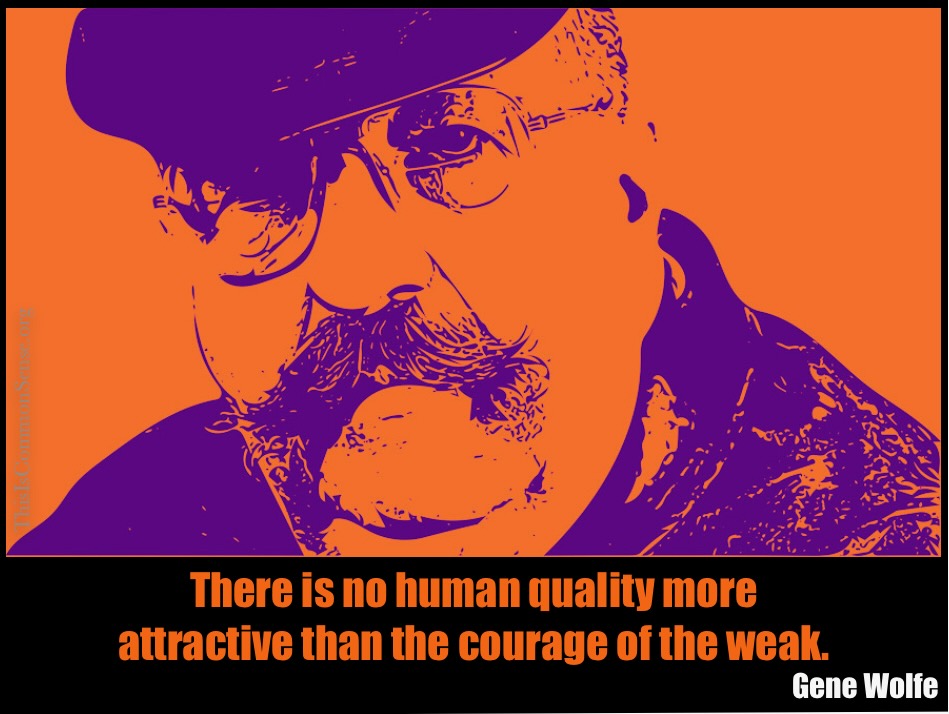
There is no human quality more attractive than the courage of the weak.
Gene Wolfe, Home Fires (2011), Reflection 1.
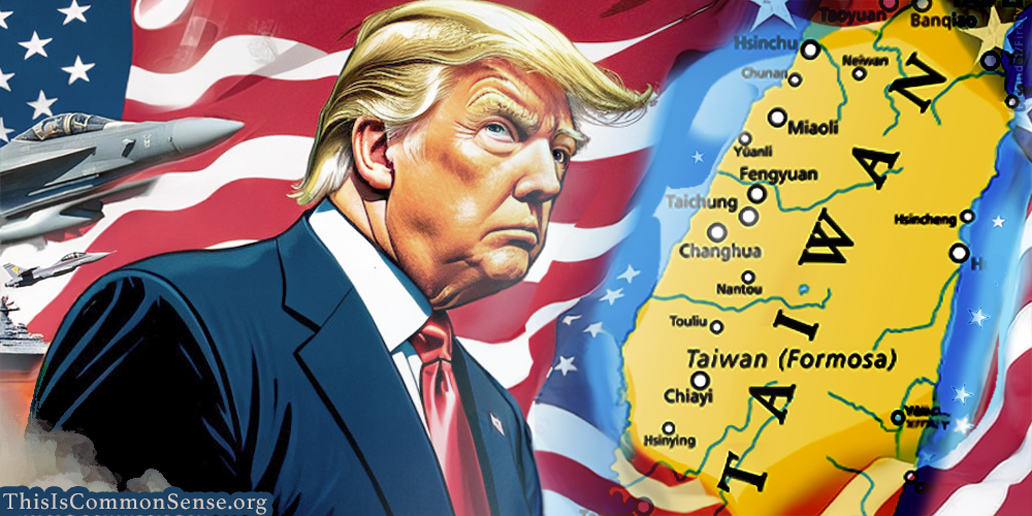
For the last five years, I havecounseled that the U.S. must either withdraw from Southeast Asia or convince the Chinese regime that we and our allies are willing to stand up to them, militarily.
How will President Trump respond in a second term?
Arguing that “the United States . . . is always America first,” a spokesperson for China’s Taiwan Affairs Office recently needled: “Taiwan at any time may turn from a pawn to a discarded child.”
However, Lyle Goldstein with Defense Priorities notes that “During Trump’s last four years there was quite a robust stance in favor of defending Taiwan . . .” While Al Jazeera headlined a recent story, “Trump signals hard line on China with hawkish cabinet picks.”
Still, “I think Taiwan should pay us for defense,” Trump said back in June.*
“[T]hey want protection,” he told Joe Rogan last month. “The mob makes you pay money, right? But with these countries that we protect, I got hundreds of billions of dollars from NATO countries that were never paying us.”
Mr. Trump did successfully prod NATO countries into putting more money into their militaries. That seems to be his gambit with Taiwan.
And maybe it’s working.
“Taiwan is considering a massive $15 billion military package,” Fox News is reporting, “in a show to the incoming Trump administration that it is serious about defending itself against the threat posed by China.”
Plus, as The Epoch Times illuminates, “A coalition of the willing is already emerging.” Countries in Europe and Asia are increasingly coming together and standing up against Chinese bullying of Taiwan.
As we await the second Trump administration.
This is Common Sense. I’m Paul Jacob.
* Trump also charged that Taiwan “stole” our computer chip business. True, in the same sense that Shohei Ohtani stole 57 bases for the LA Dodgers last season.
Illustration created with Midjourney and Firefly
See all recent commentary
(simplified and organized)
See recent popular posts

Once the most potent moral figure in Western culture was Jesus Christ. Believer or unbeliever, you took your ethical bearings from him, or professed to. To question his morals was to expose yourself as a monster. Now, the most potent moral figure in Western culture is Adolf Hitler. It is as monstrous to praise him as it would once have been to disparage Jesus. He has become the fixed reference point by which we define evil.
Alec Ryrie, Unbelievers: An Emotional History of Doubt (November 2019). See also “The End of the Age of Hitler,” First Things, November 2024.

November 14:
332 BC — Alexander the Great was crowned pharaoh of Egypt.
1770 AD — James Bruce discovered what he believed to be the source of the Nile.
1947 AD — P. J. O’Rourke, American libertarian political satirist and journalist (d. 2022) was born.